
Tipologie e contesti stratigrafici della ceramica (1968-2003). Descrizione e documenti
By (author) Brepols Publishers

Hardback (Published)
(June 2008)
ISBN: 9788862400107
Price: $213.00
On back order
The three volumes – Capernaum VI, Capernaum VII, and Capernaum VIII – are intertextual and present the description (Capernaum VI), illustrated documentation (Capernaum VII) and photographic documentation (Capernaum VIII) for the ceramics collected on the Franciscan property in Capernaum (Israel) over the course of twenty-three archaeological digs. For this project, the author took part as Assistant to the Director V. Corbo (1968- 1986) and then as his successor (2000 – 2003), and the dates of the material range from the early Bronze Age to the Mamluk period (about 3200 BC to 1400 AD). In this account, the different types of terra cotta vases are presented using a uniform classification system with an alphanumeric code assigned according to type, and with references to the illustrations, photographs, descriptions, frequency, dating, contexts, and parallels. There are numerous illustrations: 10,539 of the 44,730 items recorded have been sketched to illustrate both individual type and their associations in certain stratigraphic contexts. The Ceramics Register makes cross-referencing between the three volumes easy. The author allows the figures to speak for themselves in the twenty-one tables included. For example, regarding Table XIII, one learns that terra sigillata is represented at Capernaum by a tremendous 8,387 examples. No other archaeological site in the Holy Land has furnished such a massive amount of terra sigillata, coming mostly from Africa Proconsularis (896 examples of African terra sigillata), the western coasts of Asia Minor (3,832 pieces of Phocaean terra sigillata.) and Cyprus (2,947 specimens of Cypriot terra sigillata). This flood of terra sigillata affected all of the homes in Capernaum irregardless of social class, which can be readily verified vis-a-vis the Register. Additionally, the author presents Map II to show the areas in Capernaum where terra sigillata moulds with crosses were located. Capernaum’s contacts with foreign countries are not limited to the elegant terra sigillata plates primarily from the Byzantine period. An Egyptian scarab was already present as early as the Second Millennium BC. In the Persian period, characteristic amphorae from Phoenicia reached Capernaum. Plates inspired by the ceramics of Megara, amphorae with Greek inscriptions most likely from Rhodes, and ciboria from Corinth are recorded in the Hellenistic and Roman periods. The involvement with distant cultures does not end with the Arab period; even in the Mamluk period, glazed ceramics inspired by faraway China were found in Capernaum. Beyond these lively contacts with foreign places, facilitated by Capernaum’s position on the via maris, the lengthy excavations at Capernaum have yielded other results that are just as important to ceramologists interested in the region’s “common” pottery.
The three volumes – Capernaum VI, Capernaum VII, and Capernaum VIII – are intertextual and present the description (Capernaum VI), illustrated documentation (Capernaum VII) and photographic documentation (Capernaum VIII) for the ceramics collected on the Franciscan property in Capernaum (Israel) over the course of twenty-three archaeological digs. For this project, the author took part as Assistant to the Director V. Corbo (1968- 1986) and then as his successor (2000 – 2003), and the dates of the material range from the early Bronze Age to the Mamluk period (about 3200 BC to 1400 AD). In this account, the different types of terra cotta vases are presented using a uniform classification system with an alphanumeric code assigned according to type, and with references to the illustrations, photographs, descriptions, frequency, dating, contexts, and parallels. There are numerous illustrations: 10,539 of the 44,730 items recorded have been sketched to illustrate both individual type and their associations in certain stratigraphic contexts. The Ceramics Register makes cross-referencing between the three volumes easy. The author allows the figures to speak for themselves in the twenty-one tables included. For example, regarding Table XIII, one learns that terra sigillata is represented at Capernaum by a tremendous 8,387 examples. No other archaeological site in the Holy Land has furnished such a massive amount of terra sigillata, coming mostly from Africa Proconsularis (896 examples of African terra sigillata), the western coasts of Asia Minor (3,832 pieces of Phocaean terra sigillata.) and Cyprus (2,947 specimens of Cypriot terra sigillata). This flood of terra sigillata affected all of the homes in Capernaum irregardless of social class, which can be readily verified vis-a-vis the Register. Additionally, the author presents Map II to show the areas in Capernaum where terra sigillata moulds with crosses were located. Capernaum’s contacts with foreign countries are not limited to the elegant terra sigillata plates primarily from the Byzantine period. An Egyptian scarab was already present as early as the Second Millennium BC. In the Persian period, characteristic amphorae from Phoenicia reached Capernaum. Plates inspired by the ceramics of Megara, amphorae with Greek inscriptions most likely from Rhodes, and ciboria from Corinth are recorded in the Hellenistic and Roman periods. The involvement with distant cultures does not end with the Arab period; even in the Mamluk period, glazed ceramics inspired by faraway China were found in Capernaum. Beyond these lively contacts with foreign places, facilitated by Capernaum’s position on the via maris, the lengthy excavations at Capernaum have yielded other results that are just as important to ceramologists interested in the region’s “common” pottery.
- By (author) Brepols Publishers
Similar Books





 Connecting the Dots: Counting, Writing, and the Beginnings of Civilization
The Secret Lives of Clay Tokens: A Memoir

 Curating the Prehistoric Past
Studies on West Asian Archaeology and Beyond in Honour of Yoshihiro Nishiaki

 Exploring Gender Dynamics across the Ancient Near East
Collected Essays of Gender and Methodology in the Ancient Near East (GeMANE) 4 and 5
Volume 7


 Ḫattušaš utnē išḫameški
Hittite and Other Ancient Near Eastern Studies Presented to Piotr Taracha on the Occasion of His 65th Birthday




 Kultur – Kontakt – Kultur
Beiträge anlässlich der 66. Rencontre Assyriologique Internationale in Frankfurt/Main und Mainz, 25.–29. Juli 2022
Volume 35
 Money of Mercenaries in the Cimmerian Bosporus
From the Mithridatic Wars to the Roman-Bosporan War of AD 45-49
Volume 45

 New Research on Old Collections in Southwest Asian Archaeology
Proceedings of the Workshop Held at the British Museum, London, 31 July – 2 August, 2023
 Old Aramaic Inscriptions and their Contexts
An Epigraphic, Archaeological, and Historical Synthesis
Volume 63

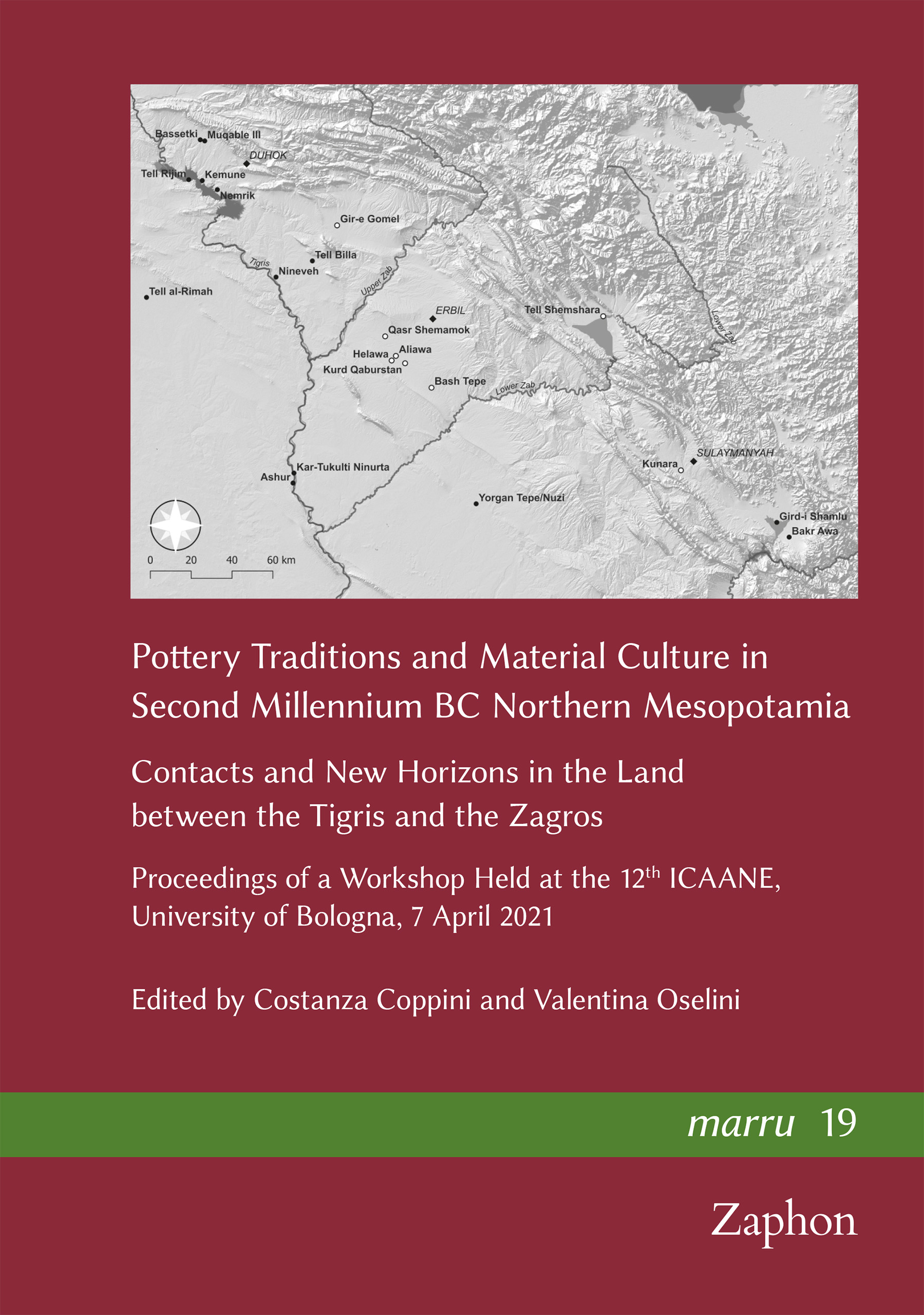 Pottery Traditions and Material Culture in Second Millennium BC Northern Mesopotamia
Contacts and New Horizons in the Land between the Tigris and the Zagros. Proceedings of a Workshop Held at the 12th ICAANE, University of Bologna, 7 April 2021
Volume 19
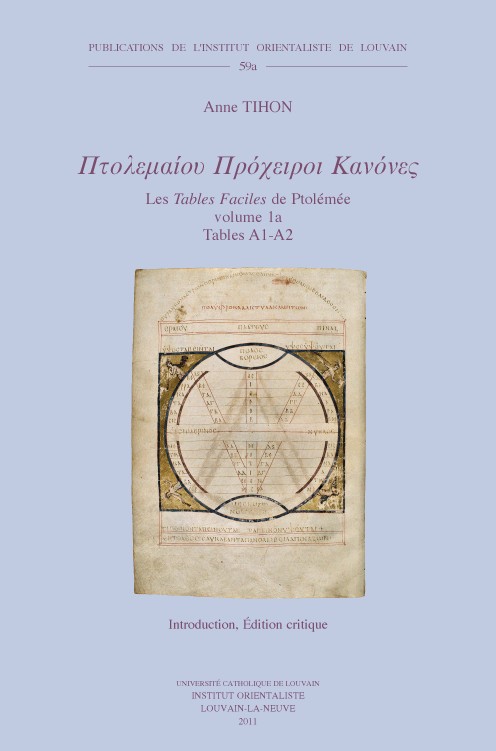
 Punning in Odd or Elegant Constructions in Jeremiah
The Convergence of Linguistics, Rhetoric, and Textuality in the Hebrew Text of Jeremiah

 Sertorius, the Exiles of the Sullan Regime and the Provinces of the Empire
Legitimacy, Morality and Imperial Discourse in the 70s BCE
 Shame in the Worlds of the Hebrew Bible and Akkadian Texts
A Linguistic Study and Its Implications
Volume 33

 Telling Contexts
Archaeological and Textual Studies in Honor of Elizabeth Bloch-Smith and Mark S. Smith
 The Body
Lived, Cultured, Adorned: Essays on Dress and the Body in the Bible and Ancient Near East in Honor of Nili S. Fox
 The Discourse of Rites
Shaping and Reshaping the (Counter-)Priestly Rituals Conducted Outside the Tabernacle
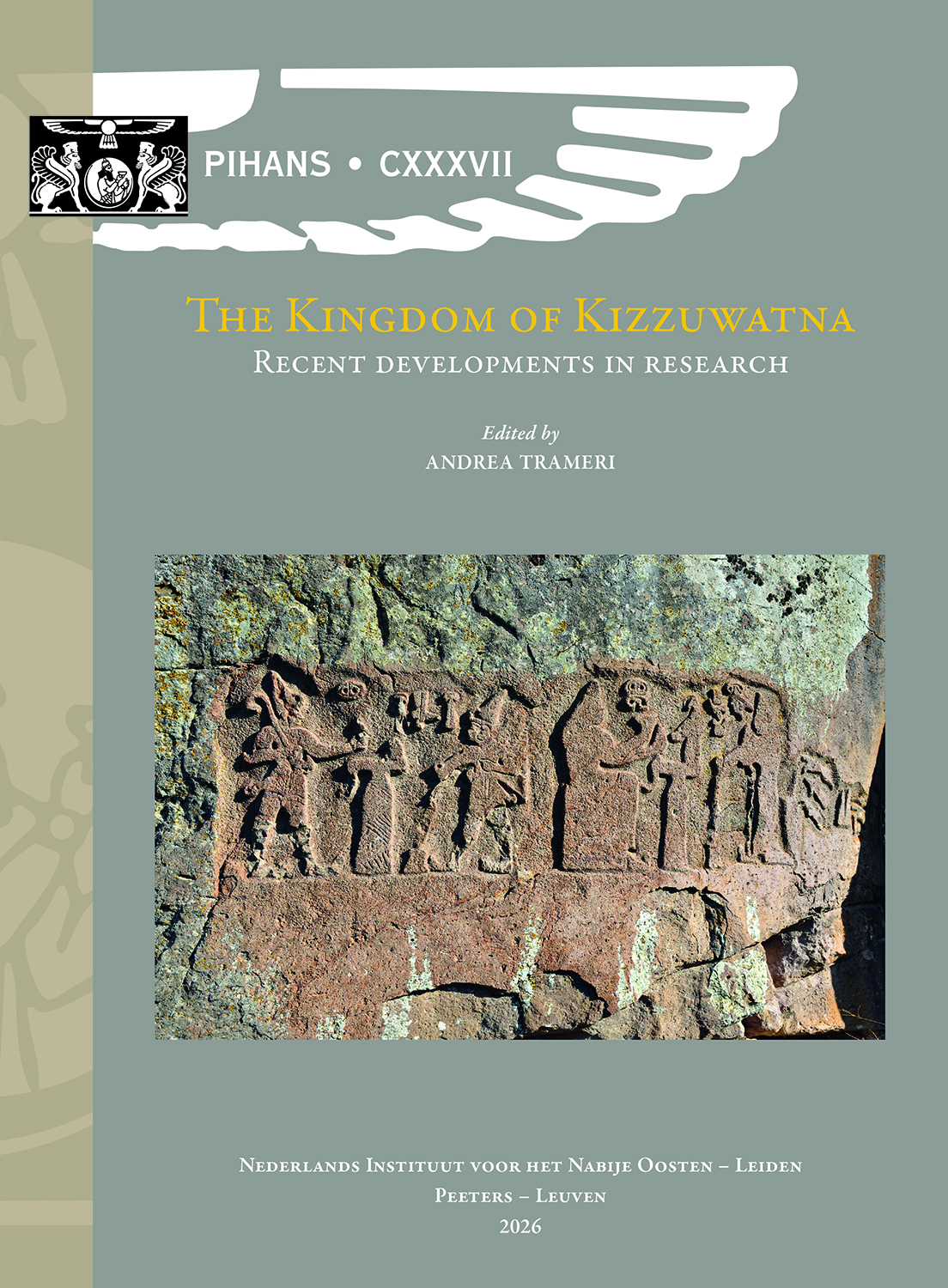 The Kingdom of Kizzuwatna: Recent Developments in Research
Proceedings of the Third NINO Postdoctoral Research Fellow Annual Conference, Leiden, 23rd-25th March 2023
Volume 137


 The Vandals and the Mediterranean / I Vandali e il Mediterraneo
Politics, Economy and Culture of a Barbarian Kingdom / Politica, economia e cultura di un regno barbarico