
Poets and Princes
The Panegyric Poetry of Johannes Michael Nagonius
By (author) Paul Gwynne
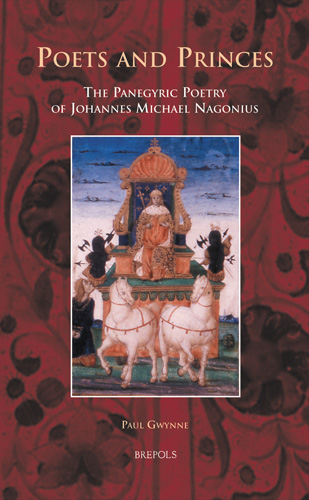
Poets and Princes offers a richly textured interdisciplinary survey of late medieval and early Renaissance court cultures across Europe as they are reflected in the neo-Latin verse of the itinerant poet, Johannes Michael Nagonius. This analysis of the life and works of Nagonius provides a fascinating insight into the world of late me
Poets and Princes offers a richly textured interdisciplinary survey of late medieval and early Renaissance court cultures across Europe as they are reflected in the neo-Latin verse of the itinerant poet, Johannes Michael Nagonius. In 1496 the poet laureate Nagonius presented Henry VII with a manuscript of Latin panegyric poetry. This elaborate diplomatic gift from Pope Alexander VI solicited the King’s support against Charles VIII of France. The verse emphasized the mutual benefit of an alliance: if Henry supported him the Pope would acknowledge disputed Tudor claims to England’s throne. For Henry, the gift represented a literary and political coup. With all the rhetorical skill of a learned poet, Nagonius presented the King as a classical hero on an epic scale in the latest Italian style. The work thus acknowledged Henry’s international significance. Other recipients of Nagonius’s panegyric verse include Holy Roman Emperor Maximilian I, Vladislav II of Bohemia, Louis XII of France, Doge Leonardo Loredan, the condottieri Niccolo Orsini and Gian Giacomo Trivulzio, Giovanni Bentivoglio, lord of Bologna, and Duke Ercole d’Este of Ferrara. The presentation of a deluxe manuscript to Julius II, celebrating the pontiff ‘s campaign in the Romagna, marked the climax of the poet’s career. This analysis of the life and works of Nagonius thus provides a fascinating insight into the world of late medieval and early Renaissance court cultures. It contributes to the growing field of neo-Latin scholarship, examining the manuscripts and para-texts, studying the relationship between volume and dedicatee, placing these manuscripts within the wider literary and artistic cultures of the courts where they were presented, and investigating the role of neo-Latin verse within court cultures. Paul Gwynne received his Ph.D. in Combined Historical Studies from the Warburg Institute, University of London. His research interests include the reception of the Classical Tradition with particular emphasis on the development of Humanism in Renaissance Rome.
- By (author) Paul Gwynne
Similar Books
 «Solazoxa festa, stradolze e stracomplia»
Festschrift für Raymund Wilhelm zum 65. Geburtstag mit Beiträgen zu Diskurstraditionen und mittelalterlicher Philologie
Volume 249
 A Collaborative Tapestry in Honour of Shirley Ann Brown / Une fresque brodée en l’honneur de Shirley Ann Brown
The Bayeux Tapestry Seen by her Colleagues and Friends / La Tapisserie de Bayeux vue par ses collègues et amis



 Balthasar Caymox of Nuremberg
Early Modern German Print Publishers: Popular Prints of the Seventeenth Century

 Behind the Scenes of Medieval Roofs
An Overview of the Roofing Systems of Italian Churches
Volume 90

 Beyond Sovereign Courts
Agents and Practices in Early Modern Spanish and Habsburg Diplomacy
Volume 3

 Cahiers de recherches médiévales et humanistes – Journal of Medieval and Humanistic Studies
Volume 51

 Circulation, Use, Impact
The Consumption of Architectural Books in the Early Modern Eastern Adriatic
Volume 1



 Councils, Conflicts, Correspondence
Urban Diplomacy in Reval (Tallinn) and Lübeck (c. 1470–1570)
Volume 67





 Homo-Politicus in the Balkans
Early Modern Southeast European History in Imperial and Regional Context

 Innovation and Medieval Communities
The Circulation of Ideas and Practices in and out of the Town (1200-1500)
Volume 63
 Innovationes Lovanienses: Arts, Law and Theology at the University of Louvain (1425–1797)
Studium Lovaniense: Learning across Borders, 2
Volume 18
 John Dunstaple Reading Boethius
John Dunstaple’s Annotations to Boethius’s “De institutione musica” in the Manuscript Oxford, Corpus Christi College Library, MS 118
 Legal Visuality
Exegesis, Ambiguity, and Dissimulation of the Donation of Constantine in the Early Modern Period

 Medieval Debates on Foreknowledge: Future Contingents, Prophecy, and Divination
Acts of the XXVII Annual Colloquium of the SIEPM, Trento 12-15 September 2023
Volume 31

 Medieval Yeghegis, Armenia
History, Archaeology, Society. Local Multiplicities and Global Connections of a Rural Centre on the Silk Road(s)