
Transport Stirrup Jars of the Bronze Age Aegean and East Mediterranean
by Halford W. Haskell, Richard E. Jones, Peter M. Day and John T. Killen
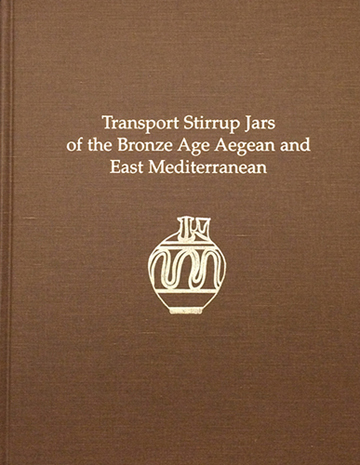
The transport stirrup jar was a vessel type used extensively in the Late Bronze Age III Aegean world, used both to transport and to store liquid commodities in bulk. This study concentrates on the origins and distribution of the jars and thus tracing exchange routes, placing the jars within their historical context.
The transport stirrup jar was a vessel type used extensively in the Late Bronze Age III Aegean world. Found in a variety of contexts, the type was used both to transport and to store liquid commodities in bulk. The peak of the production and exchange of this jar corresponded with the time of economic expansion on the Greek mainland. On Crete, stirrup jars appeared at most major centers on the island. Their presence in large numbers in storerooms indicates the movement of commodities and the centralized storage and control of goods. The broad distribution of stirrup jars at coastal sites in the eastern Mediterranean and their presence in the cargoes of the Uluburun, Gelidonya, and Iria shipwrecks clearly shows their role in the extensive exchange networks within the Aegean and beyond. Because they represent significant Aegean exchange, tracing their origins and movement provides information regarding production centers and trade routes. This study concentrates on determinating of provenance of the jars and the subsequent tracing of exchange routes. The fully integrated research design is an interdisciplinary, collaborative archaeological project that embraces typological, chemical, petrographic, and epigraphic approaches in order to shed light on the jars’ classification and origin. The results of the chemical and petrographic work constitute primary parts of the study. By establishing the origins and distribution of the jars, these vases are placed within their historical context. The identification of production centers and export routes is critical for a full understanding of the economic and political conditions in the Late Bronze Age Aegean and eastern Mediterranean.
1. Introduction, Halford W. Haskell, Richard E. Jones, Peter M. Day 2. Typology, Halford W. Haskell
3. Scientific Background and Aims of the Analyses, Richard E. Jones and Peter M. Day 4. Chemical Analyses, Richard E. Jones 5. Petrographic Analyses, Peter M. Day 6. Interpretation of the Chemical and Petrographic Data, Richard E. Jones and Peter M. Day 7. Chemistry, Petrography, and Typology: Geographic Associations, Halford W. Haskell, Richard E. Jones, Peter M. Day 8. The Linear B Inscriptions, John T. Killen 9. Chronology and Power, Halford W. Haskell 10. Trade, Halford W. Haskell 11. Catalog Index Tables Graphs Figures Plates
- By (author) Peter M. Day
- By (author) Halford W. Haskell
- By (author) Richard E Jones
- By (author) John T. Killen
Other Titles in this Series
 Mochlos IVA
Period III. The House of the Metal Merchant and Other Buildings in the Neopalatial Town
Volume 68
 The Cave of the Cyclops
Mesolithic and Neolithic Networks in the Northern Aegean, Greece. Volume I: Intra-Site Analysis, Local Industries, and Regional Site Distribution
Volume 21
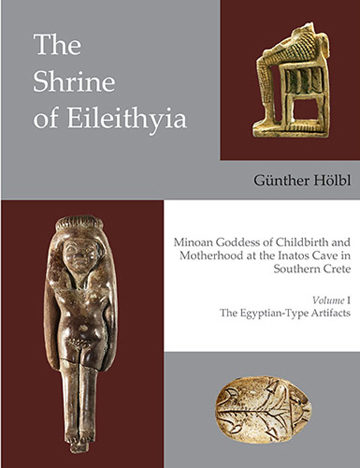 The Shrine of Eileithyia
Minoan Goddess of Childbirth and Motherhood, at the Inatos Cave in Southern Crete: Volume I: The Egyptian-Type Artifacts
Volume 69
 An Archaeological Palimpsest in Minoan Crete
Tholos Tomb A and Habitation at Apesokari Mesara
Volume 70

 Petras, Siteia I
A Minoan Palatial Settlement in Eastern Crete: Excavation of Houses I.1 and I.2
Volume 53

 Mochlos IA
Period III. Neopalatial Settlement on the Coast: The Artisans' Quarter and the Farmhouse at Chalinomouri: The Sites
Volume 7
Similar Books


 Archaeological Excavations at Irmis Rka: An Investigation of a Multi-Layered Settlement in Southwest Georgia
Results from the 2020 Season: Early Bronze Age to Medieval Occupations


 Caesar’s Visions and Impact on the Roman Empire
Revisiting the Archaeological and Historical Record of the 40s BC
Volume 2


 Catuvellaunia and Rome: Economic and Political Relations during the Final Decades Pre-conquest
The Role of Grain from Southeastern Britain and Its Potential for Maintenance of the Roman Military along the Frontier on the Rhine
 Construction Processes in Historical Western Societies (5th c. BC – 10th c. AD)
Case Studies on Techniques, Models, and Costs


 Etruscan and Roman Hellenistic Anatomical ex votos
Reassessing Popular Religious Expressions in Central Italy
Volume 8




 Invisible Labour in Antiquity
Visualizing Obscure Work in the Ancient Mediterannean and West Asia
Volume 1

 Late Antique villae in the Balkans (3rd–7th c. AD): Current Research Questions and Perspectives
HAEMUS Companion to the Late Antique Balkans 1
Volume 4
 Making and Meaning in the Bronze and Iron Ages
Chronology, Landscapes and Societies across Europe. Proceedings from the METALAGES2024 Colloquium (Florence, 23 October 2024)





 Portraying the Individual in the Roman East
Local–Imperial Entanglements in Sculpture, Mosaics, and Paintings (First–Fourth Centuries AD)
Volume 18


 Roman Copies, Collecting, and Culture in the Bay of Naples and Beyond
Papers in Honor of Eugene J. Dwyer
 Small Worlds and Relational Agencies: Local Societies in Early Medieval Iberia
Pequeños mundos y Agencias relacionales: Sociedades locales altomedievales en la Península Ibérica
 SOMA 2023: Proceedings of the 24th Symposium on Mediterranean Archaeology
Ideas that Travelled by the Sea, Udine, 2-4 February, 2023
