
The Hasmoneans
Ideology, Archaeology, Identity
by Eyal Regev

Eyal Regev presents an inter-disciplinary analysis of the Hasmoneans: How they perceived themselves and their role in Jewish history, and how they wanted to be perceived by their subjects. By exploring the ways-some common among ancient monarchies, others unique-in which the Hasmoneans shored up their authority, the author reveals the deliberate and innovative construction of a national politico-religious ideology.
The first two chapters discuss the religious practices of the Hasmoneans. Chapter 1 explores why the Maccabees regarded Hanukkah as a festival of renewal, specifically of those traditions related to the Temple cult. Chapter 2 examines the manner in which the Hasmoneans used the protection and maintenance of the Jewish Temple to legitimize their rule-and how they worked to place the Temple at the center of the Jewish religion. Chapters 3-5 deal with different perspectives in the Hellenistic world on the role of government and royal ideologies. Specifically, chapter 3 explores both the Hellenistic and Jewish contexts for Hasmonean government and kingship. Regev shows how the Hasmonean dynasty built up its religious (in contrast to political) authority, suggesting that the Hasmonean state was not a conventionally Hellenistic one, but rather a ‘national’ monarchy, closer to Macedonian in type. Chapter 4 attempts to decipher the meaning of the symbols and epigraphs on Hasmonean coins, and examines how both Hellenistic symbols and Jewish concepts were employed to reinforce the dynasty’s authority and introduce Jewish ‘national’ ideas into the populace. Chapter 5 then undertakes a comparative social-archaeological analysis of the Hasmonean palaces in Jericho in an effort to gain insight into their royal ideology. The author compares the Hasmonean palaces to other Hellenistic palaces – especially the Herodian palaces. Finally, the concluding chapter integrates the previous findings into a new understanding of and appreciation for the Hasmoneans’ creation of an innovative Jewish corporal identity, one whose echoes we can still hear today.
- By (author) Eyal Regev
"Regev's book has the potential to receive as much attention as e.g. Mendels' Rise and Fall of Jewish Nationalism (1992)." -- Friedrich T. Schipper, Bryn Mawr Classical Review, 2015.02.48 "Regev does a fine job of observing and articulating what he sets out to do in the beginning: reconstruct the Hasmonean narrative." --James S. Lee, Review of Biblical Literature, 7.9.2015
—
Other Titles in this Series


 Light Against Darkness
Dualism in Ancient Mediterranean Religion and the Contemporary World
Volume 2


 Social Inequality in the World of the Text
The Significance of Ritual and Social Distinctions in the Hebrew Bible
Volume 4


 Gender and Social Norms in Ancient Israel, Early Judaism and Early Christianity
Texts and Material Culture
Volume 28
 Between Cooperation and Hostility
Multiple Identities in Ancient Judaism and the Interaction with Foreign Powers
Volume 11

 At the Intersection of Texts and Material Finds
Stepped Pools, Stone Vessels, and Ritual Purity Among the Jews of Roman Galilee
Volume 16
 Evil Within and Without
The Source of Sin and Its Nature as Portrayed in Second Temple Literature
Volume 9
 Between Symbolism and Realism
The Use of Symbolic and Non-Symbolic Language in Ancient Jewish Apocalypses 333-63 B.C.E.
Volume 8

 Between Text and Text
International Symposium on Intertextuality in Ancient Near Eastern, Ancient Mediterranean, and Early Medieval Literatures
Volume 6

 The Faces of Torah
Studies in the Texts and Contexts of Ancient Judaism in Honor of Steven Fraade
Volume 22
 The Land to the Elect and Justice for All
Reading Psalms in the Dead Sea Scrolls in Light of 4Q381
Volume 14


 ‘See, I will bring a scroll recounting what befell me’ (Ps 40-8)
Epigraphy and Daily Life from the Bible to the Talmud. Dedicated to the Memory of Professor Hanan Eshel
Volume 12

Similar Books





 Ars Prophetica
Theology in the Poetry of Twentieth-Century Hebrew Poets Avraham Halfi, Shin Shalom, Amir Gilboa, and T. Carmi
 As Messianism Turns to Heresy
The Regenstein Chair Lectures On Lurianic Kabbalah and Shabbatai Tzevi at Hebrew Union College - Cincinnati


 Boğazköy Tablets in the Museum of Anatolian Civilizations (Bo 9032–Bo 9097)
Anadolu Medeniyetleri Müzesinde Bulunan Boğazköy Tabletleri (Bo 9032–Bo 9097)
Volume 4

 Connecting the Dots: Counting, Writing, and the Beginnings of Civilization
The Secret Lives of Clay Tokens: A Memoir

 Curating the Prehistoric Past
Studies on West Asian Archaeology and Beyond in Honour of Yoshihiro Nishiaki


 Exploring Gender Dynamics across the Ancient Near East
Collected Essays of Gender and Methodology in the Ancient Near East (GeMANE) 4 and 5
Volume 7
 Extracanonical Traditions and the Holy Land
Texts, Rituals, and Material Culture in Late Antique Palestine


 Ḫattušaš utnē išḫameški
Hittite and Other Ancient Near Eastern Studies Presented to Piotr Taracha on the Occasion of His 65th Birthday




 Kultur – Kontakt – Kultur
Beiträge anlässlich der 66. Rencontre Assyriologique Internationale in Frankfurt/Main und Mainz, 25.–29. Juli 2022
Volume 35

 Lobbying for Equality
Jacques Godard and the Struggle for Jewish Equality during the French Revolution


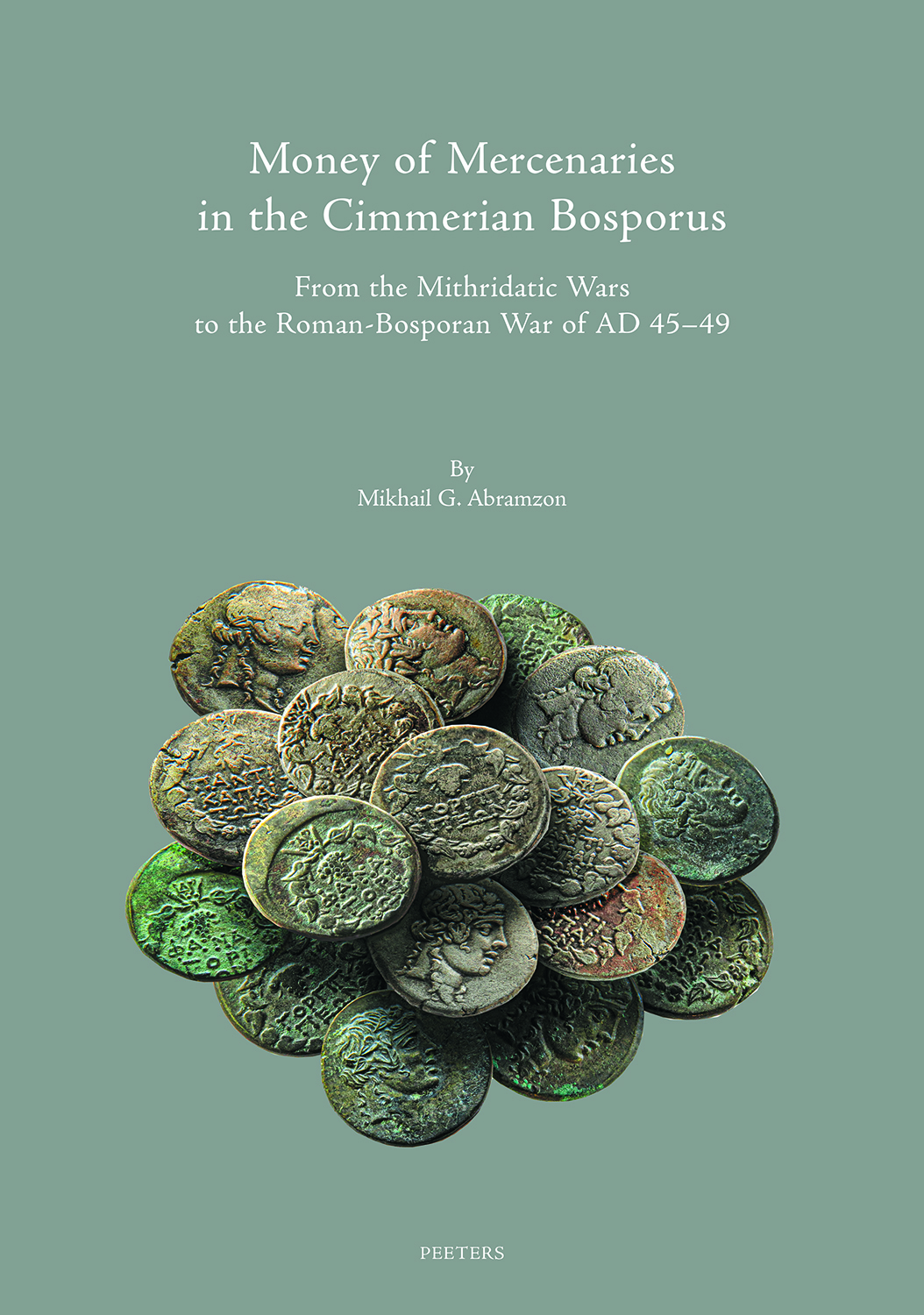 Money of Mercenaries in the Cimmerian Bosporus
From the Mithridatic Wars to the Roman-Bosporan War of AD 45-49
Volume 45
