
Structured Deposition of Animal Remains in the Fertile Crescent during the Bronze Age
By (author) José Luis Ramos Soldado

Paperback (Published)
(January 2016)
ISBN: 9781784912727
8.31 x 11.69 inches
Price: $40.00
In stock
The aim of this research is to draw up a literature review of the structured deposits of animal remains during the third and second millennia BC in the Ancient Near East for its subsequent classification and detailed interpretation.
Although most of the animal remains recorded throughout the archaeological excavations consist usually of large assemblages of discarded and fragmented bones, it is possible to yield articulated animal skeletons in some cases. Most of them have been usually picked up from sacred and/or funerary contexts, but not all of them might fit necessarily in ritual and symbolic interpretations, and not all of the structured deposit of animal remains may be explained due to anthropic factors. In addition, zooarchaeology has traditionally focused on animal domestication, husbandry and economy, and species identification above all, shutting out further discussion about these type of findings. Moreover, the limited condition of the data is also another issue to bear in mind. Thus, the aim of this study has been to draw up a literature review of the structured deposits of animal remains during the third and second millennia BC in the Ancient Near East for its subsequent classification and detailed interpretation. In this survey it has been attested that not only most of the articulated animal remains have been found in ritual and/or funerary contexts but also that all species recorded- but some exceptions-are domestic. Hence there is a broad religious attitude towards the main domesticated animals of human economy in the Ancient Near East, based on the closeness of these animals to the human sphere. Therefore, it seems that domesticated animals were powerful constituents in the cultural landscape of these regions, never simply resources.
1. Introduction
2. Historical and archaeological context
3. Structured deposition of animal remains in the Fertile Crescent during the III Millennium BC
4. Structured deposition of animal remains in the Fertile Crescent during the II Millennium BC
5. Discussion
6. Conclusions
Bibliography
Appendix A. Number of articulated animal individuals recorded at each site classified by species, region and period
Appendix B. Identification of equid species classified by site and period
- By (author) José Luis Ramos Soldado
Similar Books






 Boğazköy Tablets in the Museum of Anatolian Civilizations (Bo 9032–Bo 9097)
Anadolu Medeniyetleri Müzesinde Bulunan Boğazköy Tabletleri (Bo 9032–Bo 9097)
Volume 4
 Connecting the Dots: Counting, Writing, and the Beginnings of Civilization
The Secret Lives of Clay Tokens: A Memoir

 Curating the Prehistoric Past
Studies on West Asian Archaeology and Beyond in Honour of Yoshihiro Nishiaki

 Exploring Gender Dynamics across the Ancient Near East
Collected Essays of Gender and Methodology in the Ancient Near East (GeMANE) 4 and 5
Volume 7


 Ḫattušaš utnē išḫameški
Hittite and Other Ancient Near Eastern Studies Presented to Piotr Taracha on the Occasion of His 65th Birthday




 Kultur – Kontakt – Kultur
Beiträge anlässlich der 66. Rencontre Assyriologique Internationale in Frankfurt/Main und Mainz, 25.–29. Juli 2022
Volume 35
 Money of Mercenaries in the Cimmerian Bosporus
From the Mithridatic Wars to the Roman-Bosporan War of AD 45-49
Volume 45

 New Research on Old Collections in Southwest Asian Archaeology
Proceedings of the Workshop Held at the British Museum, London, 31 July – 2 August, 2023
 Old Aramaic Inscriptions and their Contexts
An Epigraphic, Archaeological, and Historical Synthesis
Volume 63

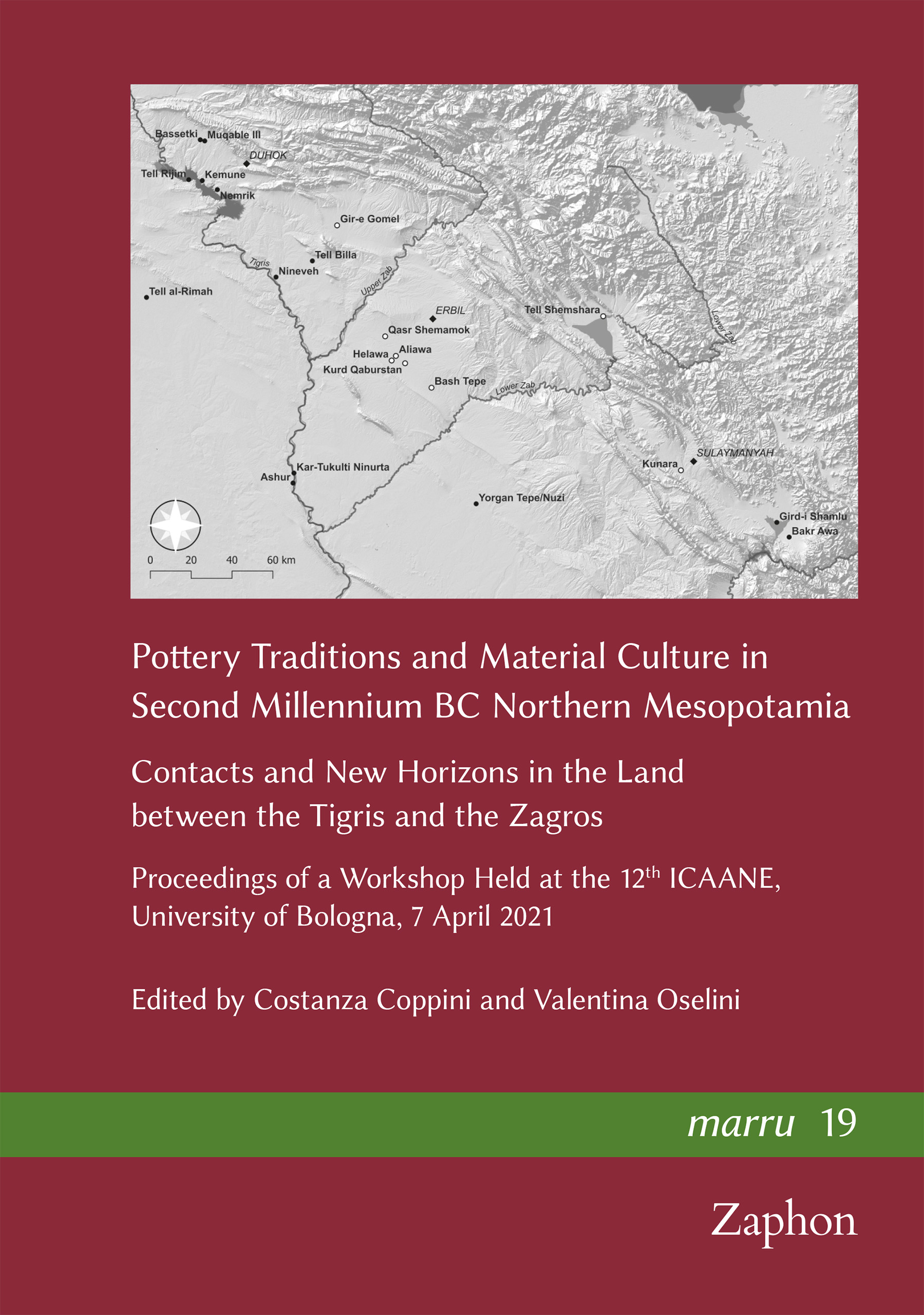 Pottery Traditions and Material Culture in Second Millennium BC Northern Mesopotamia
Contacts and New Horizons in the Land between the Tigris and the Zagros. Proceedings of a Workshop Held at the 12th ICAANE, University of Bologna, 7 April 2021
Volume 19
 Punning in Odd or Elegant Constructions in Jeremiah
The Convergence of Linguistics, Rhetoric, and Textuality in the Hebrew Text of Jeremiah

 Sertorius, the Exiles of the Sullan Regime and the Provinces of the Empire
Legitimacy, Morality and Imperial Discourse in the 70s BCE
 Shame in the Worlds of the Hebrew Bible and Akkadian Texts
A Linguistic Study and Its Implications
Volume 33

 Telling Contexts
Archaeological and Textual Studies in Honor of Elizabeth Bloch-Smith and Mark S. Smith
 The Body
Lived, Cultured, Adorned: Essays on Dress and the Body in the Bible and Ancient Near East in Honor of Nili S. Fox
 The Discourse of Rites
Shaping and Reshaping the (Counter-)Priestly Rituals Conducted Outside the Tabernacle
 The Kingdom of Kizzuwatna: Recent Developments in Research
Proceedings of the Third NINO Postdoctoral Research Fellow Annual Conference, Leiden, 23rd-25th March 2023
Volume 137
