
New Directions in Early Medieval European Archaeology
Spain and Italy compared: Essays for Riccardo Francovich
Edited by Sauro Gelichi Edited by Richard Hodges

On 30 March 2007 Riccardo Francovich died suddenly and Europe lost one of its greatest archaeologists. The impact of Francovich’s teaching had on the birth and development of medieval archaeology has been very strong, especially in the country where he worked (Italy), and on the archaeologists of his ‘adopted’ country, namely Spain. If medieval archaeology has grown over the last thirty years in these two countries, it is certainly thanks to him. For this reason, on 11 June, 2011, some of his closest colleagues and family gathered in Rome at the British School of Rome, in order to remember him and to open a serious discussion on issues that were central to his interests as well as those pertinent to any understanding Italian and Spanish historiography in the second half of the 20th century. Discussing together on this occasion in Rome, there emerged perspectives of analysis, interpretative paradigms and models of reading the original, that recent research has strongly renewed and that often possessed a shared commonality. All this showed that, even with the obvious differences of the national ‘stories’, not only might one recognize similar conjunctures (the impact of new ‘barbarian’ aristocracies on the social structures of the Roman world, the modalities of Islamization, for example), but also find parallel evolutions in terms of macrostructures (in the lives of urban and rural communities, for example). Hence the idea of comparing two different worldviews after the end of antiquity, through the identification of specific topics, made possible by archaeological research that had developed with great effect (and with good results) in recent decades . The optical analysis of these processes is essentially an archaeological one. The focus is primarily the study of social structures and on how these structures show and represent themselves. While there is no perfect symmetry between the analyses of the two countries, the contributions to this collection make it possible to trace and to compare two different types of processes that have led to different types of ‘fragmentation’. A book like this is new in the publishing context of archaeological European Union. It is aimed at an audience of specialists and university researchers. The issues that are addressed are new or are being addressed through new paradigms. In addition, the book written in English should attract a much wider audience to key research topics in significant European medieval studies, but which have been hitherto confined to the local context. Much of the debate that has developed in recent decades, as Francovich himself believed, will inhabit a new intellectual space and will then spread. The volume is not only a fitting tribute to an original and innovative scholar, but also an attempt to compare the ‘archaeology’ of two different countries, with the aim of reading their histories in parallel.
On 30 March 2007 Riccardo Francovich died suddenly and Europe lost one of its greatest archaeologists. The impact of Francovich’s teaching had on the birth and development of medieval archaeology has been very strong, especially in the country where he worked (Italy), and on the archaeologists of his ‘adopted’ country, namely Spain. If medieval archaeology has grown over the last thirty years in these two countries, it is certainly thanks to him. For this reason, on 11 June, 2011, some of his closest colleagues and family gathered in Rome at the British School of Rome, in order to remember him and to open a serious discussion on issues that were central to his interests as well as those pertinent to any understanding Italian and Spanish historiography in the second half of the 20th century. Discussing together on this occasion in Rome, there emerged perspectives of analysis, interpretative paradigms and models of reading the original, that recent research has strongly renewed and that often possessed a shared commonality. All this showed that, even with the obvious differences of the national ‘stories’, not only might one recognize similar conjunctures (the impact of new ‘barbarian’ aristocracies on the social structures of the Roman world, the modalities of Islamization, for example), but also find parallel evolutions in terms of macrostructures (in the lives of urban and rural communities, for example). Hence the idea of comparing two different worldviews after the end of antiquity, through the identification of specific topics, made possible by archaeological research that had developed with great effect (and with good results) in recent decades . The optical analysis of these processes is essentially an archaeological one. The focus is primarily the study of social structures and on how these structures show and represent themselves. While there is no perfect symmetry between the analyses of the two countries, the contributions to this collection make it possible to trace and to compare two different types of processes that have led to different types of ‘fragmentation’. A book like this is new in the publishing context of archaeological European Union. It is aimed at an audience of specialists and university researchers. The issues that are addressed are new or are being addressed through new paradigms. In addition, the book written in English should attract a much wider audience to key research topics in significant European medieval studies, but which have been hitherto confined to the local context. Much of the debate that has developed in recent decades, as Francovich himself believed, will inhabit a new intellectual space and will then spread. The volume is not only a fitting tribute to an original and innovative scholar, but also an attempt to compare the ‘archaeology’ of two different countries, with the aim of reading their histories in parallel.
- Edited by Sauro Gelichi
- Edited by Richard Hodges
Other Titles in this Series


 Le virus de l’erreur. La controverse carolingienne sur la double predestination
Essai d'histoire sociale
Volume 26


 Sacred Places
Devotional Practices and Space Organization in Early Medieval Monasteries (5th-10th centuries)
Volume 52
 Donner sens au nom de personne dans le royaume anglo-saxon (Xe-XIe siecles)
Essai d'histoire sociale
Volume 35
 Genese des espaces politiques (IXe-XIIe siecle)
Autour de la question spatiale dans les royaumes francs et post-carolingiens
Volume 28

 La controverse carolingienne sur la predestination
Histoire, textes, manuscrits. Actes du colloque international de Paris des 11 et 12 octobre 2013
Volume 32


 Charlemagne : les temps, les espaces, les hommes
Construction et deconstruction d'un regne
Volume 34
 Monasteres, convergences, echanges et confrontations dans l’Ouest de l’Europe au Moyen Age
Actes du Colloque Anciennes Abbayes de Bretagne, Universite de Toronto 5-6 mai, 2016
Volume 45


 Du Champ de Mars merovingien au Champ de Mai carolingien
Eclairages sur un objet fugace et une reforme de Pepin, dit le Bref
Volume 41
Similar Books
 A Collaborative Tapestry in Honour of Shirley Ann Brown / Une fresque brodée en l’honneur de Shirley Ann Brown
The Bayeux Tapestry Seen by her Colleagues and Friends / La Tapisserie de Bayeux vue par ses collègues et amis

 Behind the Scenes of Medieval Roofs
An Overview of the Roofing Systems of Italian Churches
Volume 90

 Caesar’s Visions and Impact on the Roman Empire
Revisiting the Archaeological and Historical Record of the 40s BC
Volume 2






 Etruscan and Roman Hellenistic Anatomical ex votos
Reassessing Popular Religious Expressions in Central Italy
Volume 8



 Innovation and Medieval Communities
The Circulation of Ideas and Practices in and out of the Town (1200-1500)
Volume 63
 Invisible Labour in Antiquity
Visualizing Obscure Work in the Ancient Mediterannean and West Asia
Volume 1
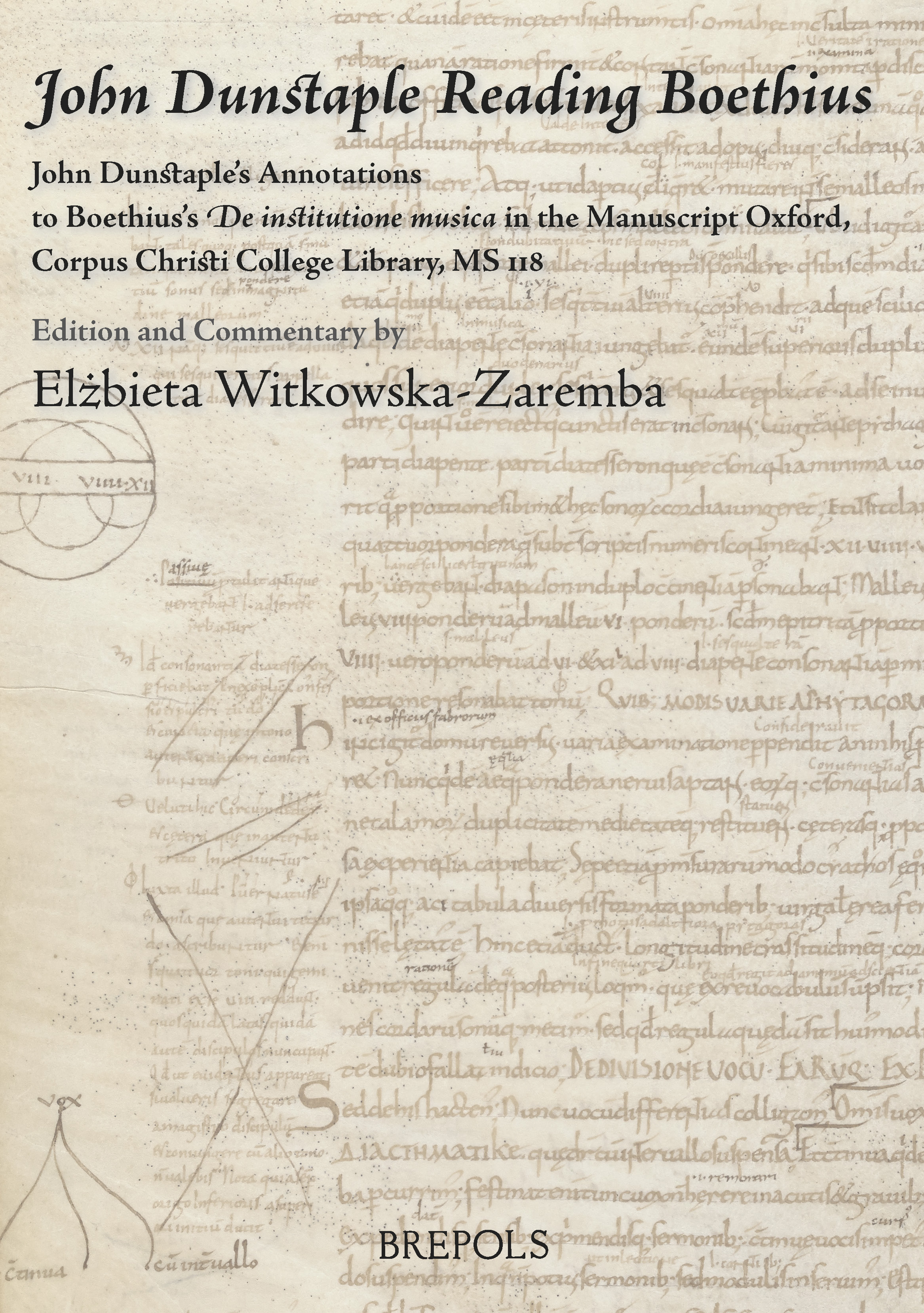 John Dunstaple Reading Boethius
John Dunstaple’s Annotations to Boethius’s “De institutione musica” in the Manuscript Oxford, Corpus Christi College Library, MS 118
 Late Antique villae in the Balkans (3rd–7th c. AD): Current Research Questions and Perspectives
HAEMUS Companion to the Late Antique Balkans 1
Volume 4
 Linguistic and Cultural Dynamics in a Frontier Society
New Perspectives on Northeastern Bavaria and Western Bohemia in the Early Middle Ages
Volume 9
 Medieval Debates on Foreknowledge: Future Contingents, Prophecy, and Divination
Acts of the XXVII Annual Colloquium of the SIEPM, Trento 12-15 September 2023
Volume 31
 Medieval Yeghegis, Armenia
History, Archaeology, Society. Local Multiplicities and Global Connections of a Rural Centre on the Silk Road(s)




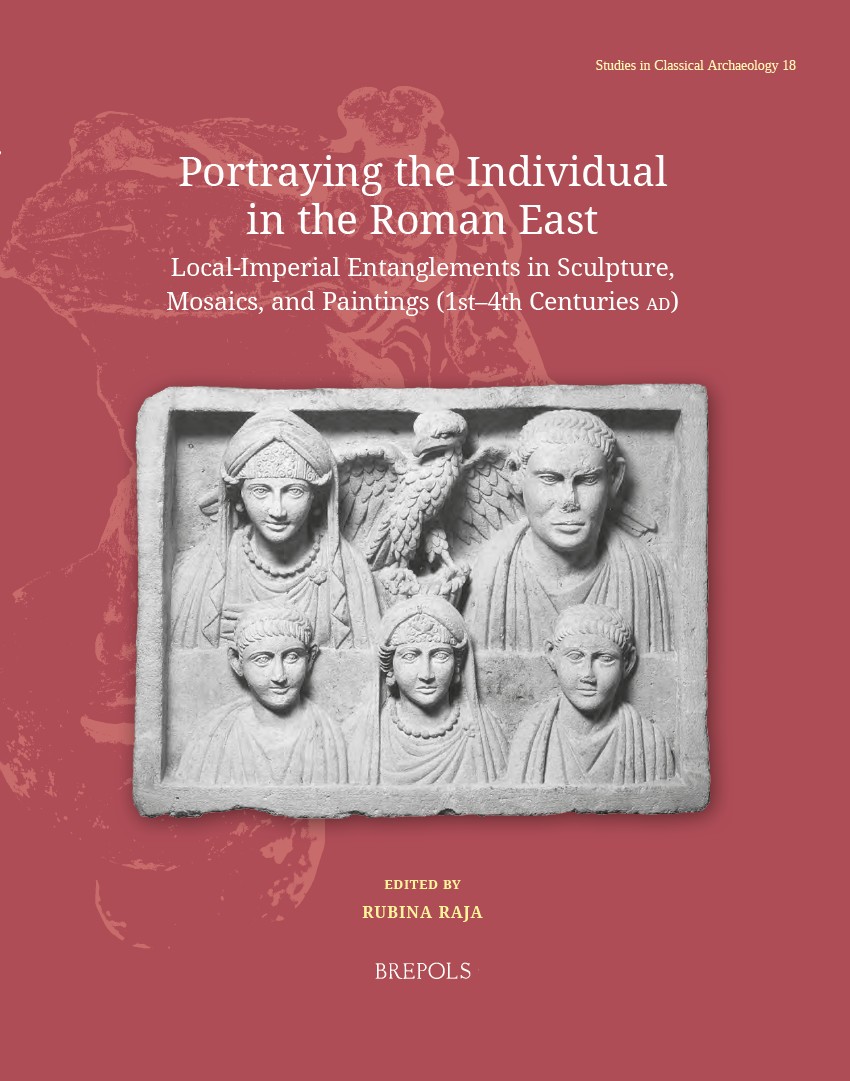 Portraying the Individual in the Roman East
Local–Imperial Entanglements in Sculpture, Mosaics, and Paintings (First–Fourth Centuries AD)
Volume 18