Waste and the Hygienic Imagination
Perspectives from American Literature and Culture
By (author) James M. Cochran
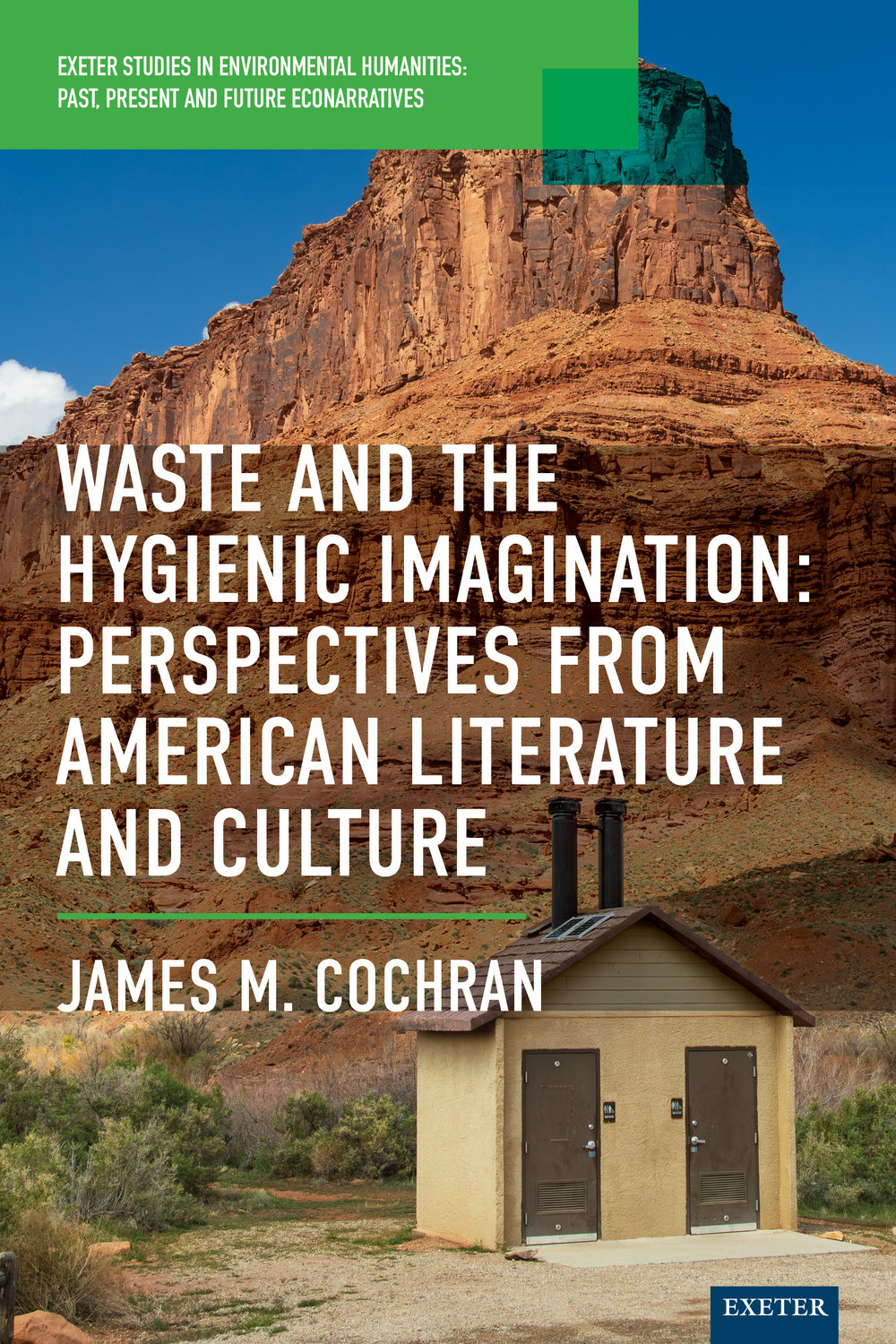
Hardback (Forthcoming)
(November 2026)
ISBN: 9781804132838
6.14 x 9.21 inches
Price: $110.00
PDF (No longer our product)
(November 2026)
ISBN: 9781804132852
Price: $110.00
This book considers how twentieth- and twenty-first century American literature uses a hygienic imagination, centering on waste and bathroom spaces, to address cultural, national, and ethical concerns. It argues that literary texts help to develop and to dismantle an idea of hygiene tied to morality, nationality and race.
Waste and the Hygienic Imagination examines how American writers—including J.D. Salinger, John Rechy, María Amparo Escandón, Toni Morrison, Jennifer Egan, and Craig Finn—have imagined waste and hygienic spaces as sites of negotiation for cultural anxieties around race, gender, sexuality, class, and the environment. Centering on twentieth-century and contemporary literary and cultural texts, the book argues that waste is not just a material condition but also a rhetorical concept that has powerful implications for how society treats marginalized individuals and communities.
Drawing from literary analysis, cultural studies, queer theories, religious studies, environmental studies, and waste studies, the volume traces how bathroom spaces and sanitation systems are represented in American texts. The analysis reveals cultural tension between purity and contamination, privacy and publicity, containment and openness. Reading cultural and literary texts alongside popular culture, advertising, and histories of sanitation, the book argues that the authors—to differing extents—question, resist, and reject a hygienic imagination that links marginalized people with waste. Instead, these authors offer more affirming models of hygienic discourse that views waste as necessary for ecological communities.
Waste and the Hygienic Imagination will appeal to readers and scholars of American literature, environmental humanities, cultural studies, and waste studies. The book offers a new framework—the hygienic imagination—to help readers understand culture’s complicated relationship with waste and to examine their own attitudes toward waste, hygiene, and bathroom spaces.
Introduction
1. ‘Our Little Chapel’: Privacy, Productivity, and Public Space in J.D. Salinger’s Bathrooms
2. ‘You can rot here’: Cleansing Projects, Dirty Responses, and Sacred Waste in John Rechy’s Early Fiction
3. ‘Tucked up there in the Bottom’: Environmental Racism, ‘Funk-y’ Metaphors of Waste, and Historiography as Waste-Recovery
4. ‘She appears to me in a rust stain on my bathroom wall’: Bathroom Messages in María Amparo Escandón's Esperanza’s Box of Saints
5. ‘Our hands are dirty’: 9/11, Clean Music, and Polluted Spaces in Jennifer Egan’s A Visit From the Goon Squad
6. ‘I was in the bathroom doing my best to ascend’: Sacred yet Profane Bathroom Spaces in the Music of Craig Finn
Conclusion
- By (author) James M. Cochran
Other Titles in this Series



Similar Books


 Ars Prophetica
Theology in the Poetry of Twentieth-Century Hebrew Poets Avraham Halfi, Shin Shalom, Amir Gilboa, and T. Carmi
 As Messianism Turns to Heresy
The Regenstein Chair Lectures On Lurianic Kabbalah and Shabbatai Tzevi at Hebrew Union College - Cincinnati

 Beyond Sovereign Courts
Agents and Practices in Early Modern Spanish and Habsburg Diplomacy
Volume 3

 Cahiers de littérature française
Les Métamorphoses du texte. Enjeux intertextuels et transpositions visuelles
Volume 25


 European Drama and Performance Studies
Dramatisations politiques. Théâtre, politique et idéologie au XIXe siècle (1806-1914)
Volume 27
 Food Security under Armed Conflict
Global Knowledge Landscape and Public Attention to Social, Economic, and Humanitarian Dimensions


 Innovationes Lovanienses: Arts, Law and Theology at the University of Louvain (1425–1797)
Studium Lovaniense: Learning across Borders, 2
Volume 18


 LiCArC
Trauma et création artistique : l’engagement des artistes arabes dans des dynamiques de résiliences
Volume 14