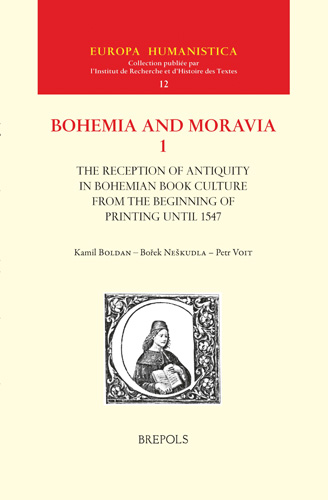
The Reception of Antiquity in Bohemian Book Culture from the Beginning of Printing until 1547
By (author) Kamil Boldan By (author) Borek Neskudla By (author) Petr Voit
Hardback (Published)
(March 2015)
ISBN: 9782503551791
6.06 x 9.45 inches
Price: $107.00
In stock
This volume presents the historical development and important personalities of the time of transition from manuscript book culture to book printing in the years 1450-1550. The first part of the volume contains a thorough description of historical, social and technical background influencing the development of book printing in Bohemia
This volume presents the historical development and important personalities of the time of transition from manuscript book culture to book printing in the years 1450-1550. The first part of the volume contains a thorough description of historical, social and technical background influencing the development of book printing in Bohemia and Moravia and the impact of book printing production on the contemporary Czech society. The authors described the specific historical conditions in the Kingdom of Bohemia after the pre-reformation Hussite movement. The newly emerged Utraquist confession spread in important parts of Bohemia which led to decrease of social and economic contacts between the Kingdom of Bohemia and Catholic states in Europe. Apart from that the decreased activity of Prague University had negative impact on literacy in Bohemia. These two main reasons were detrimental to the development of book printing in Bohemia. The low quality of first prints was not attractive for educated readers who rather chose better equipped foreign books, mainly in Latin. Book printing in Bohemia soon became a matter of closed Czech speaking public. One of the important consequences of this process was weak reception of humanism and classical antiquity in Czech culture, although the former was partly embraced in Bohemia in previous centuries anyway. The second part of the book presents the first printers and editors of printed books before 1550 with a summary of their publishing activities.
- By (author) Kamil Boldan
- By (author) Borek Neskudla
- By (author) Petr Voit
Other Titles in this Series

Similar Books


 Balthasar Caymox of Nuremberg
Early Modern German Print Publishers: Popular Prints of the Seventeenth Century
 Beyond Sovereign Courts
Agents and Practices in Early Modern Spanish and Habsburg Diplomacy
Volume 3

 Circulation, Use, Impact
The Consumption of Architectural Books in the Early Modern Eastern Adriatic
Volume 1


 Councils, Conflicts, Correspondence
Urban Diplomacy in Reval (Tallinn) and Lübeck (c. 1470–1570)
Volume 67


 Innovationes Lovanienses: Arts, Law and Theology at the University of Louvain (1425–1797)
Studium Lovaniense: Learning across Borders, 2
Volume 18
 Legal Visuality
Exegesis, Ambiguity, and Dissimulation of the Donation of Constantine in the Early Modern Period
 Monastic Manuscripts from the Eastern Mediterranean (Sinai, Jerusalem, Antioch)
Production, Use, and Contexts

 Naples as Laboratory / Laboratorium Neapel
Style Options, Artistic Rivalry and Self Fashioning in Neapolitan Baroque Painting / Plurale Stilbildung, Kunstlerkonkurrenz und Self Fashioning in der neapolitanischen Barockmalerei
 Power and Women in Southeast and Central Europe in Late Medieval and Early Modern Period (1300-1600)
Volume 10



 Staging the Spectacle of Majesty
Ceremonial, Courtly Space, and Collecting under the Spanish Habsburgs
Volume 9
 Students, Scholars and Their Books at the University of Louvain (1425-1797)
Studium Lovaniense: Learning across Borders, 1
Volume 17


 The Antiquarian Book-trade in Switzerland
Sir Thomas Phillipps's Acquisitions in the 1820s and their Later Dispersal
Volume 69


 The Embodied Court in the Premodern World
Understanding the Physicality, Performativity and Lifecycle of Bodies at Court in Europe and Beyond, 1400-1800
Volume 4

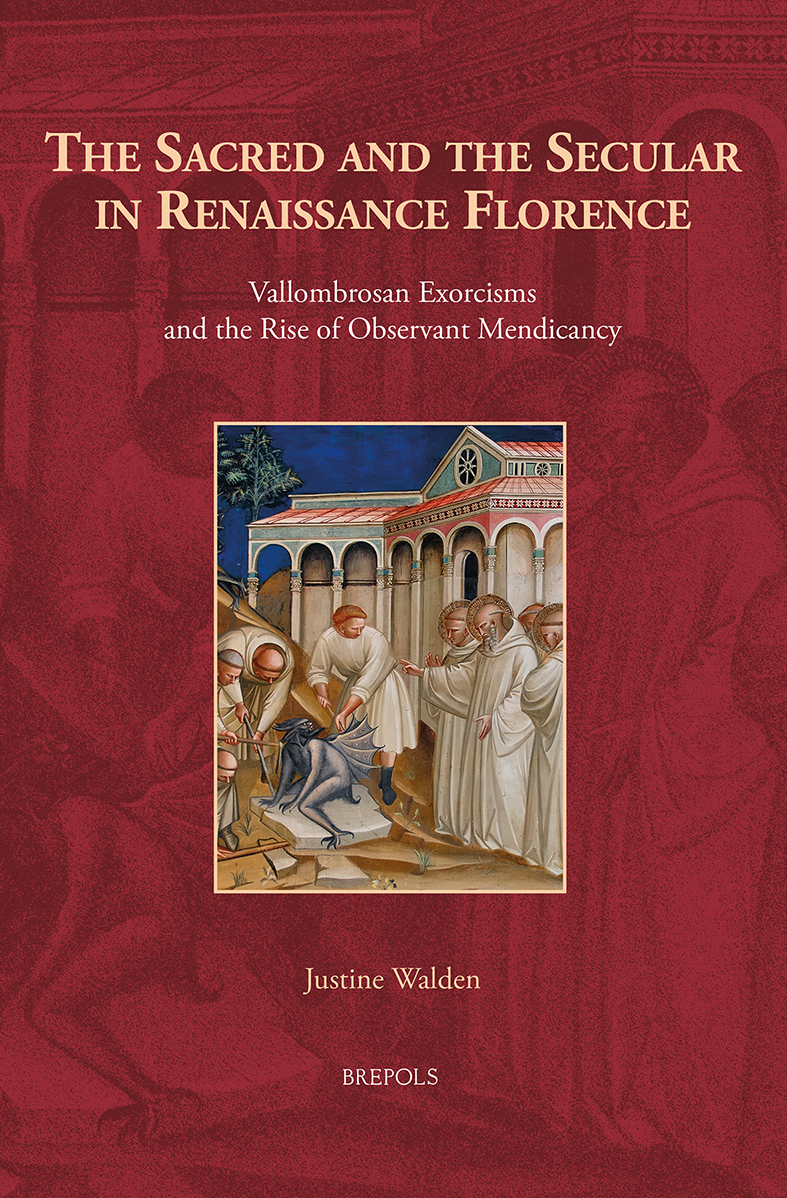 The Sacred and the Secular in Renaissance Florence
Vallombrosan Exorcisms and the Rise of Observant Mendicancy
Volume 31
 Tradition, Interpretation, and Change
Developments in the Liturgy of Medieval and Early Modern Ashkenaz