
The Hellenistic Schools and Thinking about Pagan Philosophy in the Middle Ages
A Study of Second-Order Influence
by John Marenbon

Paperback (Out of print)
(December 2012)
ISBN: 9783796528378
Price: $21.00
On back order
‘One theme central to the second-order influence of ancient on medieval philosophy is the contrast between the classical philosophers’ paganism and the medieval writer’s own Christian beliefs.’ John Marenbon ‘Second-order influence’ is the way in which writers think about previous authors and texts. Central to the second-order influence of ancient philosophy in the Middle Ages are the questions raised for the medieval thinkers by the fact that the ancient philosophers were pagans. These were especially difficult with regard to the thinkers of the Hellenistic schools (Sceptics, Stoics, Epicureans), whose fundamental ideas are more obviously at odds with Christianity than those of Plato and Aristotle. But, contrary to widespread belief among scholars, the Hellenistic philosophers were not simply ignored or rejected in the Middle Ages. This study looks at their second-order influence, especially on Abelard (who has a remarkably sympathetic attitude to Epicureanism), John of Salisbury (a professed Academic sceptic), thirteenth-century authors such as Albert the Great, Aquinas and John of Wales and Dante. It shows how these thinkers devised sophisticated strategies to appreciate and use the wisdom of philosophers whose views on many matters were abhorrent. In the case of Dante, however, it argues that he cast the Epicureans into a new and antagonistic role, as adversaries of human immortality, in order to safeguard.
- By (author) John Marenbon
Similar Books
 A Collaborative Tapestry in Honour of Shirley Ann Brown / Une fresque brodée en l’honneur de Shirley Ann Brown
The Bayeux Tapestry Seen by her Colleagues and Friends / La Tapisserie de Bayeux vue par ses collègues et amis

 Behind the Scenes of Medieval Roofs
An Overview of the Roofing Systems of Italian Churches
Volume 90








 Innovation and Medieval Communities
The Circulation of Ideas and Practices in and out of the Town (1200-1500)
Volume 63
 John Dunstaple Reading Boethius
John Dunstaple’s Annotations to Boethius’s “De institutione musica” in the Manuscript Oxford, Corpus Christi College Library, MS 118
 Linguistic and Cultural Dynamics in a Frontier Society
New Perspectives on Northeastern Bavaria and Western Bohemia in the Early Middle Ages
Volume 9

 Medieval Debates on Foreknowledge: Future Contingents, Prophecy, and Divination
Acts of the XXVII Annual Colloquium of the SIEPM, Trento 12-15 September 2023
Volume 31
 Medieval Yeghegis, Armenia
History, Archaeology, Society. Local Multiplicities and Global Connections of a Rural Centre on the Silk Road(s)




 Power and Women in Southeast and Central Europe in Late Medieval and Early Modern Period (1300-1600)
Volume 10



 The Anglo-Norman Bible’s Books of Kings, a Critical Edition
(BL Royal 1 C III, fols 234r-274v)
Volume 37


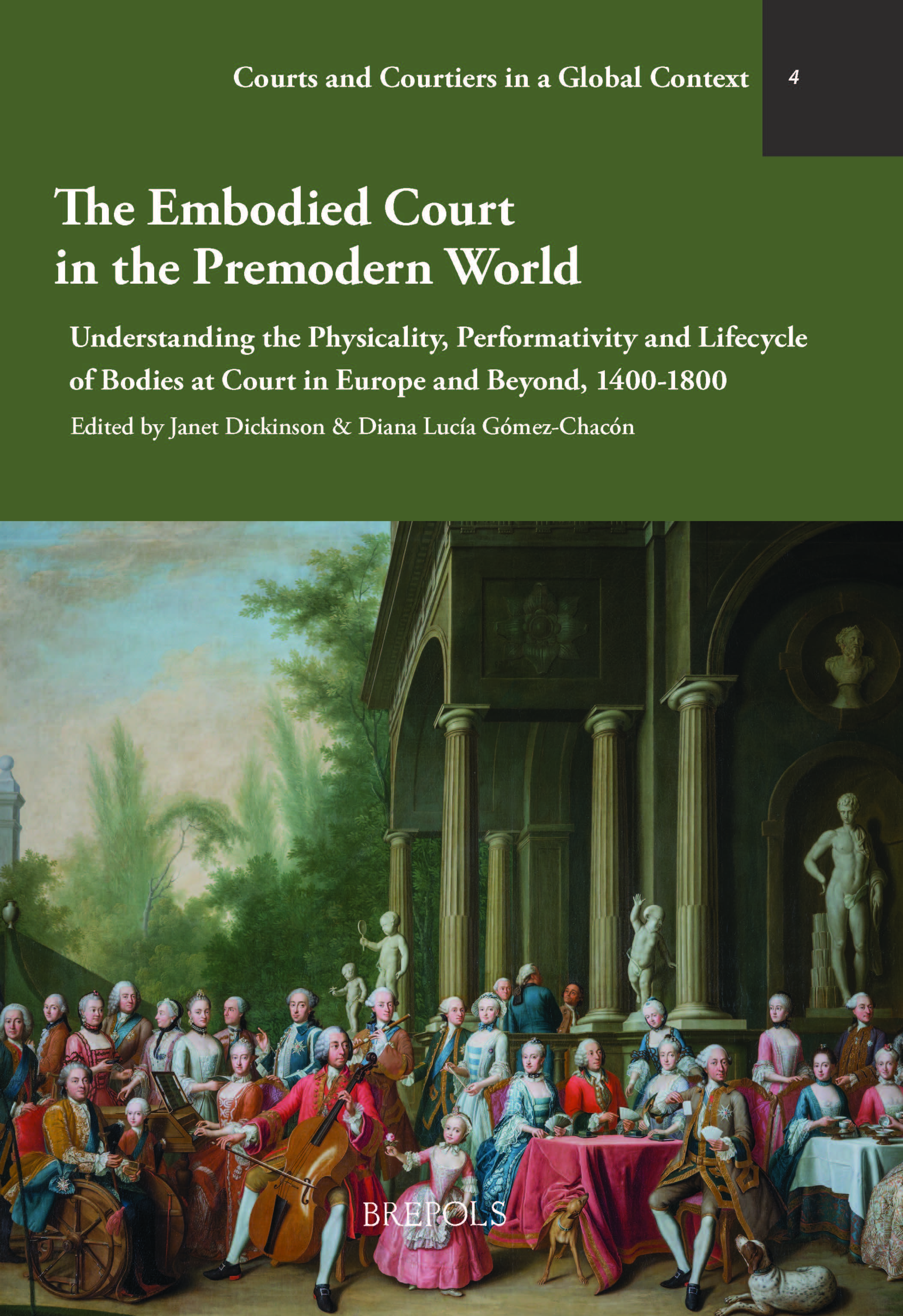 The Embodied Court in the Premodern World
Understanding the Physicality, Performativity and Lifecycle of Bodies at Court in Europe and Beyond, 1400-1800
Volume 4


 The Middle English ‘Medicines for Horses’
Edited from the Manuscript formerly at Kensington Palace, HRH Duke of Gloucester MS s.n. (olim York House MS 45)
Volume 69
