
The Handbook on Music Business and Creative Industries in Education
edited by Daniel Walzer

Creative arts research encompasses a broad range of sectors in the music and entertainment industries; subfields include performance, technology, entrepreneurship, marketing, and social justice. Globally, formal training for such pathways happens most often in higher education. The Handbook provides a practical and engaging resource for faculty, staff, administrators, graduate students, and industry members working on the “front lines” in teaching and learning. It presents a wide range of global perspectives from academics, BIPOC voices, and ECRs from the United States, the UK, Europe, Australia, and Canada.
Creative arts professions (music, media, and performance) remain in a period of flux. As the music industry and related fields adapt to changing business models, student interest in training for a career in the entertainment sector continues to rise. Though the expansion of global degree offerings in the creative industries expands each year, a “state of the field” on educational and pedagogical issues in the music business and the creative industries has yet to be created. Creative arts research encompasses a broad range of sectors in the music and entertainment industries; among these subfields include performance, technology, entrepreneurship, marketing, and social justice. Globally, formal training for such pathways happens most often in higher education.The Handbook provides a practical and engaging resource for faculty, staff, administrators, graduate students, and industry members working on the “front lines” in teaching and learning. It presents a wide range of global perspectives from academics, BIPOC voices, and ECRs from the United States, the UK, Europe, Australia, and Canada. Another factor that affects HE stakeholders is the absence of a versatile resource on the teaching and learning issues in music business and related fields. While The Handbook avoids overly prescriptive models of teaching and learning, the volume includes topical research through case studies, ethnographies, and a thorough cross-section of qualitative and quantitative methods. Such a resource may be germane particularly to educators transitioning from industry to faculty appointments in HE. Authors are encouraged to draw from their expertise and use narrative analysis to support their perspectives.
- Edited by Daniel Walzer
Other Titles in this Series




Similar Books


 As Messianism Turns to Heresy
The Regenstein Chair Lectures On Lurianic Kabbalah and Shabbatai Tzevi at Hebrew Union College - Cincinnati
 Beyond Sovereign Courts
Agents and Practices in Early Modern Spanish and Habsburg Diplomacy
Volume 3


 Food Security under Armed Conflict
Global Knowledge Landscape and Public Attention to Social, Economic, and Humanitarian Dimensions
 Friedlicher Handel oder umkämpfte Geschäfte?
Handel und Handelsrecht in der Vormoderne zwischen Krieg und Frieden


 Global Gulf
Geo-Economic, Geo-Political, and Geo-Technological Transformation in Saudi Arabia, the United Arab Emirates, and Qatar


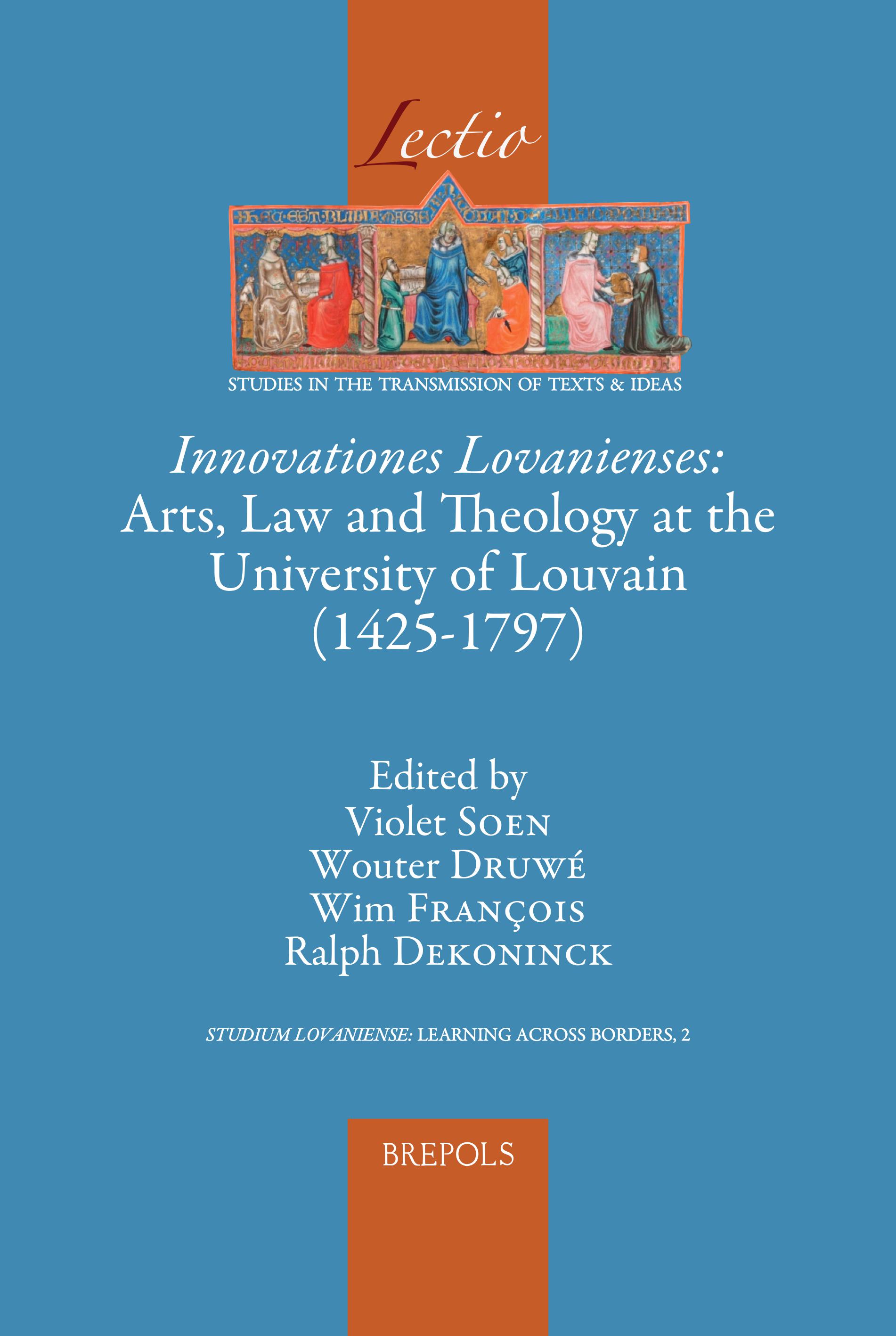 Innovationes Lovanienses: Arts, Law and Theology at the University of Louvain (1425–1797)
Studium Lovaniense: Learning across Borders, 2
Volume 18
 Invisible Labour in Antiquity
Visualizing Obscure Work in the Ancient Mediterannean and West Asia
Volume 1

 John Dunstaple Reading Boethius
John Dunstaple’s Annotations to Boethius’s “De institutione musica” in the Manuscript Oxford, Corpus Christi College Library, MS 118


 Music and Colonialism in Fascist Italy
Identity, Propaganda, and Ethnographic Representation
Volume 13



 Socio-économie du travail
La dégradation du travail au XXIe siècle ? Lectures contemporaines de Harry Braverman
Volume 17