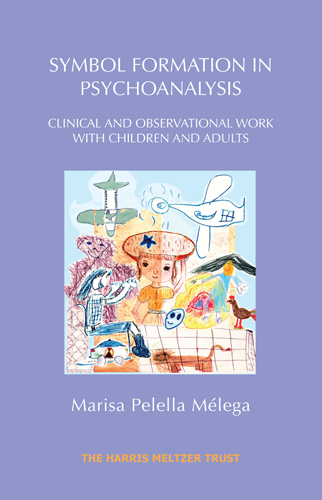
Symbol Formation in Psychoanalysis
Clinical and Observational Work with Children and Adults
By (author) Marisa Pelella Mélega
Paperback (Published)
(February 2023)
ISBN: 9781914901126
5.12 x 7.83 inches
Price: $24.00
On back order
The importance of symbol formation as a primary goal in psychoanalysis, and an indicator of developmental progress, is based on the post-Kleinian conviction that, since Bion’s theory of thinking and Meltzer’s elucidation of the role of ‘dream life’, focuses on the desire for knowledge as the resolution of emotional conflict.
Marisa Pelella Melega draws on a broad spectrum of clinical and observational work, gathered over many years as a practising and teaching psychoanalyst based in Sao Paulo, Brazil. The role of symbol formation as a goal in psychoanalysis, and an indicator of developmental progress, has always been recognised. The post-Kleinian understanding of its operation has advanced since Bion’s theory of thinking and Meltzer’s elucidation of the role of ‘dream life’, which view the desire for knowledge as the resolution of emotional conflict, with symbol formation being the primary mental mechanism. Melega discusses illustrative examples from newborn infants, children of different ages, adolescents and adults, to illustrate her longstanding fascination with the process of symbol formation and its vicissitudes, including those transference moments at which symbols are forged during the analytic session.
1. The concept of 'symbol' in the post-Kleinian model of the mind
2. The early symbolic mind
3. Vicissitudes in symbol formation in infancy
4. Symbol formation in child analysis
5. Children's drawings and the analyst
6. Symbol formation in the analytical process
7. Hindrances to symbol formation
Marisa Pelella Mélega is a psychiatrist, psychoanalyst in private practice and a Training Analyst and Supervisor at the Brazilian Psychoanalytic Society of São Paulo. She founded the São Paulo Mother–Baby Relationship Study Centre in 1987, receiving accreditation from the Centro Studi Martha Harris, in Rome. She teaches at the Brazilian Institute as a child psychoanalyst, 1996. Her clinical and research interests include applications of the Esther Bick observation model, as in assessment and therapeutic interventions with parents and children.
- By (author) Marisa Pelella Mélega
Similar Books
 Attics and Basements
The Evocative, Expressive and Embracing Functions of Homes and Other Human Dwellings
















 Die Erhebung und Bewertung von Zeugenaussagen im Strafprozess
Juristische, aussagepsychologische und psychiatrische Aspekte. Bd. 9





 Kann man Filterblasen platzen lassen?
101 Fragen und Antworten rund um Verschwörungstheorien, Fake News und ideologische Überzeugungen