
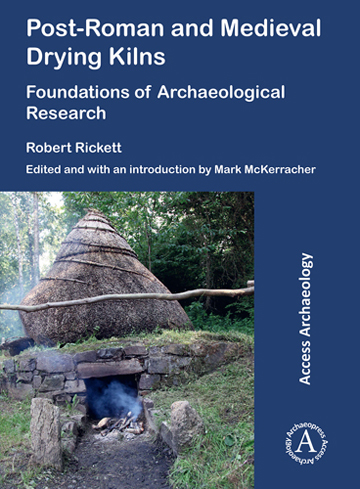
Post-Roman and Medieval Drying Kilns
Foundations of Archaeological Research
By (author) Robert Rickett Edited by Mark McKerracher
Paperback (Published)
(October 2021)
ISBN: 9781803270708
7.99 x 10.91 inches
Price: $48.00
In stock
Drying kilns, corn-dryers and malting ovens are familiar features in post-Roman, Anglo-Saxon and medieval archaeology, yet few works of synthesis are available. Robert Rickett’s pioneering dissertation is published here for the first time, with additional material from Mark McKerracher which sets the work within the context of more r
Drying kilns, corn-dryers and malting ovens are increasingly familiar features in post-Roman, Anglo-Saxon and medieval archaeology. Their forms, functions and distributions offer critical insights into agricultural, technological, economic and dietary history across the British Isles. Despite the significance and growing corpus of these structures, exceptionally few works of synthesis have been published. Yet such a foundational study was produced by Robert Rickett as early as 1975: an undergraduate dissertation which, for the first time, assembled a gazetteer of drying kilns from across the British Isles, critically examined this archaeological evidence in the light of documentary research, and established a typology and uniform terminology for drying kiln studies. This pioneering and oft-cited dissertation is here published for the first time, providing a foundation for the future study of drying kilns in Britain, Ireland and beyond. A new introduction and notes by Mark McKerracher set the original work within the context of drying kiln research since 1975.
Introduction Post-Roman and Medieval Drying Kilns Identifying drying kilns in archaeology Evidence of function Other functions, and relationship of kiln type to function Purposes of kiln drying Evidence of fuel Siting, and materials and methods of construction Construction of superstructure and drying floors Distribution, dating and origins Historical context Gazetteer of Drying Kilns Introduction to the Gazetteer Summary of types Type I K1: Stamford kiln 1 (Lincolnshire, England) K2: Stamford kiln 2 (Lincolnshire, England) K3: Stamford kiln 3 (Lincolnshire, England) K4: Great Casterton (Rutland, England) K5: Montgomery Castle (Powys, Wales) K6: Stamford kiln 4 (Lincolnshire, England) Type II K7: Barrow (Rutland, England) K8: Grafton Regis (Northamptonshire, England) K9: Brixworth (Northamptonshire, England) K10: Faxton (Northamptonshire, England) Type III K11: Nottingham Caves (Nottinghamshire, England) K12: Rue Farm (Dumfries, Scotland) K13: Sandal Castle (West Yorkshire, England) K14: Doncaster (South Yorkshire, England) K15: Nottingham (Nottinghamshire, England) K16: Stanhope (Co. Durham, England) Type IV K17: Alcester (Warwickshire, England) K18: Houndtor (Devon, England) K19: South Witham (Lincolnshire, England) K20: Ballymacash (Co. Antrim, Northern Ireland) K21: Beere (Devon, England) K22: Glenvoidean (Bute, Scotland) K23: Rathbeg (Co. Antrim, Northern Ireland) K24: Sandal Castle (West Yorkshire, England) K25: St Blane's (Bute, Scotland) K26: Buckden (Cambridgeshire, England) K27: Glen Parva (Leicestershire, England) Type V K28: Jarlshof (Shetland, Scotland) K29: Kirkstall Abbey (West Yorkshire, England) K30: Stretham (West Sussex, England) Type VI K31: Ballycatteen (Co. Cork, Ireland) Type VII K32: Doarlish Cashen (Isle of Man) K33: Highlight (Glamorgan, Wales) K34: Hullasey (Gloucestershire, England) K35: Letterkeen (Co. Mayo, Ireland) K36: Lundy Island (Devon, England) K37: Uisneach (Co. Westmeath, Ireland) K38: Underhoull (Shetland, Scotland) K39: Altmush (Co. Meath, Ireland) K40: Garranes (Co. Cork, Ireland) K41: Michelham Priory (East Sussex, England) K42: Tintagel (Cornwall, England) K43: Merthyr Dyfan (Glamorgan, Wales) Insufficient Evidence for Type K44: Alcester (Warwickshire, England) K45: Block Eary (Isle of Man) K46: Deddington Castle (Oxfordshire, England) K47: Inishkea North (Co. Mayo, Ireland) K48: Lincoln (Lincolnshire, England) K49: Northampton (Northamptonshire, England) K50: Rhuddlan (Denbighshire, Wales) K51: Scole (Norfolk, England) K52: Spaunton New Inn (North Yorkshire, England) K53: Sutton (Shropshire, England) K54: Thetford (Norfolk, England) K55: Wallingford Castle (Oxfordshire, England) Not Drying Kilns K56: Fountains Abbey (North Yorkshire, England) K57: Stamford (Lincolnshire, England) K58: Winchester (Hampshire, England) Appendix: The Brewhouse and Bakehouse at Grafton Regis, Northamptonshire Bibliography,
Introduction
Post-Roman and Medieval Drying Kilns
Identifying drying kilns in archaeology
Evidence of function
Other functions, and relationship of kiln type to function
Purposes of kiln drying
Evidence of fuel
Siting, and materials and methods of construction
Construction of superstructure and drying floors
Distribution, dating and origins
Historical context
Gazetteer of Drying Kilns
Introduction to the Gazetteer
Summary of types
Type I
Type II
Type III
Type IV
Type V
Type VI
Type VII
Insufficient Evidence for Type
Not Drying Kilns
Appendix: The Brewhouse and Bakehouse at Grafton Regis, Northamptonshire
Bibliography
Robert Rickett became interested in archaeology while he was at school in Stamford, Lincolnshire. After participating in several excavations, he went to University College, Cardiff, to study Archaeology and graduated in 1975. He worked on excavations in East Anglia before becoming a Research Officer for the Spong Hill Project (North Elmham, Norfolk), from 1977 to 1989. This included excavation supervision, archiving and publication work. Meanwhile his work in education with all age groups inspired him to study at U.E.A., Norwich, and from 1991 he taught in Primary Education.
Mark McKerracher is a Postdoctoral Researcher in the School of Archaeology at the University of Oxford, where he completed his DPhil – studying Mid Saxon agriculture – in 2014. After working in museum archiving, software development and freelance archaeobotany, he is currently researching medieval farming practices as part of the ERC-funded Feeding Anglo- Saxon England project (FeedSax). His interests include archaeobotany, database development, agricultural production and Anglo-Saxon archaeology.
- By (author) Robert Rickett
- Edited by Mark McKerracher
‘Overall, this is a fascinating and valuable study for which the author, editor and publisher are to be congratulated for making so widely available.’ – Stephen Rippon (2022): Medieval Archaeology, 66/1, 2022
—
'There is no up to date overview of medieval kilns for England or Scotland. I can only hope that future researchers will build on Rickett’s work, by creating a national database and adding to this the growing number of drying kilns discovered each year. This would then facilitate research and help reveal chronological changes in the distribution, prevalence, and function of these kilns in relation to the changing environmental and socio-political climate of each period and region, and thus help identify more clearly the role these structures played in the agricultural realities of the people living in the British Isles.' – Marijke van der Veen (2023): Agricultural History Review
—
Similar Books
 «Solazoxa festa, stradolze e stracomplia»
Festschrift für Raymund Wilhelm zum 65. Geburtstag mit Beiträgen zu Diskurstraditionen und mittelalterlicher Philologie
Volume 249
 A Collaborative Tapestry in Honour of Shirley Ann Brown / Une fresque brodée en l’honneur de Shirley Ann Brown
The Bayeux Tapestry Seen by her Colleagues and Friends / La Tapisserie de Bayeux vue par ses collègues et amis

 Behind the Scenes of Medieval Roofs
An Overview of the Roofing Systems of Italian Churches
Volume 90

 Cahiers de recherches médiévales et humanistes – Journal of Medieval and Humanistic Studies
Volume 51







 Innovation and Medieval Communities
The Circulation of Ideas and Practices in and out of the Town (1200-1500)
Volume 63
 John Dunstaple Reading Boethius
John Dunstaple’s Annotations to Boethius’s “De institutione musica” in the Manuscript Oxford, Corpus Christi College Library, MS 118

 Medieval Debates on Foreknowledge: Future Contingents, Prophecy, and Divination
Acts of the XXVII Annual Colloquium of the SIEPM, Trento 12-15 September 2023
Volume 31

 Medieval Yeghegis, Armenia
History, Archaeology, Society. Local Multiplicities and Global Connections of a Rural Centre on the Silk Road(s)
 Nicholas of Lyra’s Commentaries on the Gospels of Matthew and Luke
Franciscan Exegesis in a Time of Crisis



 Power and Women in Southeast and Central Europe in Late Medieval and Early Modern Period (1300-1600)
Volume 10





 The Anglo-Norman Bible’s Books of Kings, a Critical Edition
(BL Royal 1 C III, fols 234r-274v)
Volume 37