
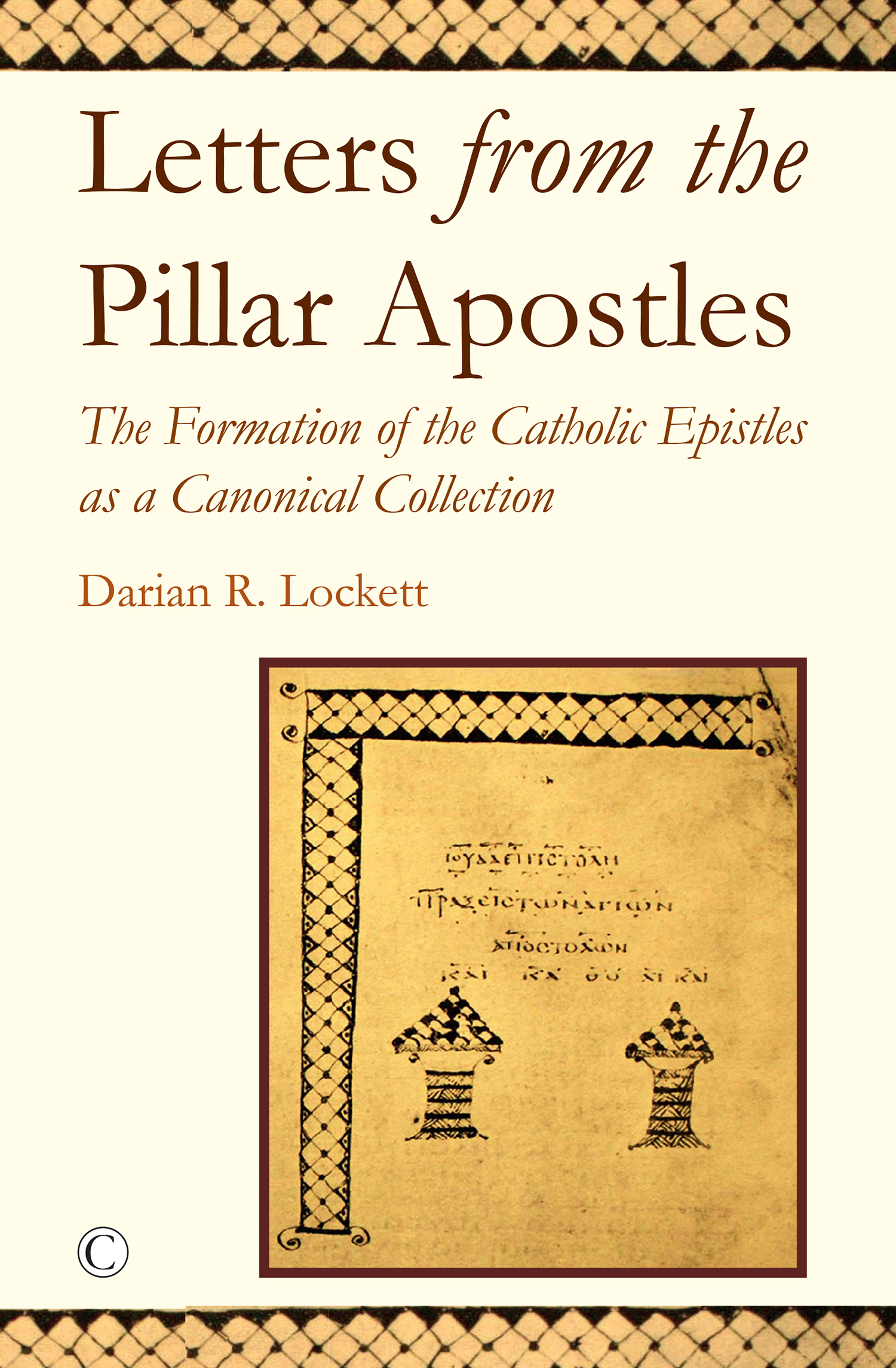
Letters from the Pillar Apostles
The Formation of the Catholic Epistles as a Canonical Collection
by Darian R. Lockett
Paperback (No longer our product)
(November 2017)
ISBN: 9780227176740
5.98 x 9.02 inches
Price: $38.00
On back order
A study of the Catholic Epistles that views them not as isolated texts but as a collection unified by their canonical context within the New Testament.
Rather than reading the Catholic Epistles in isolation from each other – understanding their individual historical situations as the single, determinative context for their interpretation – this study argues that a proper understanding of these seven letters must equally attend to their collection and placement within the New Testament canon. Resisting the judgment of much of historical-critical analysis of the New Testament, namely that the concept of canon actually obscures the meaning of these texts, it is the canonical process by which the texts were composed, redacted, collected, arranged, and fixed in a final canonical form that constitutes a necessary interpretive context for these seven letters. This study argues that through reception history and paratextual and compositional evidence one can discern a collection consciousness within the Catholic Epistles such that they should be read and interpreted as an intentional, discrete canonical sub-collection set within the New Testament. Furthermore, the work argues that such collection consciousness, though not necessarily in the preview of the original authors (being perhaps unforeseen, yet not unintended), is neither anachronistic to the meaning of the letters nor antagonistic to their composition.
- By (author) Darian R Lockett
"Too often the Catholic apostles are slighted in NT scholarship. Lockett, who is deeply conversant with the scholarly literature on these Epistles, considers the canonical shaping of these Epistles. ... Lockett rightly shows that the canonical shaping of these Epistles invites a canonical reading, and such a reading is enriching both from a literary and theological perspective."THOMAS R. SCHREINER, Southern Baptist Theological Seminary"Darian Lockett has written a fascinating study of the Catholic Epistles from the canon critical point of view. I cannot think of anyone who could do that better than he. The result is clear, complete, and compelling."PETER H. DAVIDS, Our Lady of Walsingham Catholic Church, Houston"In this important monograph, Darian Lockett illuminates the case for canonical interpretation on several fronts: by proposing a promising approach to thinking through the idea of canon; by articulating a case for treating the Catholic Epistles as a distinct, early letter collection; and by highlighting fascinating connections among the letters themselves."A. K. M. ADAM, University of Oxford"Darian Lockett opens new insights from his fascinating, fresh reading of the Catholic Epistles as a corpus."KARL WILHELM NIEBUHR, Friedrich-Schiller-University Jena, Germany
—
Similar Books




 Cyril of Alexandria’s Christological Exegesis
Explorations of Partitive Exegesis in the Dialogues on the Trinity
Volume 70


 Extracanonical Traditions and the Holy Land
Texts, Rituals, and Material Culture in Late Antique Palestine
 From Joseph to Jesus
The Joseph Narrative as a Compositional Template from Old Greek Esther to the Gospel of Luke
Volume 125


 Nicholas of Lyra’s Commentaries on the Gospels of Matthew and Luke
Franciscan Exegesis in a Time of Crisis

 Punning in Odd or Elegant Constructions in Jeremiah
The Convergence of Linguistics, Rhetoric, and Textuality in the Hebrew Text of Jeremiah


 Reformed Covenantal Eudaimonism
Wilhelmus à Brakel (1635–1711) on Highest Good, Virtue, and Law
Volume 87


 The Biblical Tale of Judah and Tamar in Fourteenth-Century Iran
A Judeo-Persian Versified Account by Shāhīn with Scholarly Edition, Annotated Translation and Persian Transliteration
Volume 94, 951
 The Body
Lived, Cultured, Adorned: Essays on Dress and the Body in the Bible and Ancient Near East in Honor of Nili S. Fox






 The Therapeutae as the Best Paradigm for the Contemplative Life
A Contextual Reading of Philo of Alexandria's De Vita Contemplativa

