
Historisches Worterbuch der Philosophie (HWPH). Band 1, A-C
edited by Joachim Ritter

The Historical Dictionary of Philosophy (HWPh), compiled between 1971 and 2007 with the collaboration of more than 1,500 scholars, is one of the most comprehensive, significant, and successful publication projects in recent German-speaking humanities. Unlike other lexicons or encyclopedias, the HWPh is not based on a history of philosophical ideas or problems, but on the history of philosophical concepts. Comprising 12 text volumes and a concluding index volume, the lexicon documents the origins and genesis of a total of 3,670 philosophical terms in 17,144 columns and approximately 6,000 articles, using numerous precise references and references, and describes the changes in their meaning and function from their first appearance to the present day. The concept of the conceptual history method makes it possible to trace both the synchronic position and meaning of individual terms in specific epochs or among specific philosophers, as well as their diachronic changes in meaning within the history of Western philosophy. In order to illustrate the specifically philosophical conceptual work in the context of the entire scientific system, concepts from adjacent disciplines – theology, psychology, pedagogy, sociology, history and art history, politics, jurisprudence, medicine and the natural sciences – are also discussed.
- Edited by Joachim Ritter
Similar Books


 Drunk the Potion, No Whit Charmed
The Doctrine of Pure and Perfect Souls from Iamblichus to Damascius


 Libertinage et philosophie à l’époque classique (XVIe-XVIIIe siècle)
Athéisme, Modernité et Sécularisation / Atheism, Modernity and Secularization
Volume 23

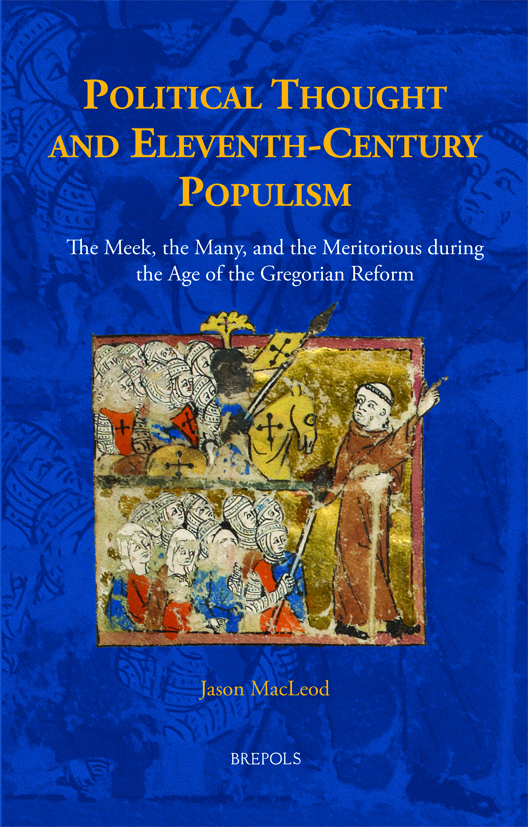 Political Thought and Eleventh-Century Populism
The Meek, the Many, and the Meritorious during the Age of the Gregorian Reform
Volume 38


 The Latin Hermes in Translation
Asclepius, Glosses on Trismegistus, Book of Six Principles of Things, Book of 24 Philosophers
Volume 50

![Book cover: Transitive Media [Philosophy]](https://isd.stisonbooks.com/images/books/native/9781804132333.jpg?asset_id=66970)


 Éthique, politique, religions
Superstition (XVIIe - XXIe siècles). Sémantique, histoires et cultures


 Lehrreiche Literatur
Die didaktische Gestaltung von Plutarchs Quaestiones Graecae und Romanae und Gellius' Noctes Atticae


 Sitten zwischen Moralphilosophie und Politischer Okonomie am Ende des 18. Jahrhunderts
Mit einer zweisprachigen Edition von Ludwig Heinrich Jakobs Preisschrift Quelles sont les institutions les plus propres a fonder la morale d'un peuple

 Theologische Anthropologie in G. E. Lessings Frühwerk
Literarische Bilder von Gemeinschaft und Nonkonformität, Glück und Sünde