
Formenwelt des Dialogs
Contributions by Dirk Baecker Contributions by Andreas Becker Contributions by Jens Birkmeyer Contributions by Thomas Combrink Contributions by Georges Didi-Huberman Contributions by Jean-Pierre Dubost Contributions by Julia Haugeneder Contributions by Michael Jennings Contributions by Lisa Kammann Contributions by Vincent Pauval Contributions by Valentin Mertes Contributions by Nils Plath Contributions by Barbara Potthast Contributions by Edgar Reitz Contributions by Rolf G. Renner Contributions by Christian Schulte Contributions by Stefanie Schmitt Contributions by Winfried Siebers Contributions by Ulrike Sprenger Contributions by Bernard Stiegler Contributions by Rainer Stollmann Contributions by Matthias Uecker Contributions by Dorothea Walzer Contributions by Beata Wiggen Contributions by Florian Wobser Contributions by Alexander Kluge Edited by Christian Schulte Edited by Winfried Siebers Edited by Valentin Mertes Edited by Stefanie Schmitt
Paperback (Published)
(September 2016)
ISBN: 9783847106364
6.1 x 9.13 inches
Price: $50.00
On back order
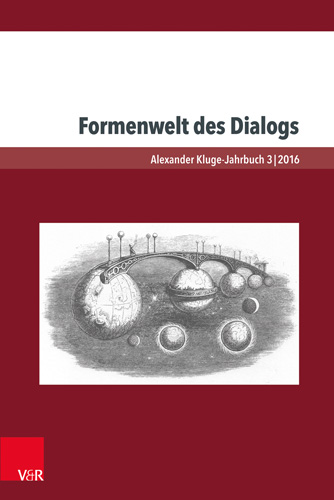
Alexander Kluges’ multimedia work in film, television, theory and literature can be understood as a model case of self-reflective authorship. This is created by a specific gestus expressed by citing external materials – torn from their original context – exposed as discernible fragments. Homogeneous compilations of works are deconstructed, the exploded pieces of material transferred into open, spacious mosaic-like montages. This volume investigates Kluges’ aesthetic method as an intermediate exercise for drafting a model of communicational publicness.
Alexander Kluges multimediales Werk (Film, Fernsehen, Theorie und Literatur) kann als Modellfall einer selbstreflexiven Autorschaft begriffen werden. Diese entsteht durch einen spezifischen Gestus der Zitation fremder Materialien, die – aus ihrem ursprunglichen Kontext herausgerissen – als erkennbare Fragmente ausgestellt werden. Homogene Werkzusammenhange werden dekonstruiert, die herausgesprengten Materialien in offene, weitraumige Montagezusammenhange transferiert. Der Band untersucht Kluges asthetische Verfahren als eine intermediale Praxis, die ein Modell kommunizierender Offentlichkeit entwirft.
- Contributions by Dirk Baecker
- Contributions by Andreas Becker
- Contributions by Jens Birkmeyer
- Contributions by Thomas Combrink
- Contributions by Georges Didi-Huberman
- Contributions by Jean-Pierre Dubost
- Contributions by Julia Haugeneder
- Contributions by Michael Jennings
- Contributions by Lisa Kammann
- Contributions by Vincent Pauval
- Contributions by Valentin Mertes
- Contributions by Nils Plath
- Contributions by Barbara Potthast
- Contributions by Edgar Reitz
- Contributions by Rolf G. Renner
- Contributions by Christian Schulte
- Contributions by Stefanie Schmitt
- Contributions by Winfried Siebers
- Contributions by Ulrike Sprenger
- Contributions by Bernard Stiegler
- Contributions by Rainer Stollmann
- Contributions by Matthias Uecker
- Contributions by Dorothea Walzer
- Contributions by Beata Wiggen
- Contributions by Florian Wobser
- Contributions by Alexander Kluge
- Edited by Christian Schulte
- Edited by Winfried Siebers
- Edited by Valentin Mertes
- Edited by Stefanie Schmitt
Other Titles in this Series


Similar Books



 Ars Prophetica
Theology in the Poetry of Twentieth-Century Hebrew Poets Avraham Halfi, Shin Shalom, Amir Gilboa, and T. Carmi
 Balthasar Caymox of Nuremberg
Early Modern German Print Publishers: Popular Prints of the Seventeenth Century


 Cahiers de l’Association internationale des études françaises
J. M. G. Le Clézio - Enseigner les littératures francophones aujourd’hui - Récit de soi et expérience de l’illusion (XVIIe-XVIIIe siècles)
Volume 78
 Cahiers de littérature française
Les Métamorphoses du texte. Enjeux intertextuels et transpositions visuelles
Volume 25
 Cahiers de recherches médiévales et humanistes – Journal of Medieval and Humanistic Studies
Volume 51
 Cahiers de sémiotique des cultures
Ponctuation et sens. Nouvelles perspectives / Punctuation and meaning. New perspectives
Volume 6


 CompLit
Myth, Folklore and Magic in European Literatures. Critical and Contemporary Reconfigurations

 Constitutional Conflict as Judicial Civil Disobedience and Conscientious Objection
Reconceptualising National Constitutional Court Rulings in the European Union Legal Space


 Dis/United States of Vulnerability
Literary and Cultural Transgressions in U.S. Poetry Since the 1960s
Volume 330


 European Drama and Performance Studies
Dramatisations politiques. Théâtre, politique et idéologie au XIXe siècle (1806-1914)
Volume 27

 Formulary apportionment in international tax law
An allocation method for the age of globalization and digitalization
Volume 210


 Hofmann oder Vorkämpfer der „philosophes“?
Deutsche Voltaire-Bildnisse und -Imaginationen im Zeitalter der Aufklärung

