
Creation and Beauty in Tolkien’s Catholic Vision
A Study in the Influence of Neoplatonism in J.R.R. Tolkien's Philosophy of Life as 'Being and Gift'
by Michael Halsall
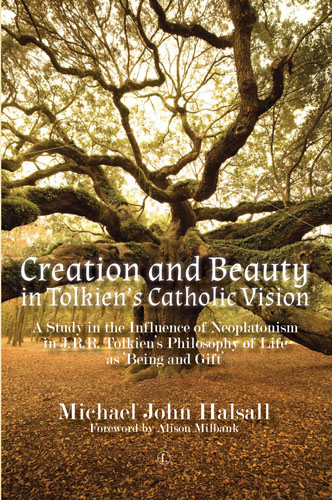
Paperback (No longer our product)
(September 2020)
ISBN: 9780718895525
5.98 x 9.02 inches
Price: $45.00
In stock
An exploration of how Tolkien’s mythology reflects his intellectual background in the philosophical traditions of Roman Catholicism.
This book hopes to invite readers into Tolkien’s world through the lens of a variety of philosophers, of all of whom owe a rich debt to the Neoplatonic philosophical tradition. It places Tolkien’s mythology against a wider backdrop of catholic philosophy and asks serious questions as to the nature of creation alongside the nature of God, what it means to be good, and concerning the problem of evil. This book attempts to set Tolkien alongside both his contemporaries and ancient authors, and how he used similar literary devices in order to express his desire to create a “mythology for England.”
Michael Halsall is a Catholic priest and teaches philosophy at Allen Hall, London.
- By (author) Michael Halsall
"This is a rich engagement at all levels with Tolkien, full of suggestive comparisons with the tradition of the music of the spheres and with the modernist music of his own time. It is deeply scholarly but clear and accessible. And it is both Catholic in relating Tolkien to Catholic theology, including Maritain, and the Thomism of the early twentieth century, but also in its range of reference, which does full justice to Tolkien's intellectual background and his generosity of spirit, which had room for wild-men and oliphants, wereworms and Barliman's best bitter, all with the mark of createdness upon them, gifted to his readers."From the Foreword by Alison Milbank, University of Nottingham
—
Similar Books

 A Companion to Christianity and Sport in Europe and North America (19th-21st centuries)
Volume 1: Western and Eastern Europe
 A Connecting Polemic in the Medieval Mediterranean
The Correspondence of Leo III and ʿUmar II
Volume 6







 Ars Prophetica
Theology in the Poetry of Twentieth-Century Hebrew Poets Avraham Halfi, Shin Shalom, Amir Gilboa, and T. Carmi
 As Messianism Turns to Heresy
The Regenstein Chair Lectures On Lurianic Kabbalah and Shabbatai Tzevi at Hebrew Union College - Cincinnati


 Cahiers de l’Association internationale des études françaises
J. M. G. Le Clézio - Enseigner les littératures francophones aujourd’hui - Récit de soi et expérience de l’illusion (XVIIe-XVIIIe siècles)
Volume 78
 Cahiers de littérature française
Les Métamorphoses du texte. Enjeux intertextuels et transpositions visuelles
Volume 25
 Cahiers de recherches médiévales et humanistes – Journal of Medieval and Humanistic Studies
Volume 51
 Cahiers de sémiotique des cultures
Ponctuation et sens. Nouvelles perspectives / Punctuation and meaning. New perspectives
Volume 6


