Closure in the Canterbury Tales
The Role of The Parson's Tale
Edited by David Raybin Edited by Linda Tarte Holley

Paperback (Published)
(July 2000)
ISBN: 9781580440127
6.14 x 9.21 inches
Price: $29.95
In stock
Hardback (Published)
(July 2000)
ISBN: 9781580440110
6.1 x 9.17 inches
Price: $29.95
On back order
For all its spiritual cheerfulness and obvious importance as a tale to conclude tales, The Parson’s Tale seems to have inspired sentence and solaas in remarkably few critics. . This rethinking of traditional scholarship on The Canterbury Tales will be of great interest to Chaucer scholars and students of medieval literature.
For all its spiritual cheerfulness and obvious importance as a tale to conclude tales, a last word from a notable maker of words, The Parson’s Tale seems to have inspired sentence and solaas in remarkably few critics. This volume rejects the tradition that assumes the tale to be of questionable literary value. The studies included span the range of Parson’s Tale criticism from the textual, to the philological, to the hermeneutical. What they share is the assumption that if one is to understand the role of The Parson’s Tale, one must begin by accepting the language and method by which Chaucer fashioned it. This rethinking of traditional scholarship on this crucial aspect of The Canterbury Tales will be of great interest to Chaucer scholars and students of medieval literature.
Acknowledgments Introductions
David Raybin and Linda Harte Holley The Parson's Tale in Current Literary Studies
Siegfried Wenzel Manye been the weyes: The Flower, Its Roots, and the Ending of the Canterbury Tales
David Raybin The Parson's Tale and Its Generic Affiliations
Richard Newhauser Prolegomenon to a Print History of the Parson's Tale: The Novelty and Legacy of Wynkyn de Worde's Text
Daniel J. Ransom The Words of the Parson's Vertuous Sentence
Peggy Knapp Chaucer's Parson and the Idiosyncracies of Fiction
Judith Ferster Dropping the Personae and Reforming the Self: The Parson's Tale and the End of the Canterbury Tales
Gregory Roper The goode wey: Ending and Not-Ending in the Parson's Tale
Charlotte Gross Epilogue: Closing the Eschatological Account
Linda Tarte Holley
Bibliography of Scholarship Treating the Parson's Tale
David Raybin Contributors Index, Acknowledgments
Introduction by David Raybin and Linda Tarte Holley
The Parson's Tale in Current Literary Studies by Siegfried Wenzel
"Manye been the weyes": The Flower, Its Roots, and the Ending of The Canterbury Tales by David Raybin
The Parson's Tale and Its Generic Affiliations by Richard Newhauser
Prolegomenon to a Print History of the Parson's Tale: The Novelty and Legacy of Wynkyn de Worde's Text by Daniel J. Ransom
The Words of the Parson's "Vertuous Sentence" by Peggy Knapp
Chaucer's Parson and the "Idiosyncracies of Fiction" by Judith Ferster
Dropping the Personae and Reforming the Self: The Parson's Tale and the End of The Canterbury Tales by Gregory Roper
"The goode wey": Ending and Not-Ending in the Parson's Tale by Charlotte Gross
Epilogue: Closing the Eschatological Account by Linda Tarte Holley
Bibliography of Scholarship Treating the Parson's Tale by David Raybin
Contributors
Index
- Edited by David Raybin
- Edited by Linda Tarte Holley
Other Titles in this Series


 Authority of Images / Images of Authority
Shaping Political and Cultural Identities in the Pre-Modern World
 The “Other Tuscany”
Essays in the History of Lucca, Pisa, and Siena during the Thirteenth, Fourteenth, and Fifteenth Centuries


 The Salt of Common Life
Individuality and Choice in the Medieval Town, Countryside, and Church: Essays Presented to J. Ambrose Raftis


Similar Books
 A Collaborative Tapestry in Honour of Shirley Ann Brown / Une fresque brodée en l’honneur de Shirley Ann Brown
The Bayeux Tapestry Seen by her Colleagues and Friends / La Tapisserie de Bayeux vue par ses collègues et amis


 Ars Prophetica
Theology in the Poetry of Twentieth-Century Hebrew Poets Avraham Halfi, Shin Shalom, Amir Gilboa, and T. Carmi
 Behind the Scenes of Medieval Roofs
An Overview of the Roofing Systems of Italian Churches
Volume 90


 Cahiers de littérature française
Les Métamorphoses du texte. Enjeux intertextuels et transpositions visuelles
Volume 25




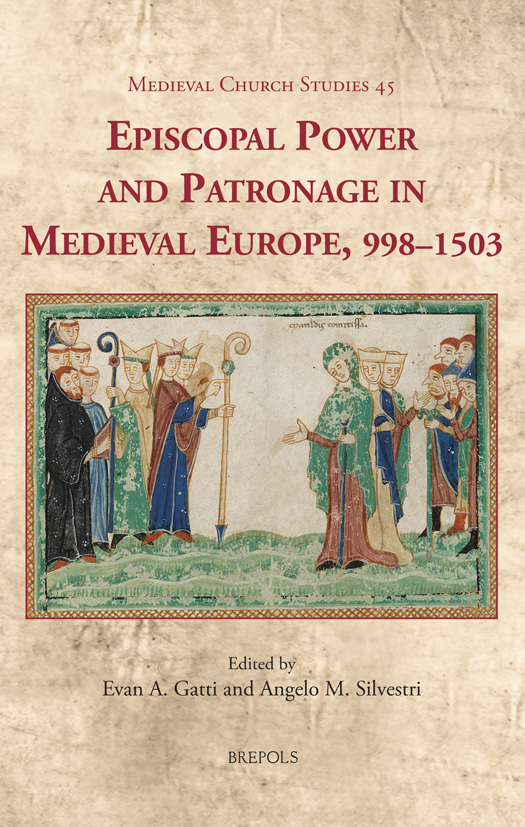


 European Drama and Performance Studies
Dramatisations politiques. Théâtre, politique et idéologie au XIXe siècle (1806-1914)
Volume 27


 Innovation and Medieval Communities
The Circulation of Ideas and Practices in and out of the Town (1200-1500)
Volume 63
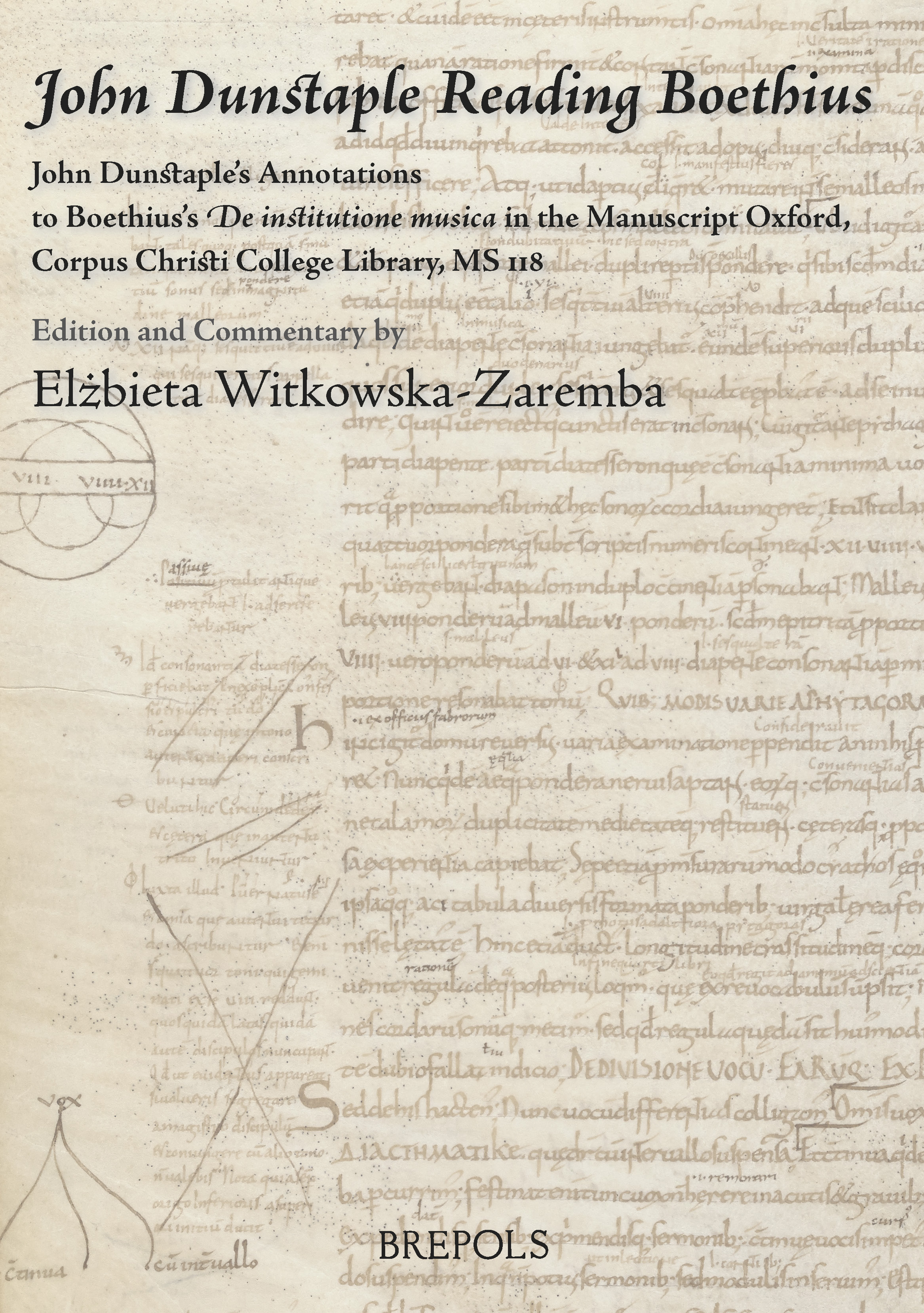 John Dunstaple Reading Boethius
John Dunstaple’s Annotations to Boethius’s “De institutione musica” in the Manuscript Oxford, Corpus Christi College Library, MS 118


 LiCArC
Trauma et création artistique : l’engagement des artistes arabes dans des dynamiques de résiliences
Volume 14

 Linguistic and Cultural Dynamics in a Frontier Society
New Perspectives on Northeastern Bavaria and Western Bohemia in the Early Middle Ages
Volume 9