
Claus Oetke
Truth Paradoxes, Meaning, and Interpretation. Two Essays
edited by Wolfgang Kunne and Ernst Steinkellner

Die beiden Aufsatze in diesem Buch haben ein gemeinsames philosophisches Anliegen. Wahrend der erste Aufsatz einem Problem der systematischen Philosophie gewidmet ist, geht es im zweiten vor allem um die Interpretation einer spezifischen Fragestellung, die in einer bestimmten indischen philosophischen Tradition artikuliert wird. Im ersten Aufsatz konzentriert sich Oetke auf einen Fragenkomplex, der die Philosophie beschaftigt, seit ein Kreter behauptete, kein Kreter sage die Wahrheit. Da die Diskussion uber die Familie der Wahrheitsparadoxa in der Logik und der analytischen Philosophie des 20. Jahrhunderts sehr intensiv gefuhrt wurde, hatte man keine grundlegend neuen Einsichten in den Ursprung und die Reichweite dieser Paradoxa erwartet, und doch ist es genau das, was dieser Aufsatz bietet, indem er die Notwendigkeit betont, verschiedene Arten von Bedeutung zu unterscheiden. Der zweite Aufsatz befasst sich mit Fragen der Hermeneutik klassischer Texte. Ausgangspunkt ist Oetkes abschliessender (unveroffentlichter) Kommentar zu einer Reihe von Artikeln im Journal of Indian Philosophy, die sich mit der Interpretation des sadvitiyaprayoga (“Beweisformulierung, die ein Gegenstuck nach sich zieht”) beschaftigen. Oetke verallgemeinert den Punkt seiner kritischen Beobachtungen, indem er die Relevanz der Anerkennung verschiedener Arten von Bedeutung und Interpretation in der Forschungsmethodik nicht nur in der Geschichte der indischen Philosophie aufzeigt. Sein Aufsatz ist ein wesentlicher Beitrag zur zeitgenossischen Literatur zur Methodologie in der Geschichte der Philosophie im Allgemeinen. The two essays in this book are united by a common philosophical concern. While the first is dedicated to a problem in systematic philosophy, the second mainly deals with the interpretation of a specific issue articulated in a certain Indian philosophical tradition. In the first essay Oetke focusses on a complex of questions that occupied philosophy ever since a Cretan asserted that no Cretan tells the truth. Since the discussion of the family of truth paradoxes was very intensive in 20th century logic and analytical philosophy, one would not have expected essentially new insights into the source and the range of those paradoxes, and yet this is exactly what this essay offers by emphasizing the need to distinguish different types of meaning. The second essay addresses issues in the hermeneutics of classical texts. It takes its start from Oetke’s final (unpublished) comment on a series of articles in the Journal of Indian Philosophy that deal with the interpretation of the sadvitiyaprayoga (“proof-formulation that entails a counterpart”). Oetke generalizes the point of his critical observations by showing the relevance of acknowledging diverse types of both meaning and interpretation in the methodology of research not only in the history of Indian philosophy. His essay is a substantial contribution to the contemporary literature of methodology in the history of philosophy in general.
- Edited by Wolfgang Kunne
- Edited by Ernst Steinkellner
Other Titles in this Series
 Transmission and Tradition
Quotations, Paraphrases and Allusions in Texts on Indian Philosophy
Volume 926

 Experimental, Acquisitional and Corpus linguistic Approaches to the Study of Morphonotacti
Volume 915
 Freie Nomaden, edle Rauber, skrupellose Sklavenjager
Zur Darstellung der Turkmenen in Reiseberichten aus dem 19. Jahrhundert
Volume 833

 Die bohmischen Lander in den Wiener Zeitschriften und Almanachen des Vormarz (1805-1848), Teil 3
Kunst: Tschechische nationale Wiedergeburt - Kultur- und Landeskunde von Bohmen, Mahren und Schlesien - Kulturelle Beziehungen zu Wien
Volume 855

 What is beyond the River?
Power, Authority, and Social Order in Transoxiania 18th-19th Centuries
Volume 877
 Cultural Politics, Transfer, and Propaganda
Mediated Narratives and Images in Austrian-American Relations
Volume 916


 The Intellectual Heritage of the Ancient Near East
Proceedings held at the 64th Rencontre Assyriologique Internationale and the 12th Melammu Symposium, University of Innsbruck, July 16-20, 2018
Volume 924


 Das Regionale konstruieren
Formen und Funktionen von Heimatschutz-, Reform- und vernakularer Architektur
Volume 940

 Formen hofischer Historiographie im 16. Jahrhundert
Geschichtsschreibung unter den fruhen Safaviden: 1501-1578
Volume 861

 Old Indo-aryan Morphology and its Indo-iranian Background
In cooperation with Jared S. Klein und Velizar Sadovski
Volume 849
 Ein Bestseller der islamischen Vormoderne
Zur Verbreitung von Hvandamirs Habib as-siyar von Anatolien bis auf den indischen Subkontinent
Volume 919
 Die Sprache(n) der Wissenschaft
Eine empirische Studie unter Wissenschaftlerinnen und Wissenschaftlern in Osterreich vor dem Hintergrund sprach- und kommunikationswissenschaftlicher Befunde
Volume 941
 Ish Murad b. Adina Muhammad al-‘Alavi
Jamshidi tavayifi fathi (The Subjugation of the Jamshidis)
Volume 888


 Die bohmischen Lander in den Wiener Zeitschriften und Almanachen des Vormarz (1805-1848), Teil 5
: Gesamtregister
Volume 887

Similar Books


 Drunk the Potion, No Whit Charmed
The Doctrine of Pure and Perfect Souls from Iamblichus to Damascius

 Libertinage et philosophie à l’époque classique (XVIe-XVIIIe siècle)
Athéisme, Modernité et Sécularisation / Atheism, Modernity and Secularization
Volume 23

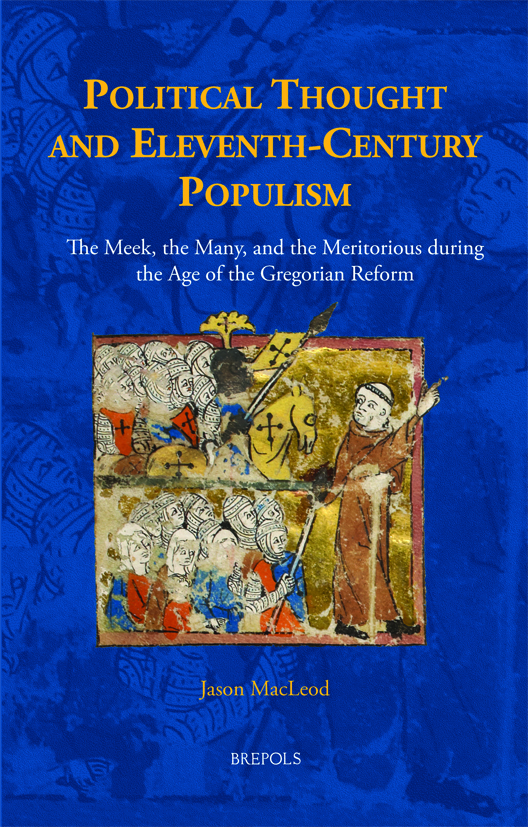 Political Thought and Eleventh-Century Populism
The Meek, the Many, and the Meritorious during the Age of the Gregorian Reform
Volume 38


 The Latin Hermes in Translation
Asclepius, Glosses on Trismegistus, Book of Six Principles of Things, Book of 24 Philosophers
Volume 50



 Éthique, politique, religions
Superstition (XVIIe - XXIe siècles). Sémantique, histoires et cultures


 Lehrreiche Literatur
Die didaktische Gestaltung von Plutarchs Quaestiones Graecae und Romanae und Gellius' Noctes Atticae


 Sitten zwischen Moralphilosophie und Politischer Okonomie am Ende des 18. Jahrhunderts
Mit einer zweisprachigen Edition von Ludwig Heinrich Jakobs Preisschrift Quelles sont les institutions les plus propres a fonder la morale d'un peuple

 Theologische Anthropologie in G. E. Lessings Frühwerk
Literarische Bilder von Gemeinschaft und Nonkonformität, Glück und Sünde