
Citadel and Cemetery in Early Bronze Age Anatolia
by Christoph Bachhuber

Hardback (Published)
(January 2016)
ISBN: 9781845536480
6.69 x 9.57 inches
Price: $120.00
In stock
Citadel and Cemetery in Early Bronze Age Anatolia is the first synthetic and interpretive monograph on the region and time period (ca. 3000-2200 BCE). The book organizes this vast, dense and often obscure archaeological corpus into thematic chapters, and isolates three primary contexts for analysis: the settlements and households of villages, the cemeteries of villages, and the monumental citadels of agrarian elites. The book is a study of contrasts between the social logic and ideological/ritual panoply of villages and citadels.
Citadel and Cemetery in Early Bronze Age Anatolia is the first synthetic and interpretive monograph on the region and time period (ca. 3000-2200 BCE). The book organizes this vast, dense and often obscure archaeological corpus into thematic chapters, and isolates three primary contexts for analysis: the settlements and households of villages, the cemeteries of villages, and the monumental citadels of agrarian elites. The book is a study of contrasts between the social logic and ideological/ritual panoply of villages and citadels. The material culture, social organization and social life of Early Bronze Age villages is not radically different from the farming settlements of earlier periods in Anatolia. On the other hand, the monumental citadel is unprecedented; the material culture of the Early Bronze Age citadel informs the beginning of a long era in Anatolia, defined by the existence of an agrarian elite who exaggerated inequality and the degree of separation from those who did not live on citadels. This is a study of the ascendance of the citadel ca. 2600 BCE, and related consequences for villages in Early Bronze Age Anatolia.
- By (author) Christoph Bachhuber
"Christoph Bachhuber's book is a most welcome contribution not only to the archaeology of Anatolia, but also in terms of the distinct approach it features in assessing archaeological evidence within a definted geographical entity. [...] The volume is an extremely useful work, meticulously prepared, coherent with the author's paradigm of drawing an up-to-date picture of the western parts of the peninsula during the third millennium BC." --Mehmet Ozdogan, European Journal of Archaeology 20(2) 2017 "...Bachhuber is to be congratulated for putting together such a comprehensive synthesis of the available data, and for presenting it within a new theoretical framework. His command of the published data, especially Turkish publications, is exemplary. This book will certainly be widely read by scholars and graduate students working on the EBA of Anatolia--it will be an eye-opener that will inspire further discussion." --Vasif Sahoglu, Ankara University, Bryn Mawr Classical Review 2017.09.59 "The book is clearly useful and important contribution to the field of EBA archaeology. Its intended audience is English-speaking archaeologists working in Anatolia, and its synthetic structure makes it valuable also for those working in neighboring regions seeking comparanda. Overall. this comprehensive narrative synthesis is a positive contribution to the field." --Laura K. Harrison, University of South Florida, American Journal of Archaeology Vol. 121, No. 3
—
Other Titles in this Series
 Debating Orientalization
Multidisciplinary Approaches to Processes of Change in the Ancient Mediterranean
Volume 10


 The Power of Technology in the Bronze Age Eastern Mediterranean
The Case of the Painted Plaster
Volume 12


Similar Books


 Caesar’s Visions and Impact on the Roman Empire
Revisiting the Archaeological and Historical Record of the 40s BC
Volume 2

 Connecting the Dots: Counting, Writing, and the Beginnings of Civilization
The Secret Lives of Clay Tokens: A Memoir


 Etruscan and Roman Hellenistic Anatomical ex votos
Reassessing Popular Religious Expressions in Central Italy
Volume 8


 Ḫattušaš utnē išḫameški
Hittite and Other Ancient Near Eastern Studies Presented to Piotr Taracha on the Occasion of His 65th Birthday

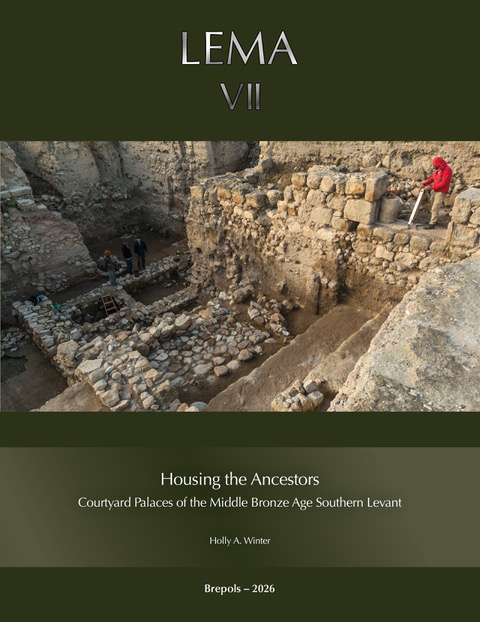

 Invisible Labour in Antiquity
Visualizing Obscure Work in the Ancient Mediterannean and West Asia
Volume 1
 Late Antique villae in the Balkans (3rd–7th c. AD): Current Research Questions and Perspectives
HAEMUS Companion to the Late Antique Balkans 1
Volume 4

 New Research on Old Collections in Southwest Asian Archaeology
Proceedings of the Workshop Held at the British Museum, London, 31 July – 2 August, 2023
 Old Aramaic Inscriptions and their Contexts
An Epigraphic, Archaeological, and Historical Synthesis
Volume 63


 Portraying the Individual in the Roman East
Local–Imperial Entanglements in Sculpture, Mosaics, and Paintings (First–Fourth Centuries AD)
Volume 18
 Punning in Odd or Elegant Constructions in Jeremiah
The Convergence of Linguistics, Rhetoric, and Textuality in the Hebrew Text of Jeremiah

 Shame in the Worlds of the Hebrew Bible and Akkadian Texts
A Linguistic Study and Its Implications
Volume 33
 Small Worlds and Relational Agencies: Local Societies in Early Medieval Iberia
Pequeños mundos y Agencias relacionales: Sociedades locales altomedievales en la Península Ibérica
 Telling Contexts
Archaeological and Textual Studies in Honor of Elizabeth Bloch-Smith and Mark S. Smith
 The Body
Lived, Cultured, Adorned: Essays on Dress and the Body in the Bible and Ancient Near East in Honor of Nili S. Fox
 The Discourse of Rites
Shaping and Reshaping the (Counter-)Priestly Rituals Conducted Outside the Tabernacle

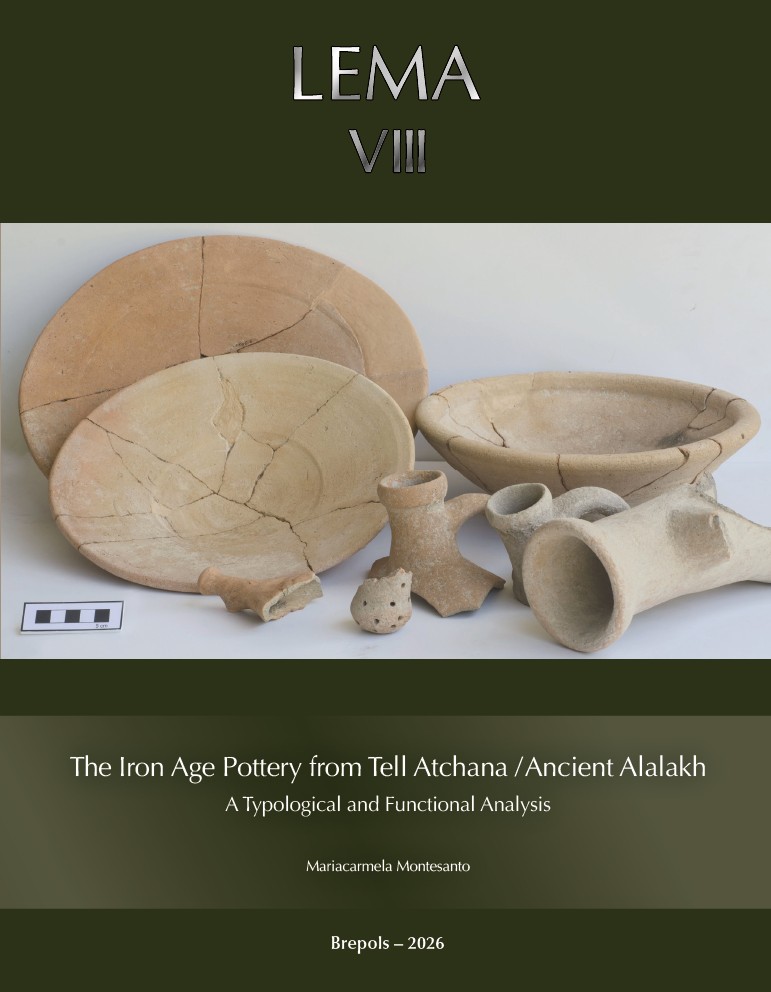 The Iron Age Pottery from Tell Atchana / Ancient Alalakh
A Typological and Functional Analysis
Volume 8

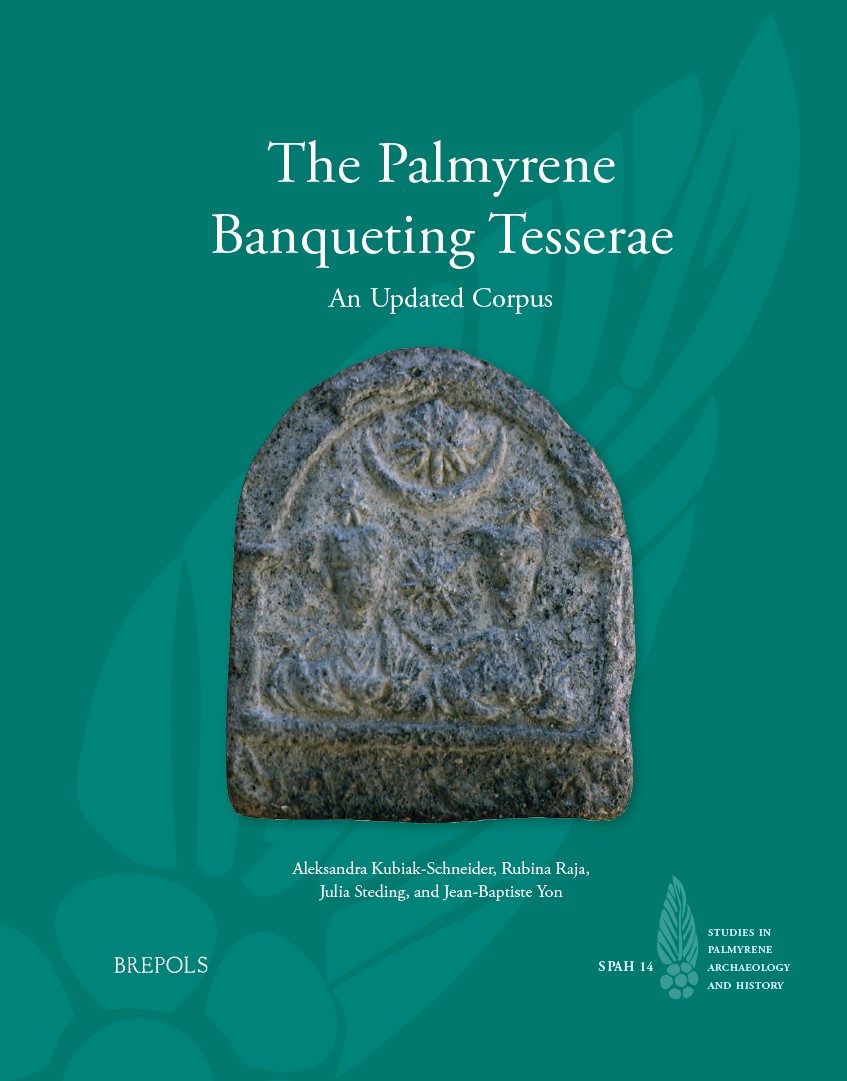


 Writing in the Church of the Nativity in Bethlehem
Inscription and Graffiti in a Multilingual and Multigraphic Perspective
Volume 45