
Catania Antica
La carta archeologica
edited by Edoardo Tortorici

The main objective of this book is to design a new archaeological map of ancient Catania, in which each discovery is referred to a geodetic system with absolute geographical coordinates. This project is accomplished by using the Technical Map of the Council of Catania (Analytical Aero-photogrammetric Relief 2002). The final archaeological map is attached both in print and in digital format (PDF), allowing for enlargement or the desired specifications for viewing the planimetric data. The placement of the archaeological remains is not only symbolic, with reference to a schematic legend as it has been done previously (Boschi, Guidoboni 2001; Branciforti 2003; Privitera 2009; Branciforti2010); it is instead a representation of the reality in which we are able to accurately detect the space of both the volume and shape of the ancient elements, by reporting their position with respect to their geographic location. On the map, all of the available archaeological remains are identified (in black) and marked by numbers (in blue) in modern topography (in sepia), giving reference to the schemes of the text; the historical cartography is marked in red (i.e. the planimetries taken or extracted from Houel Voyage, Holm 1873, Ittar 1833). The designed archaeological maps, (also known as maps of archaeological resources), represent an irreplaceable starting point to orientate, from the planning phase, the decisions of local and territorial boards with regards to the protection of their cultural resources and to the urban and/or building transformations of ever developing cities. In the first part of the book (Forma Urbis Catinae), the first chapter is entirely devoted to the archaeological map (Edoardo Tortorici) which constitutes the basis for further detailed historical-topographical studies. In the preceding two chapters, dedicated to the latter mentioned studies, a diachronic reading has been offered as a synthesis (based on Forma Italiae typology) of the main developing and transformation phases of the ancient urban system, from the prehistoric (Massimo Cultraro) to the Greek and Roman period, until later ancient times (Edoardo Tortorici). The second part of the volume (Studies and Materials) contains the specialized contributions, only to some extent put into practice so far, for some important matters relating to the debate regarding ancient Catania. The manuscript Chronicon Urbis Catinae written by Lorenzo Bolano is generally and rightly considered fundamental proof for the study of archaeological remains, which were still visible in the city before the eruption of Etna in 1669.
The main objective of this book is to design a new archaeological map of ancient Catania, in which each discovery is referred to a geodetic system with absolute geographical coordinates. This project is accomplished by using the Technical Map of the Council of Catania (Analytical Aero-photogrammetric Relief 2002). The final archaeological map is attached both in print and in digital format (PDF), allowing for enlargement or the desired specifications for viewing the planimetric data. The placement of the archaeological remains is not only symbolic, with reference to a schematic legend as it has been done previously (Boschi, Guidoboni 2001; Branciforti 2003; Privitera 2009; Branciforti2010); it is instead a representation of the reality in which we are able to accurately detect the space of both the volume and shape of the ancient elements, by reporting their position with respect to their geographic location. On the map, all of the available archaeological remains are identified (in black) and marked by numbers (in blue) in modern topography (in sepia), giving reference to the schemes of the text; the historical cartography is marked in red (i.e. the planimetries taken or extracted from Houel Voyage, Holm 1873, Ittar 1833). The designed archaeological maps, (also known as maps of archaeological resources), represent an irreplaceable starting point to orientate, from the planning phase, the decisions of local and territorial boards with regards to the protection of their cultural resources and to the urban and/or building transformations of ever developing cities. In the first part of the book (Forma Urbis Catinae), the first chapter is entirely devoted to the archaeological map (Edoardo Tortorici) which constitutes the basis for further detailed historical-topographical studies. In the preceding two chapters, dedicated to the latter mentioned studies, a diachronic reading has been offered as a synthesis (based on Forma Italiae typology) of the main developing and transformation phases of the ancient urban system, from the prehistoric (Massimo Cultraro) to the Greek and Roman period, until later ancient times (Edoardo Tortorici). The second part of the volume (Studies and Materials) contains the specialized contributions, only to some extent put into practice so far, for some important matters relating to the debate regarding ancient Catania. The manuscript Chronicon Urbis Catinae written by Lorenzo Bolano is generally and rightly considered fundamental proof for the study of archaeological remains, which were still visible in the city before the eruption of Etna in 1669.
- Edited by Edoardo Tortorici
Other Titles in this Series


 Glittica elamita Dalla meta del III alla meta del II millennio a.C
Sigilli a stampo, sigilli a cilindro e impronte rinvenute in Iran e provenienti da collezioni private museali
Volume 182


 L’Ager nord-occidentale della citta di Mutina
Il popolamento nel carpigiano e nella media pianura dalla romanizzazione al tardoantico-altomedioevo
Volume 126


 Atti del I Convegno Annuale Distretto Tecnologico Beni e Attivita culturali della Regione Lazio Centro di Eccellenza
Roma 30 settembre 2019
Volume 235


 The Dendrites
In pre-christian and christian historical-literary tradition and iconography
Volume 73
 Il complesso di Augusto sul Palatino
Nuovi contributi all'interpretazione delle strutture e delle fasi
Volume 243


Similar Books

 Caesar’s Visions and Impact on the Roman Empire
Revisiting the Archaeological and Historical Record of the 40s BC
Volume 2


 Drunk the Potion, No Whit Charmed
The Doctrine of Pure and Perfect Souls from Iamblichus to Damascius

 Epiphanies of the Divine in the Septuagint and the New Testament
Fifth International Symposium of the Corpus Judaeo-Hellenisticum Novi Testamenti (CJHNT), 14-17 May 2015, Nottingham


 Etruscan and Roman Hellenistic Anatomical ex votos
Reassessing Popular Religious Expressions in Central Italy
Volume 8




 Invisible Labour in Antiquity
Visualizing Obscure Work in the Ancient Mediterannean and West Asia
Volume 1
 Language and Power in the Roman Empire and Early India
Hierarchy, Ambiguity, and the Art of Reading the Signs in Cosmopolitan Cultures
 Late Antique villae in the Balkans (3rd–7th c. AD): Current Research Questions and Perspectives
HAEMUS Companion to the Late Antique Balkans 1
Volume 4

 Nurturing the Elite
Representations of Drinking, Eating, and Religious Vessels in Palmyrene Funerary Iconography
Volume 13


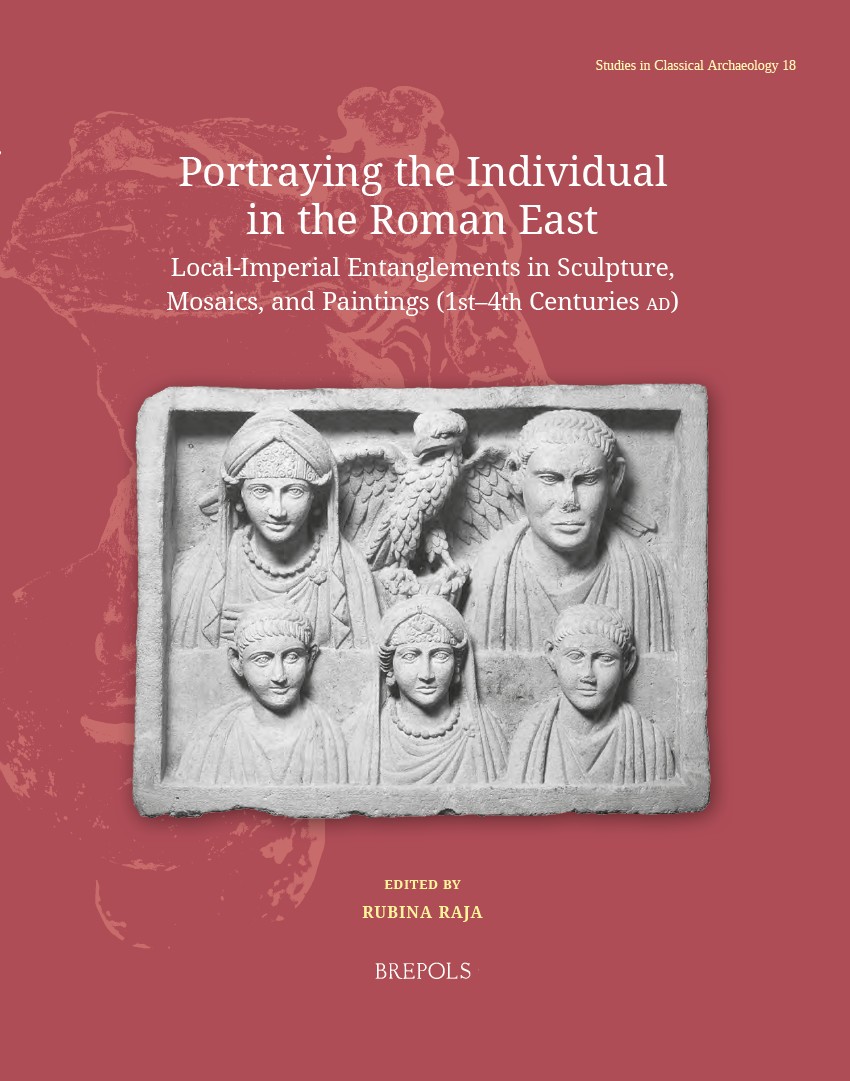 Portraying the Individual in the Roman East
Local–Imperial Entanglements in Sculpture, Mosaics, and Paintings (First–Fourth Centuries AD)
Volume 18

 Small Worlds and Relational Agencies: Local Societies in Early Medieval Iberia
Pequeños mundos y Agencias relacionales: Sociedades locales altomedievales en la Península Ibérica
 The Compositional History of the Book of Kings
An Analysis of the Evaluative Frameworks in 1 Kings 14–2 Kings 25

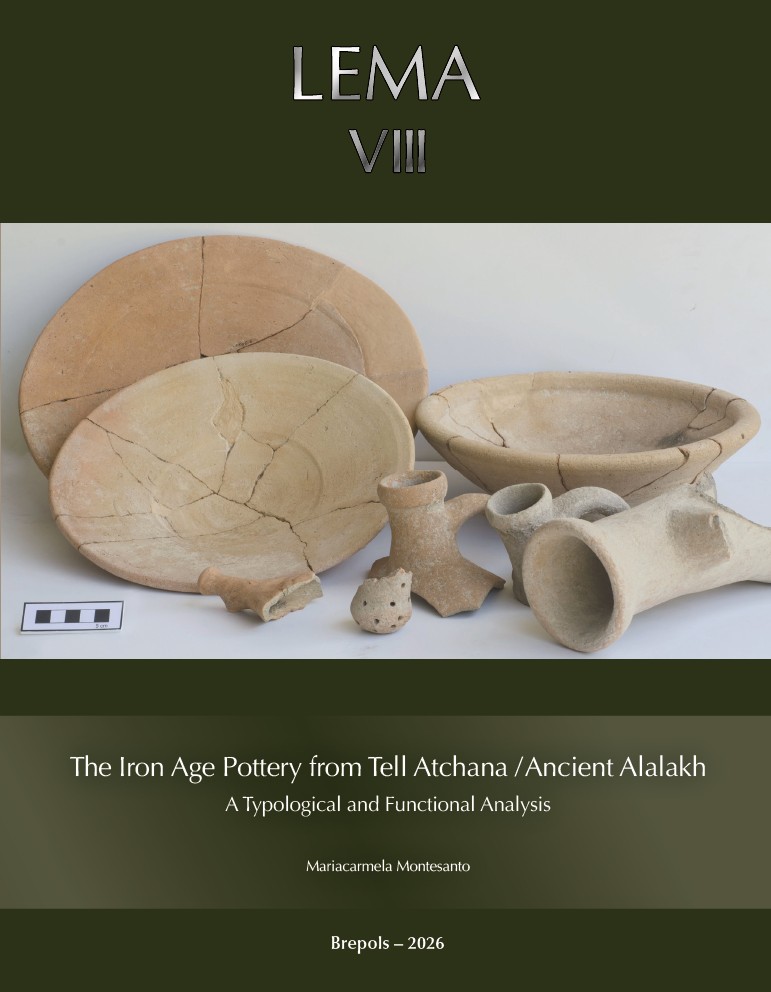 The Iron Age Pottery from Tell Atchana / Ancient Alalakh
A Typological and Functional Analysis
Volume 8

 Writing in the Church of the Nativity in Bethlehem
Inscription and Graffiti in a Multilingual and Multigraphic Perspective
Volume 45
 Contesting Labeled Identities
The Sociology of Gentilics in Biblical and Northwest Semitic Literature


 After Life in Roman Paganism. L’Égypte des astrologues. Les Mages hellénisés
Introductions historiographiques
Volume 7

 Atlante tematico di topografia antica 36-2026
Urbanistica e monumenti, porti, Roma. Ricerche sui monti Aurunci
Volume 36
 Cerámica común romana y ciclo haliéutico
Análisis de los contextos de las cetariae de Iulia Traducta

