
Arqueología urbana en el área central de la Ciudad de Córdoba, Argentina
Excavaciones en la Sede Corporativa del Banco de la Provincia de Córdoba (2014-2016)
By (author) Andrés D. Izeta By (author) Eduardo A. Pautassi By (author) G. Roxana Cattáneo

Paperback (Published)
(June 2017)
ISBN: 9781784916084
7.99 x 10.91 inches
Price: $84.00
In stock
Urban archeology in the central area of ??the City of Cordoba, Argentina. Excavations at the corporate headquarters of the Bank of the Province of Cordoba (2014-2016).
This work is part of a line of action proposed by the Institute of Anthropology of Cordoba (IDACOR), doubly dependent executing unit of the National Council of Scientific and Technical Research (CONICET) and the National University of Cordoba (UNC). This action requires the intervention of professional archaeologists in order to evaluate the impact produced by subsurface excavation in cases related to the development of real estate projects. Within this framework, in February 2014, there was the need to implement an archeological impact study on land under cadastral nomenclature 04-04-020-023 in the city of Cordoba, Argentina. The study was conducted in two instances. The first took place between the months of April and June 2014, consisting of various actions related to the systematic archaeological excavation, registration, conservation and interpretation of material culture recovered in depths between the surface and about 2.5 / 3m deep. The second stage, implemented between February and August 2015, consisted of the monitoring of the excavation while using heavy machinery allowed archaeologists to reach greater depths. The results of these tasks were submitted to the local authorities in five partial reports presented collectively here in order to have all the information available in one volume. As a result of the excavations it was possible to retrieve information about land use in the last two hundred years. Previous occupations have been masked or destroyed mostly by architectural interventions in the mid-nineteenth century and early twentieth century. However more than 30,000 objects recovered during the archaeological project help us to interpret the life of the people who inhabited these spaces, as well as local and international production and trade networks where they were integrated. Along with this, it was possible to recover significant portions of architectural structures that probably correspond to the eighteenth century, being the oldest constructive feature found on the parcel. This action, perhaps the most difficult due to the sheer scale of the objects, allowed the implementation of a novel technique for the recovery of archaeological objects in the city of Cordoba.
1. Resumen / Abstract ;
2. Agradecimientos ;
3. Introducción: el patrimonio arqueológico y los estudios de impacto en la provincia de Córdoba ;
4. Metodología de trabajo: campo y laboratorio ;
5. Excavaciones arqueológicas en el Lote 2 ;
6. Excavaciones arqueológicas en el Lote 3 ;
7. Excavaciones arqueológicas en el Lote 9 ;
8. Excavaciones arqueológicas en el Lote 11 ;
9. Excavaciones arqueológicas en el Lote 12 ;
10. Excavaciones arqueológicas en los Lotes 13-14 ;
11. Excavaciones arqueológicas en el Lote 18 ;
12. Recuperación de muro histórico ;
13. Bibliografía
- By (author) Andrés D. Izeta
- By (author) Eduardo A. Pautassi
- By (author) G. Roxana Cattáneo
Other Titles in this Series


Similar Books


 Adolescente de Jalpan
Primer estudio iconográfico y esbozo de interpretación iconológica sobre una escultura huasteca en la Sierra Gorda del Noreste de México


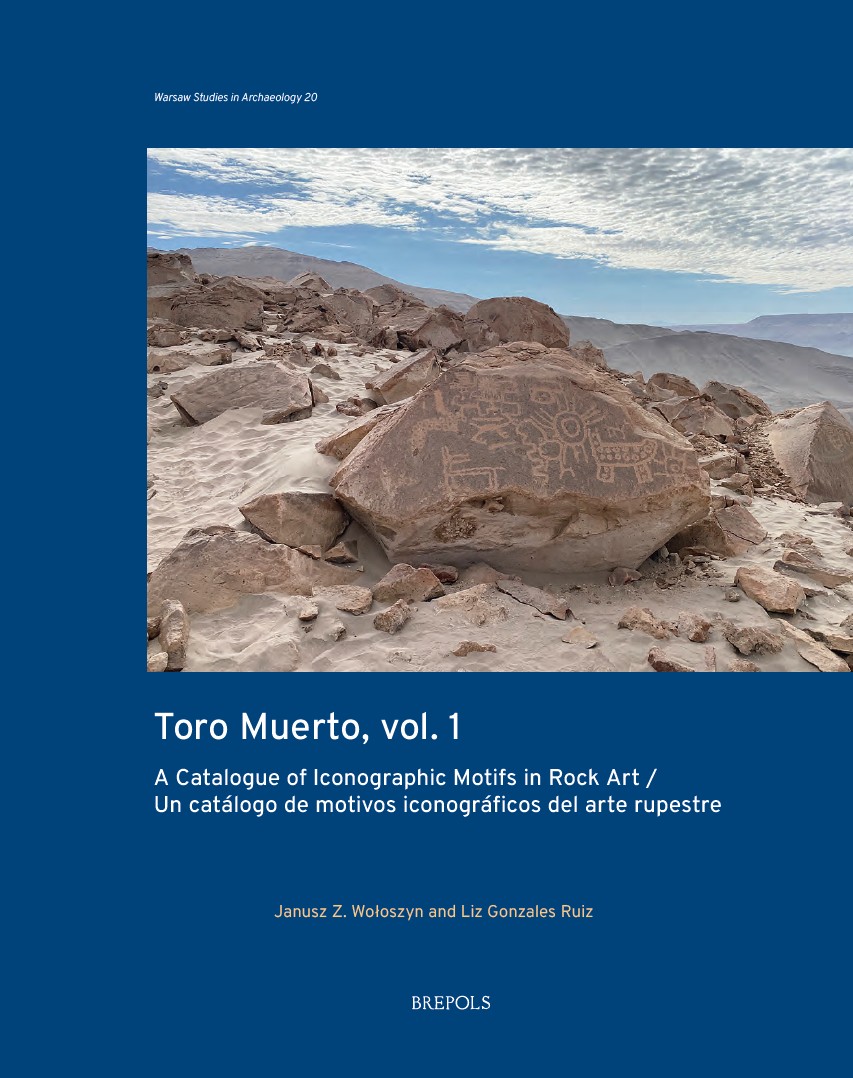 Toro Muerto, vol. I
A Catalogue of Iconographic Motifs in Rock Art / Un catálogo de motivos iconográficos del arte rupestre
Volume 20


 Obsidian Across the Americas
Compositional Studies Conducted in the Elemental Analysis Facility at the Field Museum of Natural History


 La fábrica del prestigio en Mesoamérica
Interacciones y alteridad en el Altiplano central durante el período epiclásico (600-900 d.C.)

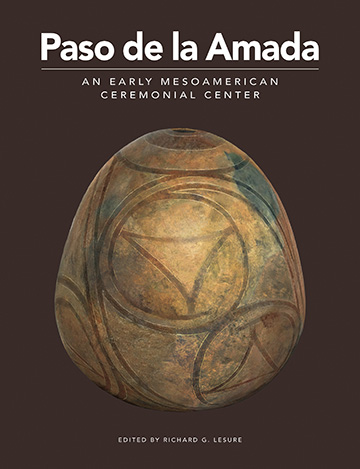

 El renacer de los Reyes
Imagen, contexto y significado del friso de Balamku, Campeche, Mexico
Volume 56

 El Palacio: Historiography and new perspectives on a pre-Tarascan city of northern Michoacán, Mexico


 Essai bibliographique sur l’archéologie francophone de la Mésoamérique
Bibliographical essay upon the French-speaking contributions to Mesoamerican archaeology; Ensayo bibliográfico sobre la arqueología francófona de Mesoamérica

 Sea Shells in the Mountains and Llamas on the Coast
The Economy of the Paracas Culture (800 to 200 BC) in Southern Peru
Volume 16
 Wari Women from Huarmey
Bioarchaeological Interpretation of Human Remains from the Wari Elite Mausoleum at Castillo de Huarmey, Peru
 Paisajes en un sector de la Quebrada de Humahuaca durante la Etapa Agroalfarera
Arqueología de Tumbaya (Jujuy, Argentina)
 Peintures et gravures rupestres des Amériques: Empreintes culturelles et territoriales
Proceedings of the XVIII UISPP World Congress (4-9 June 2018, Paris, France) Volume 2, Session XXV-3


