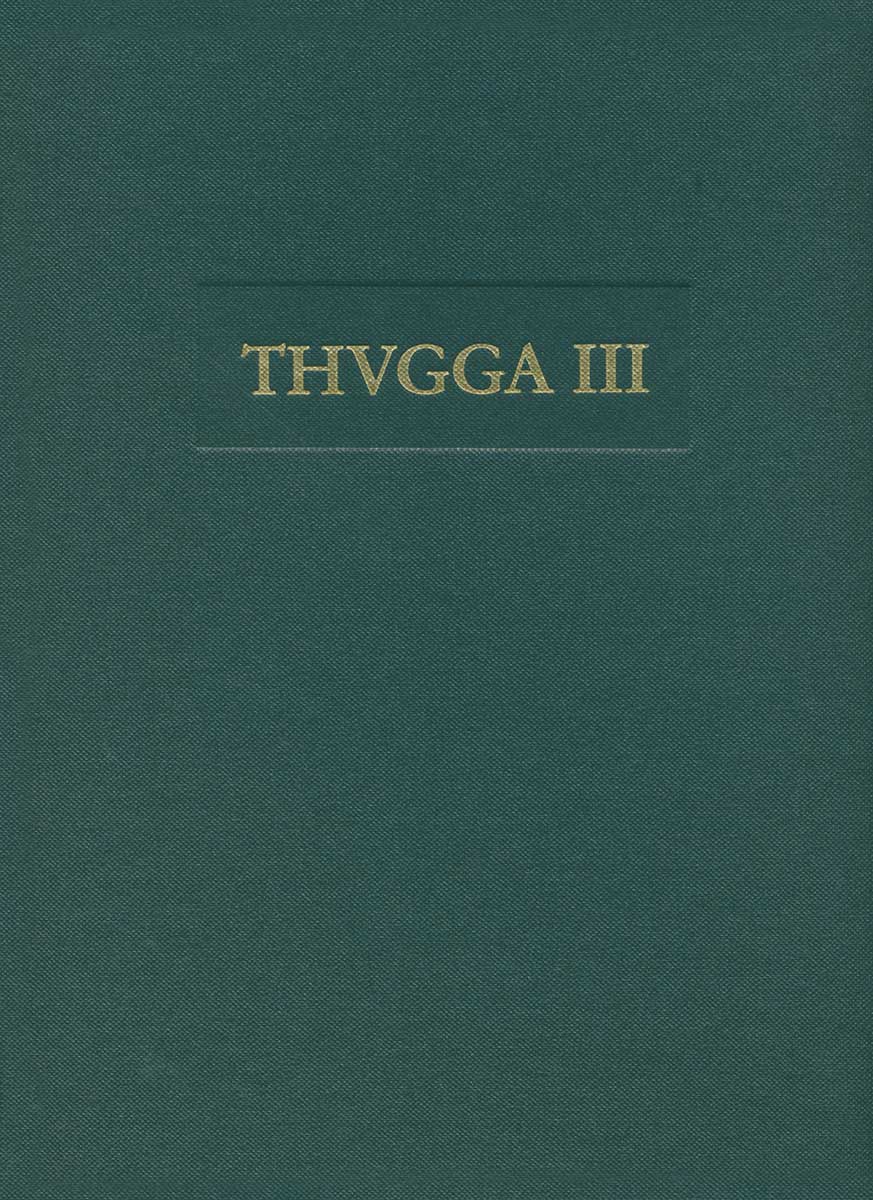
Archäologische Untersuchungen zur Siedlungsgeschichte von Thugga
Die Ausgrabungen südlich der Maison du Trifolium 2001 bis 2003
By (author) Stefan Ritter By (author) Philipp von Rummel
Hardback (Published)
(February 2016)
ISBN: 9783954900312
9.72 x 13.43 inches
Price: $152.00
In stock
This volume contains the results of the excavations that have been conducted by the Archaeological Institute at Freiburg University in cooperation with the Tunisian Institut du Patrimoine at the site of ancient Thugga between 2001 and 2003. The exemplary excavation of a greater area in a residential quarter in the south of the Roman town has allowed us, for the first time, to gain an comprehensive insight into all periods of the city’s long history, from prehistoric times to late antiquity.<br/>
English summary: This book presents archaeological research concerning the ancient city of Thugga in North Africa in order to provide a more complete history of the city and the region from its earlier settlements until the period of Late Antiquity. The reassessment of the site was undertaken by a cooperative effort between the Archeological Institute of the University of Freiburg-im-Breisgau and the National Institute of Tunisian Heritage from 2001 to 2013. The archaeological finds and stratigraphic results offer a more reliable chronology of settlement patterns from the Punic-Numidian period to Vandalic-Byzantine period and highlights new information for periods of time for which we have little other documentary or archaeological evidence. German description: In diesem Band werden die Ergebnisse eines deutsch-tunesischen Grabungsprojektes vorgelegt, das in Zusammenarbeit zwischen dem Archaologischen Institut der Universitat Freiburg i. Br. und dem Institut National du Patrimoine, Tunis von 2001 bis 2003 im antiken Thugga durchgefuhrt wurde. Thugga, das heutige Dougga, ist zwar eine der besterhaltenen romischen Stadte in Nordafrika, doch dokumentieren die imposanten Ruinen lediglich den Zustand der Stadt in der spateren romischen Kaiserzeit. Ziel des Projektes war es daher, erstmals einen umfassenden Einblick in die Stadtgeschichte zu gewinnen. Zu diesem Zweck wurde in einem Wohnareal der Unterstadt, sudlich der Maison du Trifolium, exemplarisch eine lokale Siedlungsstratigraphie bis zu den fruhesten Spuren menschlicher Aktivitaten hinunter untersucht.Die Auffindung zweier Graber aus der ersten Halfte des 2. Jahrtausends v. Chr. erbrachte die uberraschende Erkenntnis, dass der Stadtberg von Thugga bereits im spaten Neolithikum aufgesucht und fur Bestattungen genutzt wurde. Mit diesen Grabern wurden Zeugnisse einer Epoche entdeckt, die in Nordafrika insgesamt bisher kaum bekannt ist. Grossere Siedlungsaktivitaten setzten allerdings erst mehr als ein Jahrtausend spater ein. Die Ausgrabung eines grossen, mit einem zentralen Wirtschaftshof ausgestatteten Wohnhauses aus hellenistischer Zeit beweist, dass sich bereits die punisch-numidische Stadt bis weit in den Suden des kaiserzeitlichen Siedlungsraumes erstreckte. Dieses Wohngebaude wurde um 100 n. Chr. durch einen grosseren, aber strukturell ahnlichen Neubau ersetzt. Der Neubau bezeugt, dass es noch bis in die mittlere Kaiserzeit Hauser gab, die nach dem herkommlichen Schema punischer Hausarchitektur gestaltet waren, und markiert zugleich die beginnende Umwandlung dieses Stadtbezirkes zu einem gehobenen Wohnviertel. Die spatantiken Befunde liefern erstmals Anhaltspunkte dafur, dass in den Randbezirken Thuggas bereits im 4. Jahrhundert n. Chr. Wohnquartiere aufgegeben wurden. Die Auffindung von zehn Steinkistengrabern aus vandalisch-byzantinischer Zeit schliesslich bezeugt erstmals fur Thugga die andernorts gut bekannte Sitte, Friedhofe in aufgelassenen Wohngebieten anzulegen.Mit diesen stratigraphischen Untersuchungen konnte zum ersten Mal in Thugga ein umfassender Einblick in die Besonderheiten der lokalen Siedlungsabfolge, von punisch-numidischer Zeit bis in die Spatantike gewonnen werden. Mit der Aufarbeitung und Vernetzung des reichen stratifizierten Fundmaterials wurde ein zuverlassiges chronologisches Gerust erstellt, welches die historische Einordnung kunftiger Fundkomplexe aus Thugga und der Region ermoglicht. Zugleich wird erstmals ein reiches Spektrum an chronologisch fixierten, aus geschlossenen Befunden stammenden Funden aus Thugga fur uberregionale Vergleichsstudien verfugbar gemacht.
Stefan Ritter:<br/>Date of Birth: 17.01.1959<br/>Education and previous work:<br/>- 1984–1991 Studies of Classical Archaeology, Latin Philology and Byzantine Archaeology at the University of Heidelberg and at the Freie Universität Berlin<br/>- 1991 PhD (Dr. phil.) in Classical Archaeology, University of Heidelberg<br/>- 1991–1992 One-year post-doctoral fellowship (Reisestipendium) of the German <br/>Archaeological Institute, Berlin<br/>- 1994–2001 Assistant Lecturer, Archaeological Institute, University of Freiburg<br/>- 2000 Habilitation and venia legendi in Classical Archaeology, University of Freiburg<br/>- 2001–2005 University Lecturer, Archaeological Institute, University of Freiburg<br/>- 2005–2006 Professor, Institute of Classical Archaeology, University of Munich<br/>- 2007–2008 Full Professor, Institute of Classical Archaeology, University of Erlangen<br/>- since 2008: Full professor and Chair of Classical Archaeology at the Institut für Klassische Archäologie, Ludwig-Maximilians-Universität München<br/><br/>Fields of research:<br/>- Greek and Roman visual art in its social context<br/>- Comparative cultural history of Italy and the Western provinces of the Roman empire<br/>- Urban studies<br/><br/>Philipp von Rummel:<br/>- 1995–2000 Studies of Prehistory, Early Medieval Archaeology, Classical Archaeology, Ancient and Medieval History at Freiburg, Basel und Berlin.<br/>- 2000 Magister Artium, Albert-Ludwigs-University, Freiburg im Breisgau<br/>- 2005 PhD, Albert-Ludwigs-University, Freiburg im Breisgau<br/>- 2006 Assistant Professor, Freiburg University, Institut of Archaeology (Early Medieval Archaeology)<br/>- 2006–2007 Travel Grant of the German Archaeological Institute<br/>- 2007–2008 Austrian Academy of Science, Institute for Medieval Research<br/>- 2008–2014 Head oft he Editorial Department, German Archaeological Institute at Rome<br/>- since 01.03.2014 Secretary General of the German Archaeological Institute<br/><br/>
- By (author) Stefan Ritter
- By (author) Philipp von Rummel
Similar Books


 Caesar’s Visions and Impact on the Roman Empire
Revisiting the Archaeological and Historical Record of the 40s BC
Volume 2

 Construction Processes in Historical Western Societies (5th c. BC – 10th c. AD)
Case Studies on Techniques, Models, and Costs


 Etruscan and Roman Hellenistic Anatomical ex votos
Reassessing Popular Religious Expressions in Central Italy
Volume 8




 Invisible Labour in Antiquity
Visualizing Obscure Work in the Ancient Mediterannean and West Asia
Volume 1

 Late Antique villae in the Balkans (3rd–7th c. AD): Current Research Questions and Perspectives
HAEMUS Companion to the Late Antique Balkans 1
Volume 4



 Music and Colonialism in Fascist Italy
Identity, Propaganda, and Ethnographic Representation
Volume 13


 Portraying the Individual in the Roman East
Local–Imperial Entanglements in Sculpture, Mosaics, and Paintings (First–Fourth Centuries AD)
Volume 18


 Roman Copies, Collecting, and Culture in the Bay of Naples and Beyond
Papers in Honor of Eugene J. Dwyer
 Small Worlds and Relational Agencies: Local Societies in Early Medieval Iberia
Pequeños mundos y Agencias relacionales: Sociedades locales altomedievales en la Península Ibérica

 SOMA 2023: Proceedings of the 24th Symposium on Mediterranean Archaeology
Ideas that Travelled by the Sea, Udine, 2-4 February, 2023


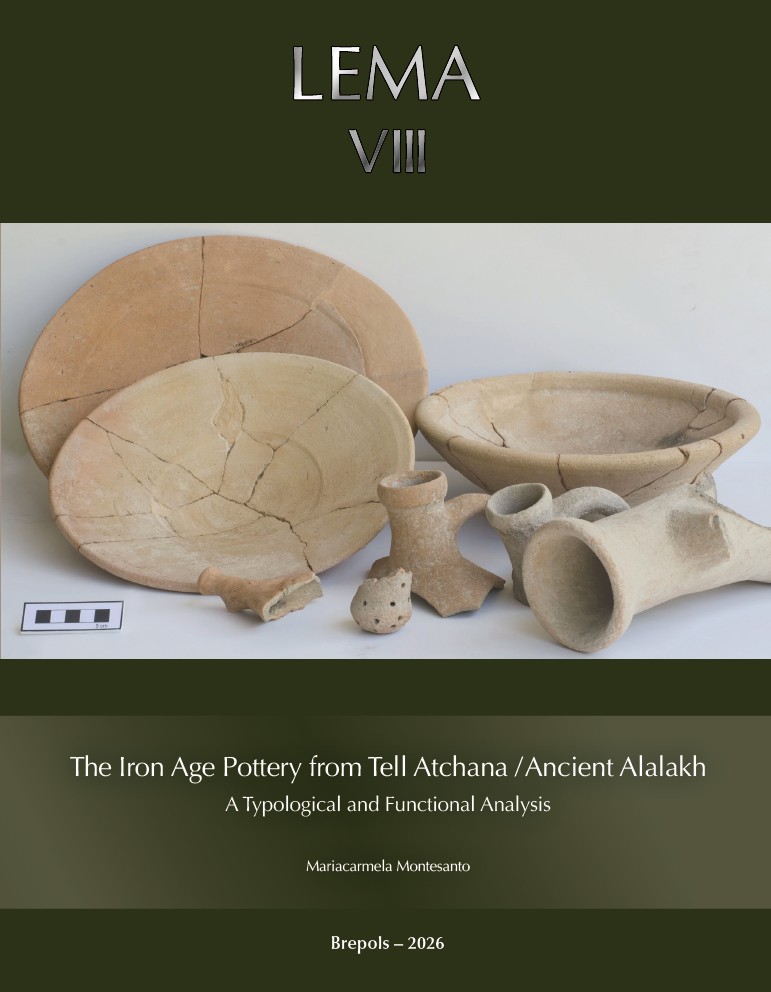 The Iron Age Pottery from Tell Atchana / Ancient Alalakh
A Typological and Functional Analysis
Volume 8