
Ambiguity in Charlotte Brontë’s Villette
By (author) Olga Springer
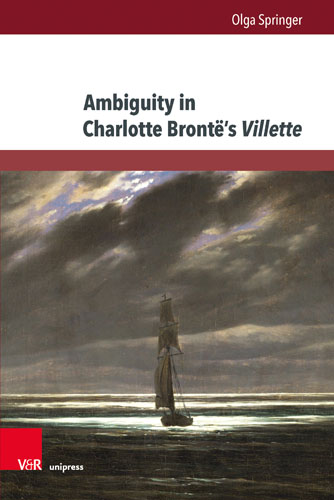
Hardback (Published)
(February 2020)
ISBN: 9783847111191
6.34 x 9.33 inches
Price: $74.00
In stock
Charlotte Bronte’s novel Villette is associated with ambiguity because of its open ending: Does M. Paul return to narrator-protagonist Lucy Snowe or is he killed in a storm? This study explores Villette as a text in which ambiguity is all-pervasive in various ways. Among these is the narrator’s ambivalent attitude toward herself and others. The links between ambiguity and doubt are explored through an analysis of Lucy’s signature phrase, “I know not,” expressive of her existential doubts and questioning attitude toward the world. It moreover focuses on the motif of the oracle as a traditionally ambiguous utterance, and explores its relevance in the context of the generic tradition of Villette as a fictional autobiography.
Charlotte Bronte’s 1853 novel Villette has been associated with ambiguity because of its open ending. But there are many other aspects relevant to ambiguity. Lucy’s ambivalent attitude toward herself and others, her reticence and stylistic idiosyncrasies (such as negations and inversions) as a narrator make the novel a text in which ambiguity is all-pervasive: it is embodied in Lucy Snowe’s signature phrase, ‘I know not,’ expressive of her existential doubts and questioning attitude toward the world. The study explores the narrator-protagonist’s ambivalent attitude toward herself and others, through an analysis of her stylistic idiosyncrasies such as negations and inversions. It moreover focuses on the motif of the oracle as a traditionally ambiguous utterance, and explores its relevance in the context of the generic tradition in which Villette stands. A further central theme is the novel’s use of allegories and the interplay of the figurative and literal levels of meaning, imparting an ambiguous quality to the text.
Dr Olga Springer is Assistant Professor of German in the School of Applied Language and Intercultural Studies at Dublin City University, Ireland. Her research interests are ambiguity in literary texts and Victorian literature.
- By (author) Olga Springer
Other Titles in this Series
Similar Books



 Ars Prophetica
Theology in the Poetry of Twentieth-Century Hebrew Poets Avraham Halfi, Shin Shalom, Amir Gilboa, and T. Carmi


 Cahiers de l’Association internationale des études françaises
J. M. G. Le Clézio - Enseigner les littératures francophones aujourd’hui - Récit de soi et expérience de l’illusion (XVIIe-XVIIIe siècles)
Volume 78
 Cahiers de littérature française
Les Métamorphoses du texte. Enjeux intertextuels et transpositions visuelles
Volume 25
 Cahiers de recherches médiévales et humanistes – Journal of Medieval and Humanistic Studies
Volume 51
 Cahiers de sémiotique des cultures
Ponctuation et sens. Nouvelles perspectives / Punctuation and meaning. New perspectives
Volume 6


 CompLit
Myth, Folklore and Magic in European Literatures. Critical and Contemporary Reconfigurations


 Dis/United States of Vulnerability
Literary and Cultural Transgressions in U.S. Poetry Since the 1960s
Volume 330


 European Drama and Performance Studies
Dramatisations politiques. Théâtre, politique et idéologie au XIXe siècle (1806-1914)
Volume 27


 La Lettre clandestine
La littérature philosophique clandestine, ses éditeurs et ses éditions
Volume 34


 La Revue des lettres modernes
« Afin que rien ne meure ». Le deuil dans et de l’œuvre de Marguerite Duras
Volume 9

