
A Classical Revival in Islamic Architecture
By (author) Terry Allen

Paperback (Published)
(January 1986)
ISBN: 9783882262629
6.69 x 9.49 inches
Price: $65.00
In stock
The Madrasah al-Shu’aybiyah in Aleppo, erected in 545/1150 by Nur al-Din Mahmud, is an Islamic building in which antique forms are reused. Starting from this building the author draws wider and wider circles of comparison around it, discussing the development of Islamic architecture and demonstrating that there was a classical revival in this architecture. Herzfeld regarded the Shu’aybiyah and other classicizing buildings as represntatives of an uninterrupted antique tradition and denied a “renaissance of the antique”. Allen clearly shows the differences between Islamic classicism and the classicism that occured in the many revivals of classical architecture in the West. In Italy, for example, antique prototyps were copied, reused and reinterpreted in their original sense, with their iconography maintained intact. Such kind of renaissance could not take place in the Islamic world, since it did not regard Greaco-Roman culture as its heritage. The classical revival in Islamic architecture that developed in Syria and neighboring lands during the 5th and 6th centuries A.H./11th and 12th centuries A.D. has double value for anyone interested in European architecture. This book will find its readers not only among art historians and those who are interested in architecture but also among anyone who is interested in the history of art and culture in general.
The Madrasah al-Shu’aybiyah in Aleppo, erected in 545/1150 by Nur al-Din Mahmud, is an Islamic building in which antique forms are reused. Starting from this building the author draws wider and wider circles of comparison around it, discussing the development of Islamic architecture and demonstrating that there was a classical revival in this architecture. Herzfeld regarded the Shu’aybiyah and other classicizing buildings as represntatives of an uninterrupted antique tradition and denied a “renaissance of the antique”. Allen clearly shows the differences between Islamic classicism and the classicism that occured in the many revivals of classical architecture in the West. In Italy, for example, antique prototyps were copied, reused and reinterpreted in their original sense, with their iconography maintained intact. Such kind of renaissance could not take place in the Islamic world, since it did not regard Greaco-Roman culture as its heritage. The classical revival in Islamic architecture that developed in Syria and neighboring lands during the 5th and 6th centuries A.H./11th and 12th centuries A.D. has double value for anyone interested in European architecture. This book will find its readers not only among art historians and those who are interested in architecture but also among anyone who is interested in the history of art and culture in general.
- By (author) Terry Allen
Similar Books

 Behind the Scenes of Medieval Roofs
An Overview of the Roofing Systems of Italian Churches
Volume 90
 Circulation, Use, Impact
The Consumption of Architectural Books in the Early Modern Eastern Adriatic
Volume 1
 Cities through Time
Glimpses into Urbanity and Community in Mediaeval to Modern West Asia and Egypt
Volume 1

 Cuneiform Artefacts from Archaeological Contexts: New Research on Ancient Iraq
Proceedings of a Conference Held at the Bavarian Academy of Sciences and Humanities, July 4–5, 2024
Volume 2
 Global Gulf
Geo-Economic, Geo-Political, and Geo-Technological Transformation in Saudi Arabia, the United Arab Emirates, and Qatar

 Ismail Hakki Bursevi’s translation of and commentary on Fusus al-Hikam By Muhyiddin Ibn ‘Arabi
Volumes 1-4
 Late Antique villae in the Balkans (3rd–7th c. AD): Current Research Questions and Perspectives
HAEMUS Companion to the Late Antique Balkans 1
Volume 4

 Monastic Manuscripts from the Eastern Mediterranean (Sinai, Jerusalem, Antioch)
Production, Use, and Contexts


 Qatar’s Societal Security
Towards the Inclusive National Concept of ‘Baladna’ Identity, Migration and External Threats Since 2017

 The Discourse of Rites
Shaping and Reshaping the (Counter-)Priestly Rituals Conducted Outside the Tabernacle


 Visual Memory and Oblivion
Monuments and Conflicts in Urban Spaces in Central and Eastern Europe from the Nineteenth Century to the Present Day


 »Ein elend-schönes Land«
Gattung und Gedächtnis in Lea Goldbergs hebräischer Literatur. Aus dem Hebräischen von Rainer Wenzel
 Die Entwicklung erdbebensicherer Bautechniken in der Frühen und Mittleren Eisenzeit in Ostanatolien
Volume 11
 La chiesa di San Francesco grande e l’ospedale antico di Padova
Archeologia Storia Arte Architettura e Restauri
Volume 8
 Meine arabischen Freunde
Geschichten aus dem Maghreb für Aufklärung - gegen Islamismus und Unfreiheit

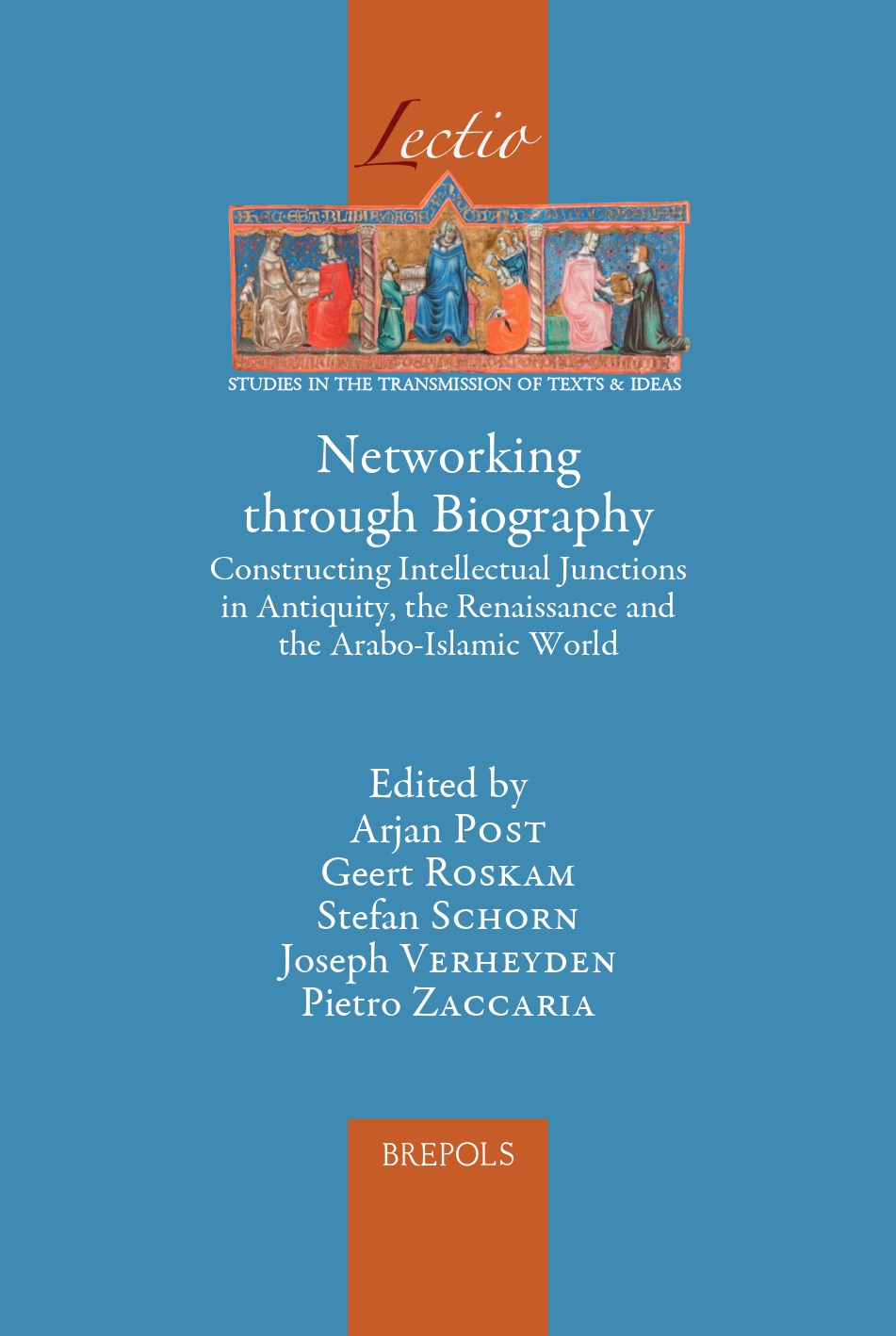 Networking through Biography
Constructing Intellectual Junctions in Antiquity, the Renaissance and the Arabo-Islamic World
Volume 19


 Beiträge zur Islamischen Kunst und Archäologie
The Arts and Archaeology of Funerary Cultures in Islam
Volume 10.0

 Boğazköy Tablets in the Museum of Anatolian Civilisations (Bo 95–Bo 3993)
Anadolu Medeniyetleri Müzesinde Bulunan Boğazköy Tabletleri (Bo 95–Bo 3993)
Volume 3


 Building the Presence of the Prince
The Institutions Responsible for the Construction and Management of the Buildings of European Courts (14th-17th centuries)
Volume 14