
Rechtsstaatswidrige Tatprovokation
Die Einstellung des Strafverfahrens und der Anspruch des Opfers auf Strafverfolgung des Täters
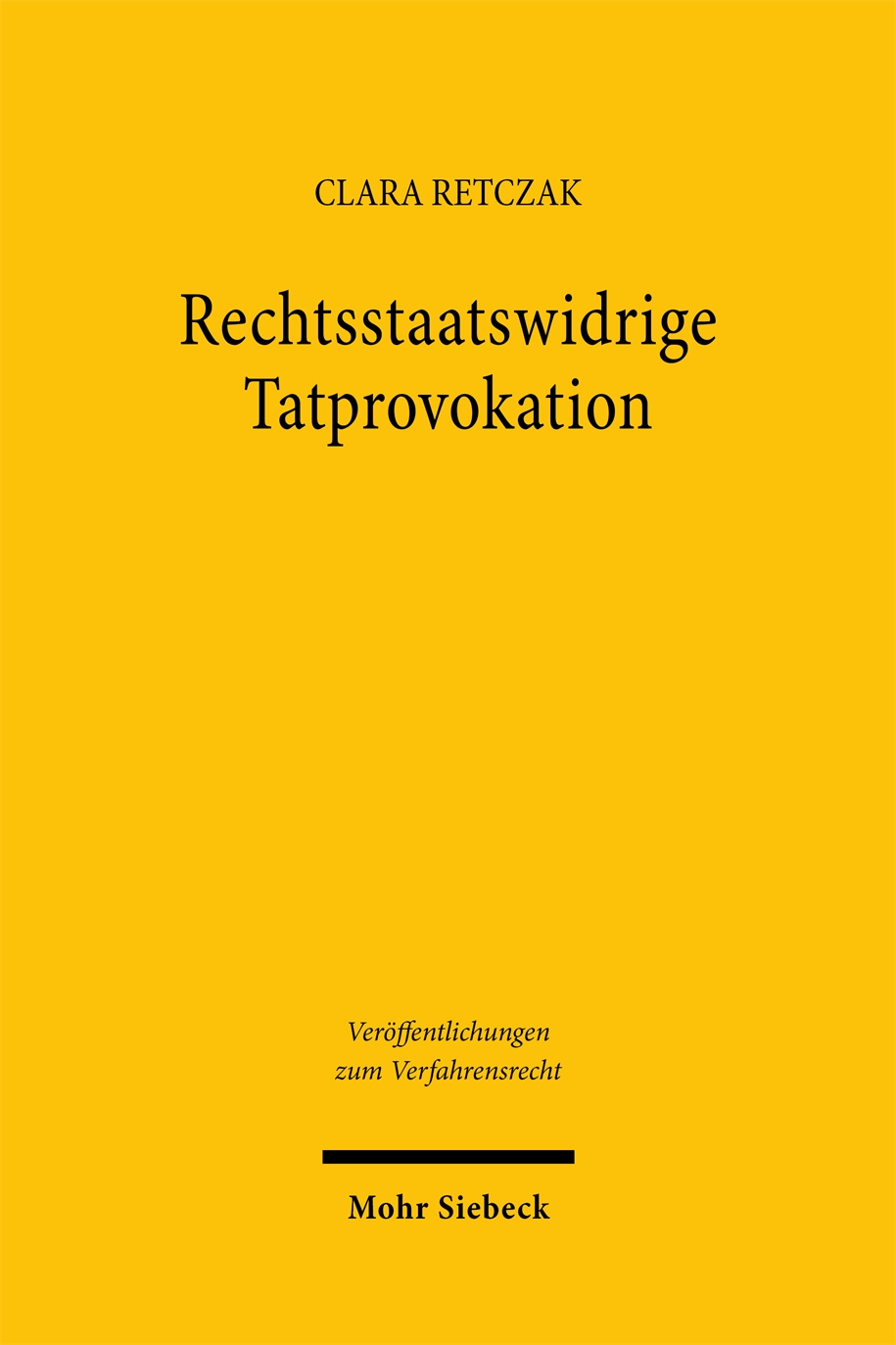
Paperback (Forthcoming)
(February 2027)
ISBN: 9783162009081
6.1 x 9.13 inches
Price: $120.00
In cases of unlawful entrapment by state authorities, proceedings must be discontinued, according to the prevailing view. But does this also apply where, under ECtHR case law, the victim has a right to prosecution? And why discontinue proceedings rather than apply a ground excluding punishment?
Clara Retczak examines the legal consequences of unlawful entrapment for the person induced to commit the offence where the offence has also harmed individual legal interests. Consider, for example, the following scenario: law enforcement authorities deploy a confidential informant to investigate a group suspected of various offences in the field of organized crime. In order to gain the targets’ trust, the informant becomes increasingly involved in their criminal activities until, one day, he induces someone to seriously injure a third party.
The prevailing view in legal scholarship is that proceedings against an offender who has been unlawfully entrapped must be discontinued. The Federal Court of Justice (BGH) has recently adopted this position as well. Following two judgments against Germany by the European Court of Human Rights (ECtHR) finding a violation of Article 6 ECHR, the BGH abandoned its so-called sentencing solution, under which it had been considered sufficient to grant “merely” a substantial reduction in sentence as compensation for the unlawful inducement to commit the offence.
However, where an offence has an individual victim, this approach of discontinuing proceedings may conflict with the case law of the ECtHR and the Federal Constitutional Court concerning the victim’s right to have the offender prosecuted. This right may range from a right to comprehensive investigations conducted ex officio to a right to the offender’s conviction and punishment.
How, then, should this tension between a prohibition on prosecution and a right to prosecution be resolved? The author reaches the following conclusion: the approach of discontinuing proceedings reaches its limits in such cases of conflict. Even in cases involving the unlawful entrapment of “victimless” offences, a legal consequence other than treating the entrapment as a procedural bar is preferable.
Other Titles in this Series

 Die subjektive Reichweite von Schiedsvereinbarungen
Eine systematische Darstellung unter besonderer Berucksichtigung der Mehrparteienschiedsgerichtsbarkeit
Volume 51

 Das Akteneinsichtsrecht der Verteidigung
Eine Analyse unter besonderer Berucksichtigung der Einfuhrung der elektronischen Akte im Strafverfahren und am besonderen Beispiel von Telekommunikationsuberwachungsdaten
Volume 193
 Aufklarung und Informationskontrolle im Zivilprozess
Eine vergleichende Studie zum deutschen, englischen und US-amerikanischen Recht
Volume 168
 Schuldnerschutz im Europaischen Zwangsvollstreckungsrecht
Eine rechtsvergleichende und kollisionsrechtliche Untersuchung der schuldnerschutzenden Vorschriften im Europaischen Zwangsvollstreckungsrecht mit einem Schwerpunkt auf der Kontenpfandung
Volume 116
 Auslandisches Recht vor deutschen Gerichten
Grundlagen und europaische Perspektiven der Ermittlung auslandischen Rechts im gerichtlichen Verfahren
Volume 105
 Europaische Vorlageverfahren und nationales Zivilprozessrecht
Eine Untersuchung der Vorlageverfahren an den EFTA-Gerichtshof und den EuGH als Bestandteile des norwegischen bzw. des deutschen Zivilprozesses
Volume 64

 Grundrechtsschutz in der Zwangsvollstreckung
Zur Vereinbarkeit des zwangsvollstreckungsrechtlichen Erwerbs schuldnerfremden Eigentums mit Art. 14 und 19 Abs. 4 GG
Volume 183

 Der Vergleich in FamFG-Verfahren
Zugleich eine Untersuchung der Grenzen der Dispositionsfreiheit uber Verfahrensgegenstand und Verfahrensende in Familiensachen und der Freiwilligen Gerichtsbarkeit
Volume 126
 Prozessokonomie
Verfassungsrechtliche Anatomie und Belastbarkeit eines gern bemuhten Arguments
Volume 82
 Beschleunigter Rechtsschutz fur Zahlungsglaubiger in Europa
Eine rechtsvergleichende Untersuchung zur vorweggenommenen Befriedigung bei Anhangikeit der Hauptsache
Volume 38
 Die virtuelle Teilnahme an der Hauptverhandlung im Zivilprozess – quo vadis?
Bestandsaufnahme und Zukunftsperspektiven der Verhandlung im Wege der Bild- und Tonubertragung
Volume 206
 Materialisierung des Zivilverfahrensrechts
Der Einfluss schuldvertraglicher Sonderwertungen zugunsten des Schwacheren auf das Erkenntnisverfahren nach der ZPO
Volume 157


 Die strafprozessuale Zufallsverwendung
Zufallsfunde und andere Zweckdivergenzen bei der Informationsverwendung im Strafverfahren
Volume 52


 Die Haftung bei der Eigenverwaltung
Eine Untersuchung der Haftung des eigenverwaltenden Schuldners einschliesslich der Haftung der Geschaftsleiter bei der Eigenverwaltung von Gesellschaften
Volume 117
 Grundfragen der Beweiserhebung von Amts wegen im Zivilprozess
Zugleich ein Beitrag zur Auslegung der 142ff. und 448 ZPO
Volume 107
 Kapitalanleger – Musterverfahrensgesetz (KapMuG)
Bestandsaufnahme und Reformempfehlung aus der Perspektive von Recht und Praxis der US-amerikanischen Securities Class Action
Volume 60
 Ausforschung und Rechtsdurchsetzung im Unionsprivatrecht
Herleitung und Ausgestaltung eines allgemeinen unionsrechtlichen Informationsrechts
 Das Prinzip der Konfliktkonzentration in der Brussel Ia-VO
Begrenzte Klagerwahlrechte fur Vertrage und Delikte mit mehrfachem Ortsbezug
Volume 184
 Gesellschafterfremdfinanzierte Auslandsgesellschaften
Kollisionsrechtliche Behandlung des Gesellschafterdarlehensrechts
Volume 137
 Die Abschaffung des Exequaturverfahrens und die EuGVVO
Bestandsaufnahme, Bewertung, Ausblick
Volume 130