
Renovatio, inventio, absentia imperii
From the Roman Empire to contemporary imperialism
Edited by Wouter Bracke Edited by Jan Nelis Edited by Jan De Maeyer

The present book is the result of the conference ‘Renovatio, inventio, absentia imperii. From the Roman Empire to Contemporary Imperialism’, held in Brussels at the occasion of the 75th anniversary of the Academia Belgica in Rome (September 11-13, 2014). At the heart of the conference was the ‘reception’, ‘Nachleben’ or ‘permanence’ of the Roman Empire, of an idea and a historical paradigm which since classical Antiquity has supported the most widespread claims to obtain and consolidate power. The volume’s focus is on culture in a broad sense, i.e. including besides the arts, philosophy, religion and, most importantly, discourse. As such, a wide array of themes are subjected to academic scrutiny. Whereas the main focus is on Europe and North America, some contributors also reach out towards non-Western contexts, whether or not directly related to the Roman example. A theoretical and sociological dimension is also added thanks to the discussion on methodological issues. More specifically, the following question(s) receive particular attention: what is our position as researchers, embedded in a contemporary, often Western, democratic and capitalist context; what about the notion of empire itself, its constituent elements and the kind of ideological prerogatives to which it is generally subjected; in other words, apart from the many historical variants and instances of reception of empire, through which filters can, and inevitably do, we approach this topic? A question that has become ever more pregnant since the beginning of the twenty-first century, after the dissolution of the Soviet Union, the events of September 11, which have revivified what could be called American ‘imperialism’, and at a time when an essentially economic variant, driven by ’emerging’ powers such as China, has increasingly contested existing power structures. In light of such meta-historical awareness, this book touches as much on the nature of the Roman Empire as it does on its historical legacy and, more importantly so, on who claims the latter inheritance throughout the most diverse epochs. By discussing some highly contrasting views upon this topic, participants explore issues that are of fundamental importance to the writing, not only of cultural history, but also of history itself.
- Edited by Wouter Bracke
- Edited by Jan Nelis
- Edited by Jan De Maeyer
Other Titles in this Series

 Matronae equestres
La parente feminine des chevaliers romains originaires des provinces occidentales sous le Haut-Empire romain (Ier-IIIe siecles)
Volume 4

Similar Books



 As Messianism Turns to Heresy
The Regenstein Chair Lectures On Lurianic Kabbalah and Shabbatai Tzevi at Hebrew Union College - Cincinnati
 Between Bones and Beliefs
Human-Bird Relations in Central and Northern Europe in the First Millennium AD
Volume 4

 Beyond Sovereign Courts
Agents and Practices in Early Modern Spanish and Habsburg Diplomacy
Volume 3


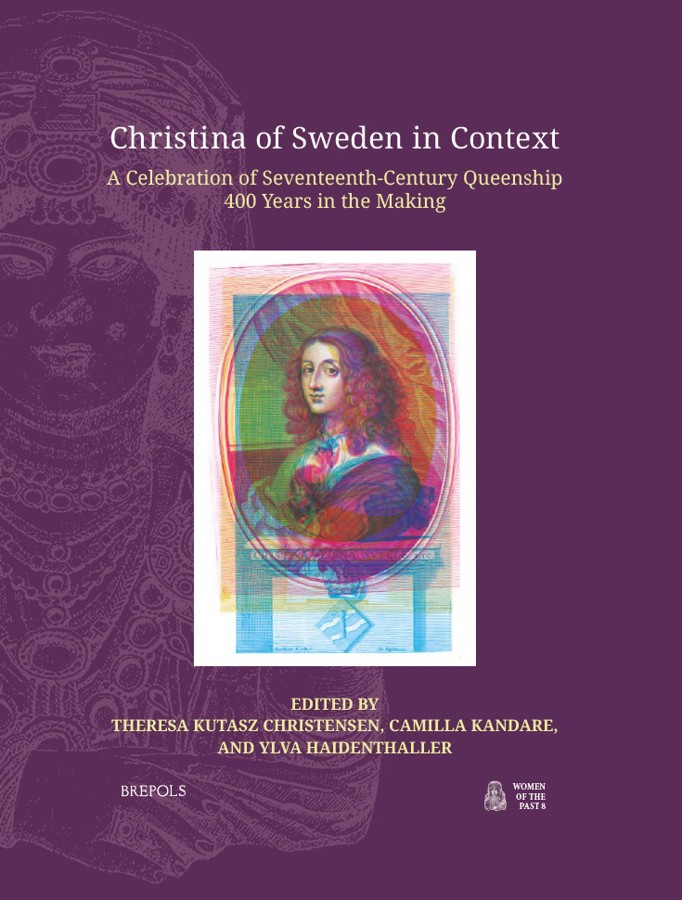 Christina of Sweden in Context
A Celebration of Seventeenth-Century Queenship 400 Years in the Making


 Contesting Labeled Identities
The Sociology of Gentilics in Biblical and Northwest Semitic Literature


 Drunk the Potion, No Whit Charmed
The Doctrine of Pure and Perfect Souls from Iamblichus to Damascius


 Engaged Languages and Literatures / Langues et Littératures engagées
Critical Views / Regards Critiques
 Epigraphic “Shades” from Hellenistic Thrace
Contextualizing Inscriptions in Greek from Thracian Tombs

 Epiphanies of the Divine in the Septuagint and the New Testament
Fifth International Symposium of the Corpus Judaeo-Hellenisticum Novi Testamenti (CJHNT), 14-17 May 2015, Nottingham


 Food Security under Armed Conflict
Global Knowledge Landscape and Public Attention to Social, Economic, and Humanitarian Dimensions


 Gold, Silver and Glass: Power Networks, Cultural Identities, Technology Transfers and Agency across the Old World (7th Century BC – 1st Century AD)
Proceedings of a Conference Held at the British Museum, 16–18 June 2023

 Innovationes Lovanienses: Arts, Law and Theology at the University of Louvain (1425–1797)
Studium Lovaniense: Learning across Borders, 2
Volume 18

 Language and Power in the Roman Empire and Early India
Hierarchy, Ambiguity, and the Art of Reading the Signs in Cosmopolitan Cultures
 Late Antique villae in the Balkans (3rd–7th c. AD): Current Research Questions and Perspectives
HAEMUS Companion to the Late Antique Balkans 1
Volume 4