
Velazquez Re-examined
Theory, History, Poetry, and Theatre
Edited by Giles Knox Edited by Tanya Tiffany
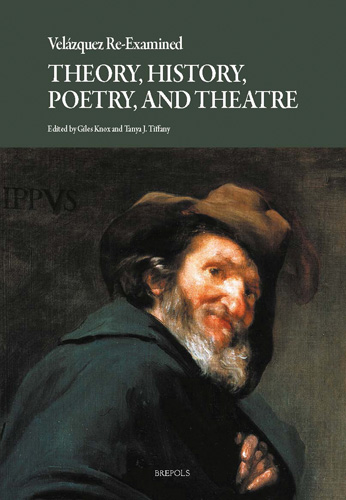
Featuring the work of five prominent scholars, this collection analyzes the paintings of Diego Velazquez within the cultural, intellectual, and political frameworks of seventeenth-century Spain. Each essay offers novel insight into the greatest artist of the Spanish Golden Age by bringing a remarkable range of material to bear upon the interpretation of his works. Laura Bass considers painting, poetics, and the Spanish canon of arts and letters in an examination of Velazquez’s trenchant portrayal of the writer Luis de Gongora. Turning to the nexus between theory and practice, Giles Knox explores how Velazquez engaged with sculpture both as a young man mastering his craft and as a painter to King Philip IV. Fernando Marias uses sixteenth- and seventeenth-century artistic theory to shed light on the complex narrative structure of a work painted by Velazquez in Italy: Joseph’s Bloodied Coat, in which the artist placed himself in competition with the celebrated history painters of Rome. Through an investigation of classical philosophy as understood by Velazquez’s contemporaries, Aneta Georgievska-Shine locates his enigmatic Aesop and Menippus within discourse on wisdom, paradox, and humor. Javier Portus places paintings and theatrical productions within the social and political matrix of the Spanish court, offering a powerful new reading of the space for which Velazquez created the Surrender of Breda.
Featuring the work of five prominent scholars, this collection analyzes the paintings of Diego Velazquez within the cultural, intellectual, and political frameworks of seventeenth-century Spain. Each essay offers novel insight into the greatest artist of the Spanish Golden Age by bringing a remarkable range of material to bear upon the interpretation of his works. Laura Bass considers painting, poetics, and the Spanish canon of arts and letters in an examination of Velazquez’s trenchant portrayal of the writer Luis de Gongora. Turning to the nexus between theory and practice, Giles Knox explores how Velazquez engaged with sculpture both as a young man mastering his craft and as a painter to King Philip IV. Fernando Marias uses sixteenth- and seventeenth-century artistic theory to shed light on the complex narrative structure of a work painted by Velazquez in Italy: Joseph’s Bloodied Coat, in which the artist placed himself in competition with the celebrated history painters of Rome. Through an investigation of classical philosophy as understood by Velazquez’s contemporaries, Aneta Georgievska-Shine locates his enigmatic Aesop and Menippus within discourse on wisdom, paradox, and humor. Javier Portus places paintings and theatrical productions within the social and political matrix of the Spanish court, offering a powerful new reading of the space for which Velazquez created the Surrender of Breda.
- Edited by Giles Knox
- Edited by Tanya Tiffany
Other Titles in this Series
Similar Books
 A Collaborative Tapestry in Honour of Shirley Ann Brown / Une fresque brodée en l’honneur de Shirley Ann Brown
The Bayeux Tapestry Seen by her Colleagues and Friends / La Tapisserie de Bayeux vue par ses collègues et amis



 Balthasar Caymox of Nuremberg
Early Modern German Print Publishers: Popular Prints of the Seventeenth Century


 ENTANGLED AFRICA
Intra-African Relations Between Rain Forest and Mediterranean from Around 4,000 BCE to 1,500 CE


 Gold, Silver and Glass: Power Networks, Cultural Identities, Technology Transfers and Agency across the Old World (7th Century BC – 1st Century AD)
Proceedings of a Conference Held at the British Museum, 16–18 June 2023


 Legal Visuality
Exegesis, Ambiguity, and Dissimulation of the Donation of Constantine in the Early Modern Period
 Listening to the Swan Song
More-than-Human Beings and Sounds in Literature and Culture Through the Ages


 Monastic Manuscripts from the Eastern Mediterranean (Sinai, Jerusalem, Antioch)
Production, Use, and Contexts

 Naples as Laboratory / Laboratorium Neapel
Style Options, Artistic Rivalry and Self Fashioning in Neapolitan Baroque Painting / Plurale Stilbildung, Kunstlerkonkurrenz und Self Fashioning in der neapolitanischen Barockmalerei

 Nurturing the Elite
Representations of Drinking, Eating, and Religious Vessels in Palmyrene Funerary Iconography
Volume 13


 Portraying the Individual in the Roman East
Local–Imperial Entanglements in Sculpture, Mosaics, and Paintings (First–Fourth Centuries AD)
Volume 18


 Technical Studies of Asian Art
Proceedings of the Seventh Forbes Symposium at the Freer Gallery of Art


