
When Wisdom Calls
Philosophical Protreptic in Antiquity
Edited by Olga Alieva Edited by Annemare Kotze Edited by Sophie Van der Meeren

Philosophy has never been an obvious life choice, especially in the absence of apparent practical usefulness. The intellectual effort and moral discipline it exacts appeared uninviting from the outside. However, the philosophical ideals of theoretical precision and living virtuously are what has shaped the cultural landscape of the West since Antiquity. This paradox arose because the ancients never confined their philosophy to the systematic exposition of doctrine. Orations, treatises, dialogues and letters aimed at persuading people to become lovers of wisdom, not metaphorically, but truly and passionately. Rhetorical feats, logical intricacies, or mystical experience served to recruit adherents, to promote and defend philosophy, to support adherents and guide them towards their goal. Protreptic (from the Greek, to exhort, to convert) was the literary form that served all these functions. Content and mode of expression varied considerably when targeting classical Greek aristocracy, Hellenistic schoolrooms or members of the early Church where the tradition of protreptic was soon appropriated. This volume seeks to illuminate both the diversity and the continuity of protreptic in the work of a wide range of authors, from Parmenides to Augustine. The persistence of the literary form bears witness to a continued fascination with the call of wisdom.
- Edited by Olga Alieva
- Edited by Annemare Kotze
- Edited by Sophie Van der Meeren
Other Titles in this Series


 La statut de la perception sensible dans les Questions a Thalassios de Maxime le Confesseur
Volume 31


 Scepticisme et religion
Constantes et evolutions, de la philosophie hellenistique a la philosophie medievale
Volume 21
 To See into the Life of Things
The Contemplation of Nature in Maximus the Confessor and his Predecessors
Volume 18


Similar Books



 Contesting Labeled Identities
The Sociology of Gentilics in Biblical and Northwest Semitic Literature


 Drunk the Potion, No Whit Charmed
The Doctrine of Pure and Perfect Souls from Iamblichus to Damascius

 Epigraphic “Shades” from Hellenistic Thrace
Contextualizing Inscriptions in Greek from Thracian Tombs

 Epiphanies of the Divine in the Septuagint and the New Testament
Fifth International Symposium of the Corpus Judaeo-Hellenisticum Novi Testamenti (CJHNT), 14-17 May 2015, Nottingham


 Éthique, politique, religions
Superstition (XVIIe - XXIe siècles). Sémantique, histoires et cultures


 Gold, Silver and Glass: Power Networks, Cultural Identities, Technology Transfers and Agency across the Old World (7th Century BC – 1st Century AD)
Proceedings of a Conference Held at the British Museum, 16–18 June 2023

 La Lettre clandestine
La littérature philosophique clandestine, ses éditeurs et ses éditions
Volume 34
 Language and Power in the Roman Empire and Early India
Hierarchy, Ambiguity, and the Art of Reading the Signs in Cosmopolitan Cultures
 Late Antique villae in the Balkans (3rd–7th c. AD): Current Research Questions and Perspectives
HAEMUS Companion to the Late Antique Balkans 1
Volume 4
 Libertinage et philosophie à l’époque classique (XVIe-XVIIIe siècle)
Athéisme, Modernité et Sécularisation / Atheism, Modernity and Secularization
Volume 23


 Nurturing the Elite
Representations of Drinking, Eating, and Religious Vessels in Palmyrene Funerary Iconography
Volume 13


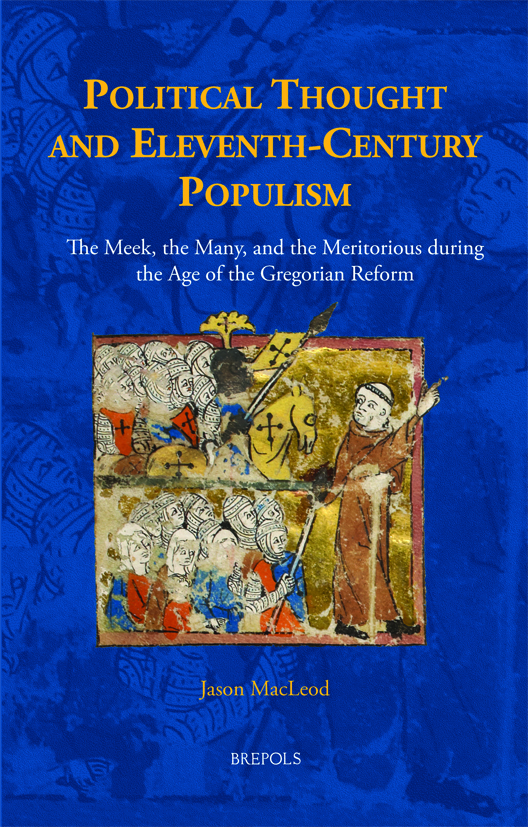 Political Thought and Eleventh-Century Populism
The Meek, the Many, and the Meritorious during the Age of the Gregorian Reform
Volume 38



