Sustainable History and Human Dignity
A Neurophilosophy of History and the Future of Civilisation
by Nayef Al-Rodhan

Paperback (No longer our product)
(March 2022)
ISBN: 9780718895716
9.17 x 6.1 inches
Price: $45.00
In stock
Hardback (No longer our product)
(January 2022)
ISBN: 9780718895709
9.17 x 6.1 inches
Price: $123.00
In stock
A new model for good governance balancing human nature with human needs.
Sustainable History and the Dignity of Man is a new philosophy of history. This volume outlines how sustainable history is propelled by good governance, which balances the tension between the attributes of human nature – emotionality, amorality and egoisms – and human dignity needs, such as reason, security, human rights, accountability, transparency, justice, opportunity, innovation and inclusiveness. The author proposes minimum criteria for good governance that are sensitive to local cultures and histories but meet certain common global values to ensure maximum and sustainable moral and political cooperation. Using an ocean model of a single collective human civilisation, the author argues that we should think in terms of a common human story that is comprised of multiple geo-cultural domains and sub-cultures with a history of mutual borrowing and synergies. The author argues that, today, all geo-cultural domains must succeed if humanity as a whole is to triumph. This collective triumph will also depend on reason and a recognition that a great deal of knowledge is indeterminate and may be temporally, spatially and perhaps culturally constrained, as is outlined in the author’s new theory of knowledge: “Neuro-rational Physicalism”. Dr. Nayef R.F. Al-Rodhan is Senior Scholar in Geostrategy and Director of the Programme on the Geopolitical Implications of Globalisation and Transnational Security at the Geneva Centre for Security Policy, Geneva, Switzerland. “This book is an exceptionally wide-ranging examination of past and present approaches to the securing of a qualitatively adequate social life on the planet. The need for intercultural dialogue is pressing and stated as a matter of urgency in the text. That argument is well-presented and it is helpfully accompanied by a large amount of empirical evidence. The book is also a strong and ethically attractive humanist statement about the value of human interaction that incorporates a vision of mutual respect based on a mixture of scientific arguments and normative aspirations. Those features are very impressive.” Professor Michael Freeden, Professor of Politics, Director of the Centre for Political Ideologies, Professorial Fellow, Mansfield College, University of Oxford, United Kingdom.
List of Figures and Tables Acknowledgements 1. Sustainable History with Dignity and without Directionality Part 1. The Foundations of Life, Human Nature and Human Knowledge 2. Where Are We? Cosmology and the Big Universal Picture 3. Who Are We? Neurochemical Man and Emotional Amoral Egoism 4. What Motivates Us? The Neuro P5, Power and Sustainable History 5. Why Are We Here? The Sustainable Neurochemical Gratification Principle 6. What Do We Know for Certain? A Proposal for a Theory of Knowledge Part 2. The Eight Prerequisites for Sustainable History 7. How Can Dignity Be Attained? Minimum Criteria for Human Dignity 8. How Can We Sustainably Govern Ourselves? Balancing the Attributes of Human Nature and the Requirements for Human Dignity 9. What Is Needed for Good National Governance? Minimum Criteria for Dignity-Based National Governance 10. What Is Needed for Good Global Governance? Minimum Criteria for Dignity- Based Good Global Governance 11. How Can We Shape a Fairer World? Minimum Criteria for Global Justice 12. How to Create a Safer World? The Five Dimensions of Global Security 13. How Should We Approach International Relations? Symbiotic Realism 14. How Should Statecraft Be Conducted? Twenty- First- Century Statecraft and Meta-Geopolitics 15. How Should Cultures Interrelate? Transcultural Security and Universal Axiology 16. How Can We Collectively Succeed? The Beneficial Development of Individual Geo-cultural Domains Part 3. The History and the Future of Human, Trans-Human and Post-Human Civilisation 17. Where Are We Going? Sustainable History and the Future of Civilisatio Notes Bibliography
Professor Nayef Al-Rodhan is a Philosopher, Neuroscientist and Geostrategist. He is Honorary Fellow, St. Antony’s College, Oxford University, United Kingdom, Head of the Geneva Centre for Security Policy’s Geopolitics and Global Futures Programme, Switzerland, Senior Research Fellow, Institute of Philosophy, School of Advanced Study, University of London, United Kingdom, and Member of the Global Future Council on Frontier Risks at the World Economic Forum. His research focuses on the interplay between: Analytic Neurophilosophy, Geopolitics, Global Futures, Outer space security, Cultural discourse and synergies, Disruptive technologies, International Relations and Policy. He was voted as one of the Top 30 most influential Neuroscientists in the world.
- By (author) Nayef Al-Rodhan
"Professor Al-Rodhan is both a distinguished neuroscientist and profound philosopher, straddling the disciplinary divide. Here he offers not just an illuminating survey of previous writing on the philosophy of history by the likes of Ibn Khaldun, Hegel, Marx, Toynbee, and Fukuyama, but also a roadmap to a better future based on good governance, social justice, inclusiveness, trans-cultural dialogue, human rights, and human dignity. A remarkable book by a remarkable author." Avi Shlaim FBA, Emeritus Professor of International Relations, University of Oxford "A pioneering work that puts neuroscience to the service of history, and uses history as a guide to the future. A profound and important book." Eugene Rogan, Professor of Modern Middle Eastern History, University of Oxford "Nayef Al-Rodhan, one of the world's leading intellectuals, has produced an epic book that navigates beyond the monocultural/Eurocentric approaches of the likes of Fukuyama and Huntington. This is a book for our times. It offers an enriching philosophy of history and historical progress that informs his brilliant diagnosis and inclusive analysis of the world together with a highly appealing but realistic set of prescriptions that can create a genuinely brighter future for global humanity." John M. Hobson, Professor of Politics & International Relations, University of Sheffield "Dr. Nayef R.F. Al-Rodhan challenges us to grapple with the meaning of history and how it could lead to the improvement of the human condition. This book presents his views on how a sustainable history based on human dignity could be achieved. In his opinion, this requires good governance, based on 'reason, security, human rights, accountability, transparency, justice, opportunity, innovation and inclusiveness.' I agree, and I hope that the path laid out in this book attracts many followers. President Jimmy Carter, 39th President of the United States No-one seeking to understand the modern condition can afford to ignore Dr Al-Rodhan's inspiring book, a profound analysis of the core values around which effective global governance can be built and sustained." Lord Anthony Giddens, Former President of LSE, UK
—
Similar Books


 Drunk the Potion, No Whit Charmed
The Doctrine of Pure and Perfect Souls from Iamblichus to Damascius
 Éthique, politique, religions
Superstition (XVIIe - XXIe siècles). Sémantique, histoires et cultures


 La Lettre clandestine
La littérature philosophique clandestine, ses éditeurs et ses éditions
Volume 34
 Libertinage et philosophie à l’époque classique (XVIe-XVIIIe siècle)
Athéisme, Modernité et Sécularisation / Atheism, Modernity and Secularization
Volume 23


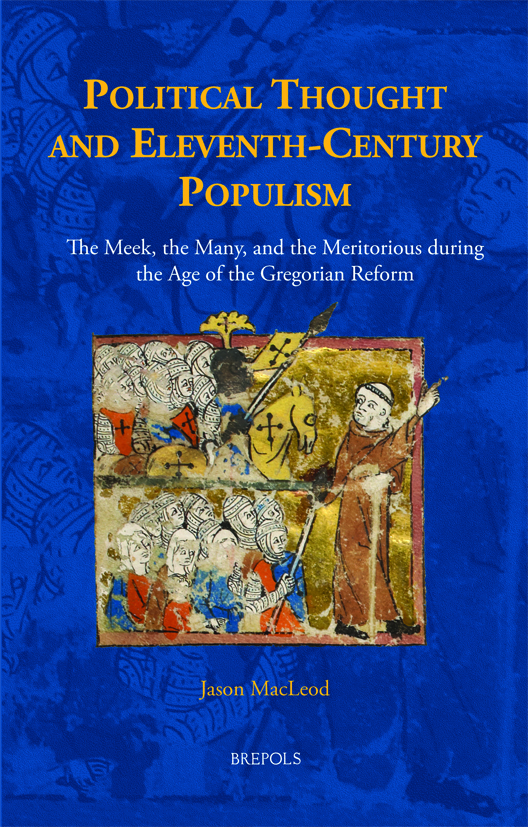 Political Thought and Eleventh-Century Populism
The Meek, the Many, and the Meritorious during the Age of the Gregorian Reform
Volume 38


 The Latin Hermes in Translation
Asclepius, Glosses on Trismegistus, Book of Six Principles of Things, Book of 24 Philosophers
Volume 50



 ‘Emergente Evolution’?
Fallstudien zur philosophischen Rekonstruktion und schopfungstheologischen Rezeption eines naturalistischen Paradigmas
Volume 40
 Al-Ğābirīs Genese und Kritik der Arabischen Vernunft
On Genesis and Critique of Arab Reason by Muḥammed ʿĀbid al-Ğābirī


 Das Dasein und das isolierte Subjekt
Die Frage der philosophischen Selbstinterpretation des Menschen bei Heidegger


 Der Geist des Menschen und die originäre Erfahrung der Zerbrechlichkeit
Eine philosophisch-theologische Grundlegung nach Edith Stein im Dialog mit der medizinischen Anthropologie und der existentiellen Psychologie