
Powerful Women in the Ancient World
Perception and (Self)Presentation
edited by Kerstin Droa-Krupe and Sebastian Fink
Hardback (Published)
(August 2021)
ISBN: 9783963271380
6.65 x 9.45 inches
Price: $157.00
In stock
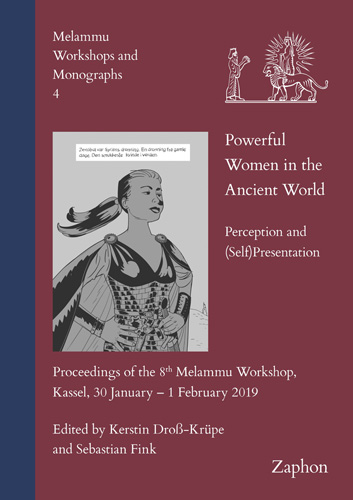
The present volume focuses on powerful women in the ancient world and not only taking an exceptionally broad temporal and geographical scope, but also combining contributions on the portrayal of powerful ancient women in cuneiform texts and classical sources. In doing so, it aims at bringing together both a “western” and “eastern” perspective on the remembrance of these exceptional women and likewise at making the Self-presentation of these women as well as their discursive/narrative treatment by (later, male) outsiders the centre of attention. Power is understood in its broadest sense – not only real political and formal power, but also more informal concepts of power, such as relations of dependence and superiority in private, in the religious or economic spheres, taking into account that the latter forms of power can nevertheless influence the exercise of formal power. Thus, both actual female rulers and women who pulled strings from behind the scenes – at least according to their presentation in the sources – are gathered here. The key questions the contributors to this volume ask are: What information does a close and critical reading of the available sources provide about their actual radius of action and their social and economic status? Were these women considered role models (and if so when and by whom)? What do these details tell us about different gender roles in the Classical and Mesopotamian worlds? How (and possibly why) where the attitudes towards women different? In particular, the contributions focus on Innana, Enheduana, and Shamhat from the Ancient Near East, Hatshepsut and Amanishakheto from Egypt, Bathsheba, female prophets, and women at the heart of the tribal system from the Biblical World, and Ada, Antigone, Cleopatra, Cornelia, Elpinice, Iulia maior, Julia Domna, Livia, Messalina, Olympias, Shirin, Valeria Melania, and Zenobia of Palmyra in classical and modern sources.
The present volume focuses on powerful women in the ancient world and not only taking an exceptionally broad temporal and geographical scope, but also combining contributions on the portrayal of powerful ancient women in cuneiform texts and classical sources. In doing so, it aims at bringing together both a “western” and “eastern” perspective on the remembrance of these exceptional women and likewise at making the Self-presentation of these women as well as their discursive/narrative treatment by (later, male) outsiders the centre of attention. Power is understood in its broadest sense – not only real political and formal power, but also more informal concepts of power, such as relations of dependence and superiority in private, in the religious or economic spheres, taking into account that the latter forms of power can nevertheless influence the exercise of formal power. Thus, both actual female rulers and women who pulled strings from behind the scenes – at least according to their presentation in the sources – are gathered here. The key questions the contributors to this volume ask are: What information does a close and critical reading of the available sources provide about their actual radius of action and their social and economic status? Were these women considered role models (and if so when and by whom)? What do these details tell us about different gender roles in the Classical and Mesopotamian worlds? How (and possibly why) where the attitudes towards women different? In particular, the contributions focus on Innana, Enheduana, and Shamhat from the Ancient Near East, Hatshepsut and Amanishakheto from Egypt, Bathsheba, female prophets, and women at the heart of the tribal system from the Biblical World, and Ada, Antigone, Cleopatra, Cornelia, Elpinice, Iulia maior, Julia Domna, Livia, Messalina, Olympias, Shirin, Valeria Melania, and Zenobia of Palmyra in classical and modern sources.
Kerstin Droa-Krupe / Sebastian Fink: Preface and Acknowledgements Powerful Women in the Ancient World in the Light of the Sources Annette Zgoll: Innana conquers Ur: A Hitherto Unknown Myth Created by En-hedu-ana for Mutual Empowerment Gina Konstantopoulos: The Many Lives of Enheduana: Identity, Authorship, and the "World's First Poet" Nicole Brisch: Samhat: Deconstructing Temple Prostitution One Woman at a Time David A. Warburton: Hatshepsut: The Feminine Horus and Daughter of Amun on the Throne of Atum Lloyd Llewellyn-Jones: Bathsheba and Beyond: Harem Politics in the Ancient Near East Martti Nissinen: The Agency of Female Prophets in the Bible: Independent or Instrumental? Prophetic or Political? Stephanie Anthonioz: Women at the Heart of the Tribal System in the Book of Genesis Paola Coro: Between a Queen and an Ordinary Woman: On Laodice and the Representation of Women in Cuneiform Sources in the Hellenistic Period Claudia Horst: Antigone: Political Power and Resonance Florian Krupe: Mighty, but quiet? Elpinice between Conflicting Priorities in Interpretations and Sources Sabine Muller: On a Dynastic Mission: Olympias and Kleopatra, Agents of their House Timothy Howe: (Re)Taking Halikarnassos: Ada, Alexander the Great and Karian Queenship Josefine Kuckertz: Amanishakheto: A Meroitic Ruling Queen of the Late 1st Cent. BC / Early 1st Cent. AD Kordula Schnegg: Cornelia: A Powerful Woman Francesca Rohr Vio: Domum servavit, lanam fecit: Livia and the Rewriting of the Female Model in the Augustan Age Christiane Kunst: Iulia maior on the Move: exemplum licentiae and euergetis Helmuth Schneider: Der Tod Messalinas. Folge sexueller Libertinage oder Machtkalkul? Brigitte Truschnegg: Feminine, influential and different? The Presentation of Julia Domna Udo Hartmann: Zenobia of Palmyra: A Female Roman Ruler in Times of Crisis Ireneusz Milewski: "Earthly yoke"? The Estate of Valeria Melania Ewan Short / Eve MacDonald: Shirin in Context: Female Agency and the Wives of the Sasanian King Khosrow Parviz Powerful Women in the Ancient World in Modern Thought Francois de Callatay: Cleopatra as a Strong Woman in Modern Times: A less Negative Episode in a Disfigured Tradition? Martin Lindner: Rome Herself: Female Characters in Gunther Birkenfeld's Augustus Novels (1934-1984) Anja Wieber: Depicting the Palmyrene Queen Zenobia: From Baroque "femmes fortes" to Modern Comic Books
- Edited by Kerstin Droa-Krupe
- Edited by Sebastian Fink
Other Titles in this Series
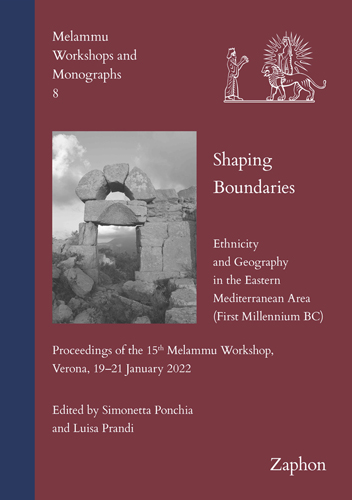 Shaping Boundaries
Ethnicity and Geography in the Eastern Mediterranean Area (First Millennium BC). Proceedings of the 15th Melammu Workshop, Verona, 19-21 January 2022
Volume 8
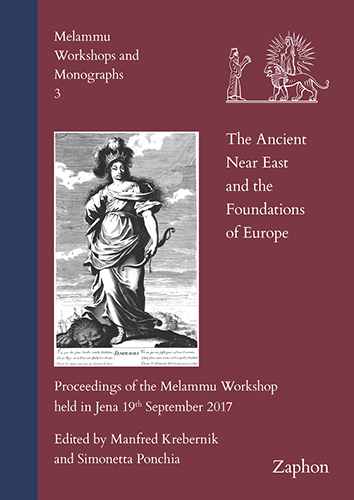 The Ancient Near East and the Foundations of Europe
Proceedings of the Melammu Workshop held in Jena 19th September 2017
Volume 3
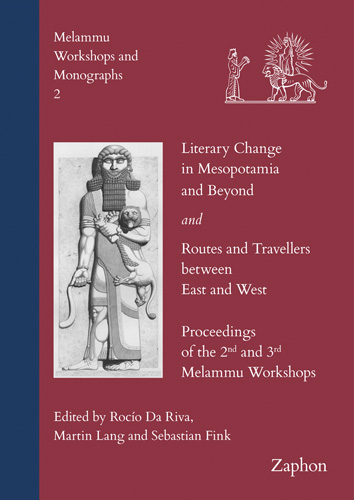 Literary Change in Mesopotamia and Beyond and Routes and Travellers between East and West
Proceedings of the 2nd and 3rd Melammu Workshop
Volume 2
 Representing the Wise
A Gendered Approach: Proceedings of the 1st Melammu Workshop. Lille, 4-5 April 2016
Volume 1
 Domestic Trade and Maritime Trade in the Eastern Mediterranean and the Ancient Near East
Proceedings of the 10th Melammu Workshop, TRANSMARE Institute Trier, 11–13 December 2019
Volume 11
 Creating the Woman in Antiquity
Proceedings of the 16th Melammu Workshop, Innsbruck, 2–3 June 2022
Volume 13
 Autocratic Rule in Antiquity
Proceedings of the 14th Melammu Workshop, Krakow, 46 October 2021
Volume 12
 Responses to the 12th Century BC Collapse
Recovery and Restructuration in the Early Iron Age Near East and Mediterranean. Proceedings of the 9th Melammu Workshop, Tartu, 7-9 June 2019
Volume 10
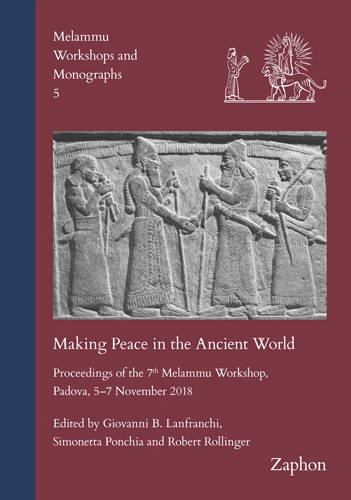 Making Peace in the Ancient World
Proceedings of the 7th Melammu Workshop, Padova, 5-7 November 2018
Volume 5
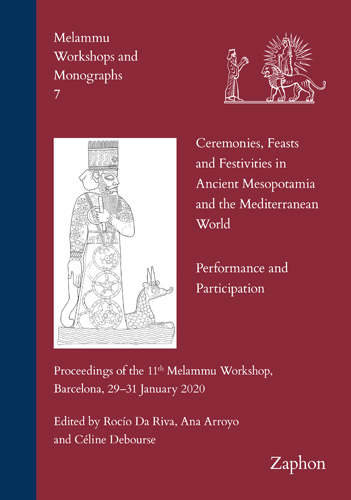 Ceremonies, Feasts and Festivities in Ancient Mesopotamia and the Mediterranean World
Performance and Participation: Proceedings of the 11th Melammu Workshop, Barcelona, 29-31 January 2020
Volume 7

Similar Books





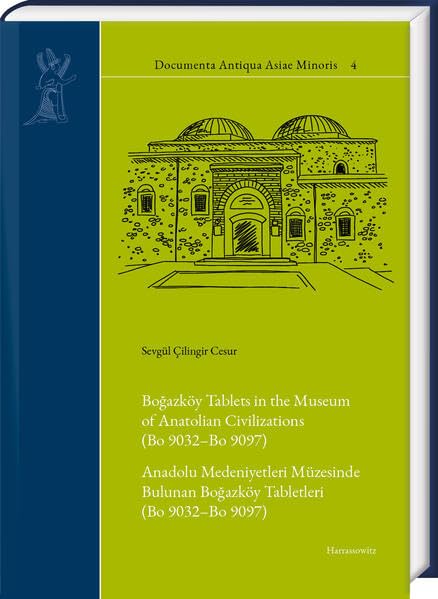 Boğazköy Tablets in the Museum of Anatolian Civilizations (Bo 9032–Bo 9097)
Anadolu Medeniyetleri Müzesinde Bulunan Boğazköy Tabletleri (Bo 9032–Bo 9097)
Volume 4

 Connecting the Dots: Counting, Writing, and the Beginnings of Civilization
The Secret Lives of Clay Tokens: A Memoir
 Contesting Labeled Identities
The Sociology of Gentilics in Biblical and Northwest Semitic Literature

 Curating the Prehistoric Past
Studies on West Asian Archaeology and Beyond in Honour of Yoshihiro Nishiaki
 Drunk the Potion, No Whit Charmed
The Doctrine of Pure and Perfect Souls from Iamblichus to Damascius


 Epigraphic “Shades” from Hellenistic Thrace
Contextualizing Inscriptions in Greek from Thracian Tombs

 Epiphanies of the Divine in the Septuagint and the New Testament
Fifth International Symposium of the Corpus Judaeo-Hellenisticum Novi Testamenti (CJHNT), 14-17 May 2015, Nottingham


 Exploring Gender Dynamics across the Ancient Near East
Collected Essays of Gender and Methodology in the Ancient Near East (GeMANE) 4 and 5
Volume 7


 Gold, Silver and Glass: Power Networks, Cultural Identities, Technology Transfers and Agency across the Old World (7th Century BC – 1st Century AD)
Proceedings of a Conference Held at the British Museum, 16–18 June 2023
 Ḫattušaš utnē išḫameški
Hittite and Other Ancient Near Eastern Studies Presented to Piotr Taracha on the Occasion of His 65th Birthday






 Kultur – Kontakt – Kultur
Beiträge anlässlich der 66. Rencontre Assyriologique Internationale in Frankfurt/Main und Mainz, 25.–29. Juli 2022
Volume 35