
Christian Zervos au miroir de la Grèce
Edited by P. Kosmadaki

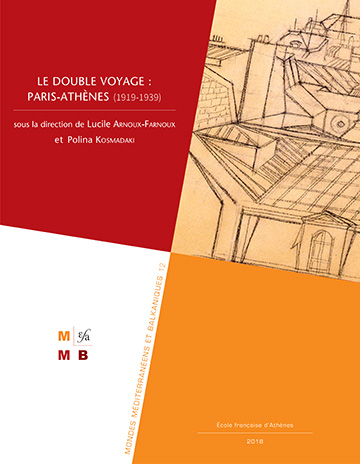
French description: Dans la revue comme dans les editions Cahiers d’art, Christian Zervos a pris le parti de faire dialoguer des oeuvres de domaines differents et de diverses epoques historiques. Il envisageait l’art moderne en partant toujours de ses rapports a des formes universelles, provenant des arts dits premiers ou archaiques et des instincts primordiaux de l’humanite. Il jetait ainsi un nouveau regard sur les objets anciens dans le cadre d’une double demarche qui les reactualisait, tout en reinscrivant l’art moderne dans une perspective historique. La contribution de Zervos fut particulierement importante pour la rehabilitation de l’art de la Grece antique – notamment de l’art preclassique – ainsi que pour la redefinition des civilisations anciennes et des formes d’art archaiques dans le cadre du modernisme. Dans ce volume, il est question de sa vision globale de la culture mediterraneenne, qui se forma au miroir de la Grece, a travers un double lien: au depart l’ancrage de sa demarche moderniste dans les principes des arts premiers du bassin mediterraneen, puis le retour au pays, dans les annees 1950, pour renouer avec les origines de la culture meridionale poursuivant ainsi son projet de retracer les sources primitives du Sud europeen (en Sardaigne, dans les Cyclades, en Crete). Ces textes retracent le developpement de son gout pour ces periodes sans temoignages ecrits et la poursuite de son projet de constituer un recit photographique des cultures du Sud prehistorique. English summary: In both the literary journal and the monographic publications of Cahiers d’art, Christian Zervos has chosen to bring together works from different fields and historical periods. His approach to modern art was always based on its relationship to universal forms, derived from the so-called “primitive” or “archaic” arts and the “primordial” instincts of humanity. He thus took a fresh look at ancient objects through a double process – updating them while placing modern art in a historical perspective. Zervos’ contribution was particularly important for the rehabilitation of ancient Greek art – especially pre-classical art – and for the redefinition of ancient civilizations and archaic art forms within the scope of modernism. This volume discusses his global vision of Mediterranean culture, which was formed “in the mirror of Greece”, through a double link, starting with the anchoring of his “modernist” approach in the principles of the primitive arts of the Mediterranean basin, and then returning to his homeland in the 1950s to reconnect with the “origins” of southern culture, thus pursuing his project of retracing the primitive sources of the European South (in Sardinia, the Cyclades, Crete). These texts trace the development of his interest in these periods that bear no written evidence, and the pursuit of his project to create a photographic account of the cultures of the “prehistoric South”.
French description: Dans la revue comme dans les editions Cahiers d’art, Christian Zervos a pris le parti de faire dialoguer des oeuvres de domaines differents et de diverses epoques historiques. Il envisageait l’art moderne en partant toujours de ses rapports a des formes universelles, provenant des arts dits premiers ou archaiques et des instincts primordiaux de l’humanite. Il jetait ainsi un nouveau regard sur les objets anciens dans le cadre d’une double demarche qui les reactualisait, tout en reinscrivant l’art moderne dans une perspective historique. La contribution de Zervos fut particulierement importante pour la rehabilitation de l’art de la Grece antique – notamment de l’art preclassique – ainsi que pour la redefinition des civilisations anciennes et des formes d’art archaiques dans le cadre du modernisme. Dans ce volume, il est question de sa vision globale de la culture mediterraneenne, qui se forma au miroir de la Grece, a travers un double lien: au depart l’ancrage de sa demarche moderniste dans les principes des arts premiers du bassin mediterraneen, puis le retour au pays, dans les annees 1950, pour renouer avec les origines de la culture meridionale poursuivant ainsi son projet de retracer les sources primitives du Sud europeen (en Sardaigne, dans les Cyclades, en Crete). Ces textes retracent le developpement de son gout pour ces periodes sans temoignages ecrits et la poursuite de son projet de constituer un recit photographique des cultures du Sud prehistorique. English summary: In both the literary journal and the monographic publications of Cahiers d’art, Christian Zervos has chosen to bring together works from different fields and historical periods. His approach to modern art was always based on its relationship to universal forms, derived from the so-called “primitive” or “archaic” arts and the “primordial” instincts of humanity. He thus took a fresh look at ancient objects through a double process – updating them while placing modern art in a historical perspective. Zervos’ contribution was particularly important for the rehabilitation of ancient Greek art – especially pre-classical art – and for the redefinition of ancient civilizations and archaic art forms within the scope of modernism. This volume discusses his global vision of Mediterranean culture, which was formed “in the mirror of Greece”, through a double link, starting with the anchoring of his “modernist” approach in the principles of the primitive arts of the Mediterranean basin, and then returning to his homeland in the 1950s to reconnect with the “origins” of southern culture, thus pursuing his project of retracing the primitive sources of the European South (in Sardinia, the Cyclades, Crete). These texts trace the development of his interest in these periods that bear no written evidence, and the pursuit of his project to create a photographic account of the cultures of the “prehistoric South”.
- Edited by P. Kosmadaki
Other Titles in this Series


 Cent ans apres
la memoire de la Premiere Guerre mondiale: One Hundred Years after: The Memory of the First World War
Volume 13
Similar Books
 A Collaborative Tapestry in Honour of Shirley Ann Brown / Une fresque brodée en l’honneur de Shirley Ann Brown
The Bayeux Tapestry Seen by her Colleagues and Friends / La Tapisserie de Bayeux vue par ses collègues et amis



 Balthasar Caymox of Nuremberg
Early Modern German Print Publishers: Popular Prints of the Seventeenth Century


 ENTANGLED AFRICA
Intra-African Relations Between Rain Forest and Mediterranean from Around 4,000 BCE to 1,500 CE


 Gold, Silver and Glass: Power Networks, Cultural Identities, Technology Transfers and Agency across the Old World (7th Century BC – 1st Century AD)
Proceedings of a Conference Held at the British Museum, 16–18 June 2023


 Legal Visuality
Exegesis, Ambiguity, and Dissimulation of the Donation of Constantine in the Early Modern Period
 Listening to the Swan Song
More-than-Human Beings and Sounds in Literature and Culture Through the Ages


 Monastic Manuscripts from the Eastern Mediterranean (Sinai, Jerusalem, Antioch)
Production, Use, and Contexts

 Naples as Laboratory / Laboratorium Neapel
Style Options, Artistic Rivalry and Self Fashioning in Neapolitan Baroque Painting / Plurale Stilbildung, Kunstlerkonkurrenz und Self Fashioning in der neapolitanischen Barockmalerei

 Nurturing the Elite
Representations of Drinking, Eating, and Religious Vessels in Palmyrene Funerary Iconography
Volume 13


 Portraying the Individual in the Roman East
Local–Imperial Entanglements in Sculpture, Mosaics, and Paintings (First–Fourth Centuries AD)
Volume 18


 Technical Studies of Asian Art
Proceedings of the Seventh Forbes Symposium at the Freer Gallery of Art


