
Der Begriff natura und seine ethische Relevanz in Senecas Prosaschriften
By (author) Christina Kreuzwieser

Hardback (Published)
(January 2016)
ISBN: 9783847105008
6.34 x 9.33 inches
Price: $82.00
On back order
Der Begriff natura bezeichnet nicht nur die Vernunft als die menschliche Gattungsnatur, sondern auch die besondere Einzelnatur, ohne deren Berucksichtigung moralische Entscheidungen nicht moglich sind.
Der oberste Grundsatz der stoischen Ethik lautet: gemass der Natur zu leben. Diese Arbeit unterzieht den Begriff der menschlichen Natur, wie er in Senecas Prosaschriften – insbesondere den Epistulae morales – begegnet, einer Neuuntersuchung. Anhand einer genauen Textanalyse behandelt die Autorin die Frage, inwieweit neben der Vernunftnatur des Menschen auch dessen besondere Einzelnatur fur moralische Entscheidungen relevant ist.Zunachst eruiert sie in einem systematischen Grundlagenteil den Senecanischen Naturbegriff unter Berucksichtigung der philosophischen Tradition. Sodann wird die Bedeutung der menschlichen Natur fur die Selbst- und Fremderziehung untersucht. Abschliessend zeigt die Autorin, welche Funktion die Briefform fur das Senecanische Philosophieren haben konnte.
Dr. Christina Kreuzwieser ist als Dozentin fur biblische Sprachen an der Johannes-Gutenberg Universitat Mainz tatig.
- By (author) Christina Kreuzwieser
Similar Books



 Contesting Labeled Identities
The Sociology of Gentilics in Biblical and Northwest Semitic Literature


 Drunk the Potion, No Whit Charmed
The Doctrine of Pure and Perfect Souls from Iamblichus to Damascius

 Epigraphic “Shades” from Hellenistic Thrace
Contextualizing Inscriptions in Greek from Thracian Tombs

 Epiphanies of the Divine in the Septuagint and the New Testament
Fifth International Symposium of the Corpus Judaeo-Hellenisticum Novi Testamenti (CJHNT), 14-17 May 2015, Nottingham


 Éthique, politique, religions
Superstition (XVIIe - XXIe siècles). Sémantique, histoires et cultures


 Gold, Silver and Glass: Power Networks, Cultural Identities, Technology Transfers and Agency across the Old World (7th Century BC – 1st Century AD)
Proceedings of a Conference Held at the British Museum, 16–18 June 2023

 La Lettre clandestine
La littérature philosophique clandestine, ses éditeurs et ses éditions
Volume 34
 Language and Power in the Roman Empire and Early India
Hierarchy, Ambiguity, and the Art of Reading the Signs in Cosmopolitan Cultures
 Late Antique villae in the Balkans (3rd–7th c. AD): Current Research Questions and Perspectives
HAEMUS Companion to the Late Antique Balkans 1
Volume 4
 Libertinage et philosophie à l’époque classique (XVIe-XVIIIe siècle)
Athéisme, Modernité et Sécularisation / Atheism, Modernity and Secularization
Volume 23


 Nurturing the Elite
Representations of Drinking, Eating, and Religious Vessels in Palmyrene Funerary Iconography
Volume 13


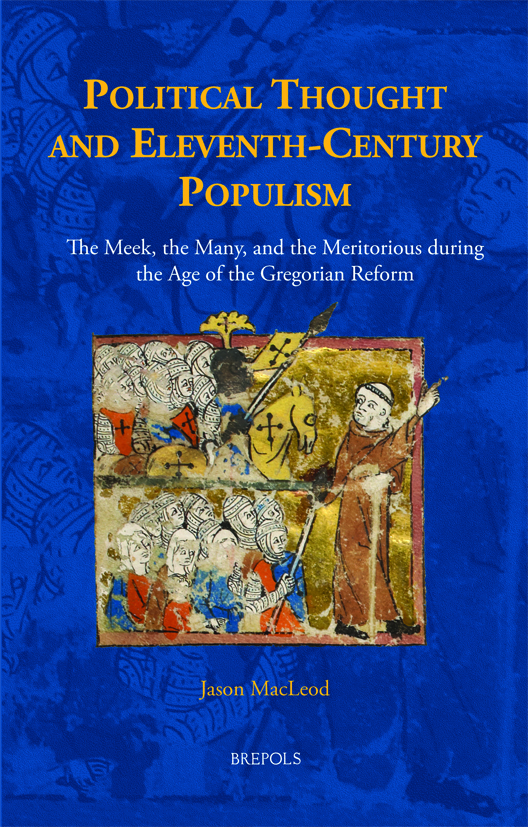 Political Thought and Eleventh-Century Populism
The Meek, the Many, and the Meritorious during the Age of the Gregorian Reform
Volume 38


