Looted, Recovered, Returned: Antiquities from Afghanistan
A detailed scientific and conservation record of a group of ivory and bone furniture overlays excavated at Begram, stolen from the National Museum of Afghanistan, privately acquired on behalf of Kabul, analysed and conserved at the British Museum and
By (author) Janet Ambers By (author) C. R. Cartwright By (author) C. Higgitt

Paperback (Published)
(October 2014)
ISBN: 9781784910167
8.27 x 11.69 inches
Price: $96.00
In stock
A detailed scientific and conservation record of a group of ivory and bone furniture overlays excavated at Begram, stolen from the National Museum of Afghanistan, privately acquired on behalf of Kabul, analysed and conserved at the British Museum and returned to the National Museum of Afghanistan in 2012.
The “Begram ivories” are widely considered to be miniature masterpieces of Indian art and are one of the largest archaeological collections of ancient ivories. They were excavated at the site of Begram, in northern Afghanistan, in 1937 and 1939 and belong to a period when Afghanistan, Pakistan and northern India were united under rulers of the Kushan dynasty. Divided soon afterwards between the National Museum of Afghanistan in Kabul and the Musee national des arts asiatiques-Guimet in Paris, the collection in Kabul suffered a disaster during the civil war which ravaged the country during the early 1990s. Some of the pieces were successfully concealed by museum staff but most were stolen, hundreds have since been reported in different collections and very few have yet been recovered. In 2011 a group of twenty bone and ivory plaques was generously acquired for the National Museum of Afghanistan by a private individual. These were scientifically analysed, conserved and exhibited at the British Museum and returned to Kabul in 2012. This book describes their story from excavation to display and return, with individual object biographies and detailed scientific analyses and conservation treatments. It also discusses how these objects have attracted very different interpretations over the decades since their discovery, and how the new analyses shed a completely fresh light on the collection. It is lavishly illustrated in full colour, and includes many previously unpublished views of the objects when they were originally exhibited in Kabul. This book is essential reading for anyone interested in the archaeology of Afghanistan, Indian art, polychromy, museum studies, object biographies or the history of conservation.
- By (author) Janet Ambers
- By (author) C. R. Cartwright
- By (author) C. Higgitt
Similar Books
 Cities through Time
Glimpses into Urbanity and Community in Mediaeval to Modern West Asia and Egypt
Volume 1
 Cuneiform Artefacts from Archaeological Contexts: New Research on Ancient Iraq
Proceedings of a Conference Held at the Bavarian Academy of Sciences and Humanities, July 4–5, 2024
Volume 2
 Global Gulf
Geo-Economic, Geo-Political, and Geo-Technological Transformation in Saudi Arabia, the United Arab Emirates, and Qatar
 Ismail Hakki Bursevi’s translation of and commentary on Fusus al-Hikam By Muhyiddin Ibn ‘Arabi
Volumes 1-4
 Monastic Manuscripts from the Eastern Mediterranean (Sinai, Jerusalem, Antioch)
Production, Use, and Contexts

 Qatar’s Societal Security
Towards the Inclusive National Concept of ‘Baladna’ Identity, Migration and External Threats Since 2017
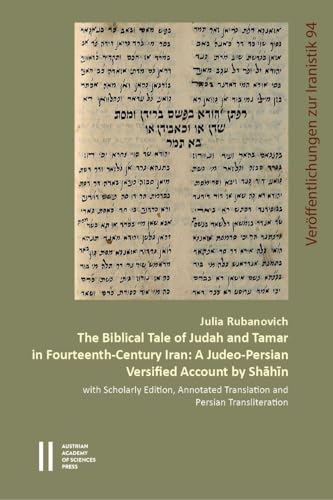 The Biblical Tale of Judah and Tamar in Fourteenth-Century Iran
A Judeo-Persian Versified Account by Shāhīn with Scholarly Edition, Annotated Translation and Persian Transliteration
Volume 94, 951
 The Discourse of Rites
Shaping and Reshaping the (Counter-)Priestly Rituals Conducted Outside the Tabernacle



 »Ein elend-schönes Land«
Gattung und Gedächtnis in Lea Goldbergs hebräischer Literatur. Aus dem Hebräischen von Rainer Wenzel
 Meine arabischen Freunde
Geschichten aus dem Maghreb für Aufklärung - gegen Islamismus und Unfreiheit

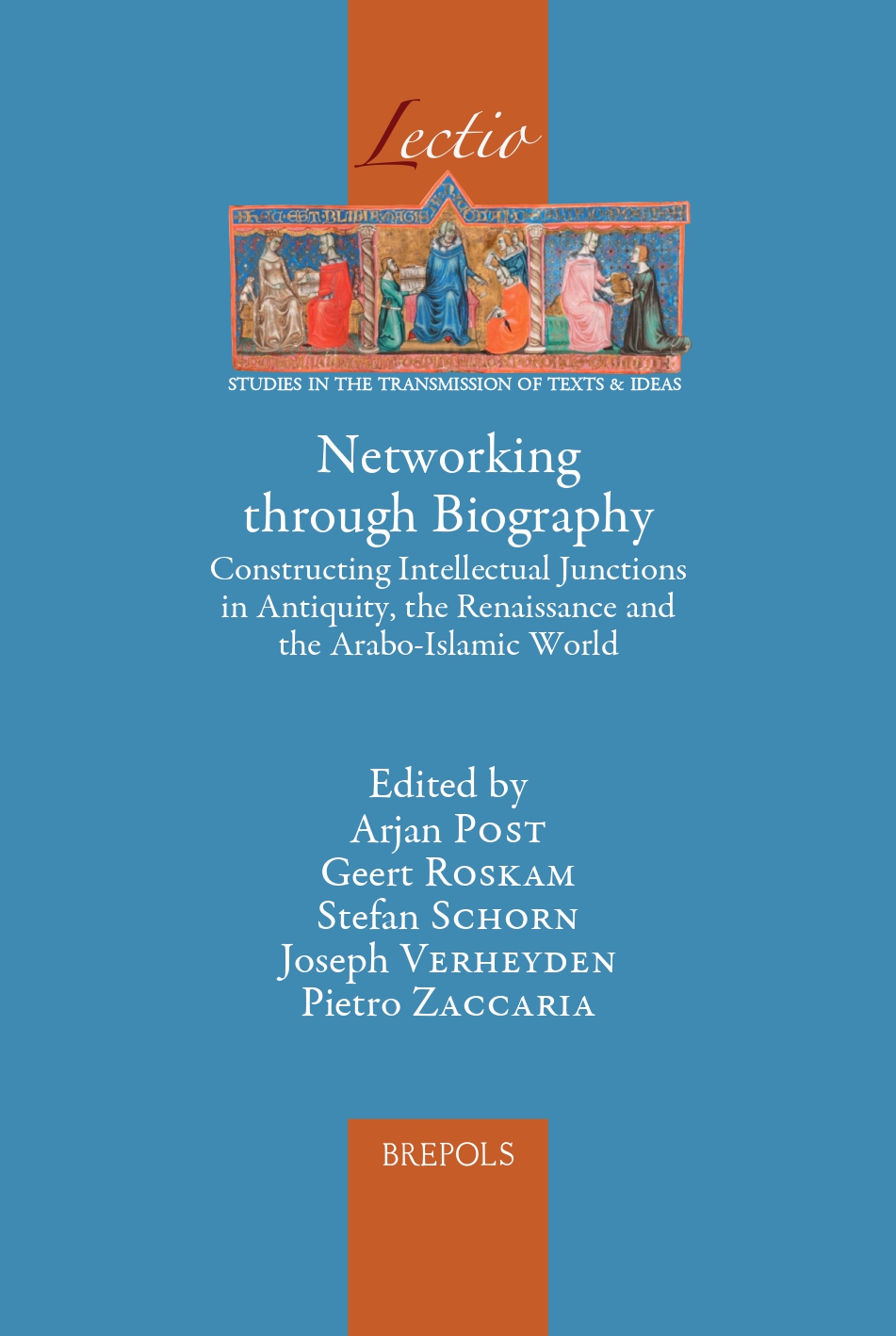 Networking through Biography
Constructing Intellectual Junctions in Antiquity, the Renaissance and the Arabo-Islamic World
Volume 19


 Beiträge zur Islamischen Kunst und Archäologie
The Arts and Archaeology of Funerary Cultures in Islam
Volume 10.0
 Boğazköy Tablets in the Museum of Anatolian Civilisations (Bo 95–Bo 3993)
Anadolu Medeniyetleri Müzesinde Bulunan Boğazköy Tabletleri (Bo 95–Bo 3993)
Volume 3


 Discerning Religious Truth
A Didactic Exposition of the Logic and Epistemology of the Islamic Sciences
Volume 1


 Explorations in Islamic Archaeology
Material Culture, Settlements, and Landscapes from the Mediterranean to Western Asia
Volume 7


 Life on the Farm in Late Medieval Jerusalem
The Village of Beit Mazmil, its Occupants and their Industry over Five Centuries

 Occasionalism Revisited
New Essays from the Islamic and Western Philosophical Traditions (2nd ed.)
Volume 2
 Oil Lamps in the Holy Land during the Early and Later Islamic Periods (7th–16th/17th CE)
The Collection of the Israel Antiquities Authority

 Proceedings of the Seminar for Arabian Studies Volume 54 2025
Papers from the fifty-seventh meeting of the Seminar for Arabian Studies held at the Institut national d’histoire de l’art, Paris, 27–29 June 2024

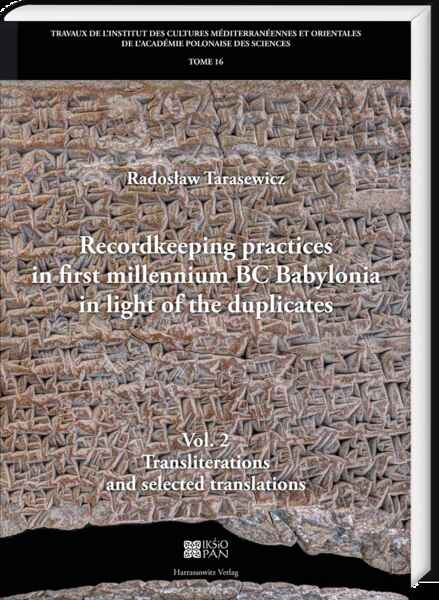
 Recordkeeping practices in first millennium BC Babylonia in light of the duplicates.
Vol. 1. An analysis of duplicate documents
Volume 15