
The Prologue of the Gospel of John
Its Literary, Theological, and Philosophical Contexts. Papers read at the Colloquium Ioanneum 2013
Edited by Udo Schnelle Edited by Jan G. van der Watt Edited by R. Alan Culpepper

Hardback (Published)
(June 2016)
ISBN: 9783161547713
6.38 x 9.8 inches
Price: $231.00
In stock
What is the origin and background of the Prologue of the Gospel of John? How does it stand in relation to the rest of the Gospel? The papers in this volume addressing these questions were presented at the first meeting of the Colloquium Ioanneum, an international group of scholars distinguished by their contributions to Johannine studies.
A key to understanding the Gospel of John is, in many respects, its prologue; yet questions regarding its origin and background, its structure, use of Greek philosophical terms, and indeed its relationship to the rest of the gospel still remain open. The papers in this volume address each of these questions and were presented at the first meeting of the Colloquium Ioanneum, a group of distinguished international Johannine scholars broadly representing different nationalities, religious traditions and approaches to the gospel. The first part offers differing assessments of the background, literary, and theological elements of the prologue, while the second examines presuppositions, methods, and perspectives involved in philosophical interpretation of the Gospel of John. Contributors:John Ashton, R. Alan Culpepper, Jorg Frey, Christos Karakolis, Craig R. Koester, William R. G. Loader, George L. Parsenios, Udo Schnelle, Michael Theobald, Marianne Meye Thompson, Jan G. van der Watt, Catrin H. Williams, Ruben Zimmermann, Jean Zumstein
Part 1: Confronting the Challenges of the Prologue
R. Alan Culpepper: The Prologue as Theological Prolegomenon to the Gospel of John - John Ashton: Really a Prologue? - William R. G. Loader: The Significance of the Prologue for Understanding John's Soteriology - Jan G. van der Watt: John 1:1 - A "Riddle"? Grammar and Syntax Considered - Catrin H. Williams: (Not) Seeing God in the Prologue and Body of John's Gospel - Ruben Zimmermann: John (the Baptist) as a Character in the Fourth Gospel: The Narrative Strategy of a Witness Disappearing - Michael Theobald: Eine Gemeinschaft von "Zeugen" (von Joh 1:7, 15 bis 3 Joh 12): Beobachtungen zur Genese des Corpus Iohanneum auf der Basis des Prologs - Christos Karakolis: The Logos-Concept and Dramatic Irony in the Johannine Prologue and Narrative
Part 2: Reading the Language and Concepts of the Prologue in Their Philosophical Context
Udo Schnelle: Philosophische Interpretation des Johannesevangeliums: Voraussetzungen, Methoden und Perspektiven - Jörg Frey: Between Torah and Stoa: How Could Readers Have Understood the Johannine Logos? - Craig R. Koester: "Spirit" (Pneuma) in Greco-Roman Philosophy and the Gospel of John - George L. Parsenios: Confounding Foes and Counseling Friends: Parrēsia in the Fourth Gospel and Greco-Roman Philosophy - Marianne Meye Thompson: "Light" (φῶς): The Philosophical Content of the Term and the Gospel of John - Jean Zumstein: "Zeichen" (σημεῖον): Philosophischer Inhalt und Gebrauch des Begriffs im Johannesevangelium
- Edited by Udo Schnelle
- Edited by Jan G. van der Watt
- Edited by R. Alan Culpepper
Other Titles in this Series


 Purity, Holiness, and Identity in Judaism and Christianity
Essays in Memory of Susan Haber
Volume 305

 The Eucharist – Its Origins and Contexts
Sacred Meal, Communal Meal, Table Fellowship in Late Antiquity, Early Judaism, and Early Christianity. Volume I-III
Volume 376

 Der eine Gott, der durch alle ist
Epheser 4,6 im Kontext antiker Diskurse uber Gott und die Welt
Volume 445

 Paulus im Kontext des Diasporajudentums
Judenchristliche Lebensweise nach den paulinischen Briefen und die Debatten um 'Paul within Judaism'
Volume 511
 Essen
Essen
Ethische Perspektiven zum Speisen in Antike und Gegenwart. Kontexte und Normen neutestamentlicher Ethik XV


 The Holy Spirit and the Church according to the New Testament
Sixth International East-West Symposium of New Testament Scholars, Belgrade, August 25 to 31, 2013

 The Future of New Testament Textual Scholarship
From H. C. Hoskier to the Editio Critica Maior and Beyond
Volume 417


Similar Books


 Athanasius of Alexandria, Epistula ad episcopos Aegypti et Libyae
Old Slavonic Version and English Translation
Volume 261


 Cyril of Alexandria’s Christological Exegesis
Explorations of Partitive Exegesis in the Dialogues on the Trinity
Volume 70


 Epiphanies of the Divine in the Septuagint and the New Testament
Fifth International Symposium of the Corpus Judaeo-Hellenisticum Novi Testamenti (CJHNT), 14-17 May 2015, Nottingham

 Extracanonical Traditions and the Holy Land
Texts, Rituals, and Material Culture in Late Antique Palestine
 From Joseph to Jesus
The Joseph Narrative as a Compositional Template from Old Greek Esther to the Gospel of Luke
Volume 125


 Paradise Lost in Transmission
The Return to Eden in the Apocalypse of Peter within Its Ethiopic and Early Christian Contexts



 Punning in Odd or Elegant Constructions in Jeremiah
The Convergence of Linguistics, Rhetoric, and Textuality in the Hebrew Text of Jeremiah

 Shame in the Worlds of the Hebrew Bible and Akkadian Texts
A Linguistic Study and Its Implications
Volume 33

 Tabernacle, Table, Ark, and Text
Richard of Saint Victor on the Interpretation of Scripture
Volume 67
 The Anglo-Norman Bible’s Books of Kings, a Critical Edition
(BL Royal 1 C III, fols 234r-274v)
Volume 37
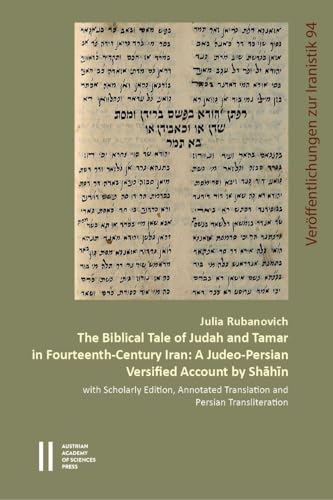 The Biblical Tale of Judah and Tamar in Fourteenth-Century Iran
A Judeo-Persian Versified Account by Shāhīn with Scholarly Edition, Annotated Translation and Persian Transliteration
Volume 94, 951
 The Body
Lived, Cultured, Adorned: Essays on Dress and the Body in the Bible and Ancient Near East in Honor of Nili S. Fox

 The Compositional History of the Book of Kings
An Analysis of the Evaluative Frameworks in 1 Kings 14–2 Kings 25
 The Discourse of Rites
Shaping and Reshaping the (Counter-)Priestly Rituals Conducted Outside the Tabernacle


