
The Onomasticon of Iudaea, Palaestina and Arabia in the Greek and Latin Sources, Volume II, Part 2
Arabia, Chapter 5 - Azzeira; Research Bibliography, Indexes and Maps
by Leah Di Segni and Yoram Tsafrir, with Judith Green

Hardback (Published)
(December 2017)
ISBN: 9789652082282
7.09 x 10.59 inches
Price: $110.00
In stock
The Onomasticon, a monumental endeavor begun in the 1960s by the late Prof. Michael Avi-Yonah, collates all the known Greek and Latin literary and documentary sources mentioning geographical and ethnic names attested in Iudaea, under the Hasmonaean and Herodian dynasties, and in the Roman and Byzantine provinces of Palaestina and Arabia an area today spread over Israel, the Palestinian Authority, Jordan, Sinai and southern Syria. The source texts, dating from the fourth century BCE to the seventh century CE, are culled from over 1,300 texts by more than 750 separate authors, and from papyri, inscriptions and coins. The individual place names are arranged in alphabetical entries, each presenting a comprehensive collection of excerpts from the texts in which that place is mentioned. Where possible, the places are identified and described on the basis of up-to-date archaeological and bibliographical research. Volume I contains an annotated bibliography of the primary source texts, a collection of major texts from which many of the sources in the alphabetical entries are excerpted, and a listing of all the place names covered in the series. With some 1,400 pages in two parts, Volume II contains the entries for the hundreds of places whose names begin with the letter A, including the massive 438-page entry on Arabia and the sizeable entries for Ascalon (Ashkelon) and Azotus (Ashdod). Alongside entries from the great Onomasticon of Eusebius and the Latin version of Jerome, the source texts include descriptions of the landscape, fauna and flora of ancient Judaea/Palaestina and Arabia, stories of the pilgrims who made their way to the holy places, accounts of the battles for the liberation and conquest of the land, lists of bishops serving the dioceses of the Holy Land who joined in the great church councils of the Byzantine period, prescriptions for the treatment of diseases, contracts, milestone inscriptions, coins, lading dockets and many other passages of widely varying types. All of the extracts are presented in the original Greek or Latin and in English translation, except for those that were preserved only in Syriac, which are presented in English translation.
The Onomasticon, a monumental endeavor begun in the 1960s by the late Prof. Michael Avi-Yonah, collates all the known Greek and Latin literary and documentary sources mentioning geographical and ethnic names attested in Iudaea, under the Hasmonaean and Herodian dynasties, and in the Roman and Byzantine provinces of Palaestina and Arabia an area today spread over Israel, the Palestinian Authority, Jordan, Sinai and southern Syria. The source texts, dating from the fourth century BCE to the seventh century CE, are culled from over 1,300 texts by more than 750 separate authors, and from papyri, inscriptions and coins. The individual place names are arranged in alphabetical entries, each presenting a comprehensive collection of excerpts from the texts in which that place is mentioned. Where possible, the places are identified and described on the basis of up-to-date archaeological and bibliographical research. Volume I contains an annotated bibliography of the primary source texts, a collection of major texts from which many of the sources in the alphabetical entries are excerpted, and a listing of all the place names covered in the series. With some 1,400 pages in two parts, Volume II contains the entries for the hundreds of places whose names begin with the letter A, including the massive 438-page entry on Arabia and the sizeable entries for Ascalon (Ashkelon) and Azotus (Ashdod). Alongside entries from the great Onomasticon of Eusebius and the Latin version of Jerome, the source texts include descriptions of the landscape, fauna and flora of ancient Judaea/Palaestina and Arabia, stories of the pilgrims who made their way to the holy places, accounts of the battles for the liberation and conquest of the land, lists of bishops serving the dioceses of the Holy Land who joined in the great church councils of the Byzantine period, prescriptions for the treatment of diseases, contracts, milestone inscriptions, coins, lading dockets and many other passages of widely varying types. All of the extracts are presented in the original Greek or Latin and in English translation, except for those that were preserved only in Syriac, which are presented in English translation.
- By (author) Leah Di Segni
- By (author) Judith Green
- By (author) Yoram Tsafrir
Similar Books





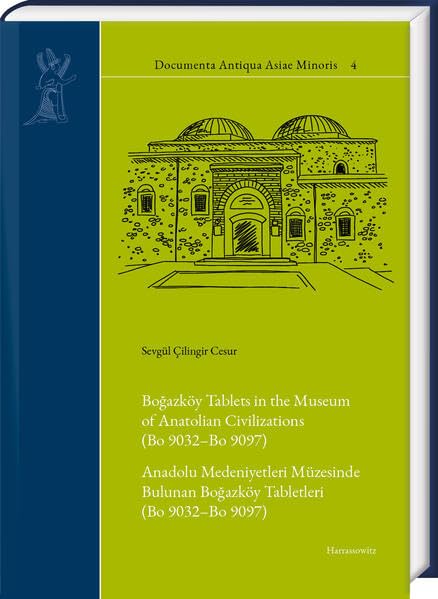 Boğazköy Tablets in the Museum of Anatolian Civilizations (Bo 9032–Bo 9097)
Anadolu Medeniyetleri Müzesinde Bulunan Boğazköy Tabletleri (Bo 9032–Bo 9097)
Volume 4
 Caesar’s Visions and Impact on the Roman Empire
Revisiting the Archaeological and Historical Record of the 40s BC
Volume 2


 Connecting the Dots: Counting, Writing, and the Beginnings of Civilization
The Secret Lives of Clay Tokens: A Memoir
 Construction Processes in Historical Western Societies (5th c. BC – 10th c. AD)
Case Studies on Techniques, Models, and Costs
 Contesting Labeled Identities
The Sociology of Gentilics in Biblical and Northwest Semitic Literature

 Curating the Prehistoric Past
Studies on West Asian Archaeology and Beyond in Honour of Yoshihiro Nishiaki
 Drunk the Potion, No Whit Charmed
The Doctrine of Pure and Perfect Souls from Iamblichus to Damascius

 Epigraphic “Shades” from Hellenistic Thrace
Contextualizing Inscriptions in Greek from Thracian Tombs

 Epiphanies of the Divine in the Septuagint and the New Testament
Fifth International Symposium of the Corpus Judaeo-Hellenisticum Novi Testamenti (CJHNT), 14-17 May 2015, Nottingham


 Etruscan and Roman Hellenistic Anatomical ex votos
Reassessing Popular Religious Expressions in Central Italy
Volume 8


 Exploring Gender Dynamics across the Ancient Near East
Collected Essays of Gender and Methodology in the Ancient Near East (GeMANE) 4 and 5
Volume 7


 Gold, Silver and Glass: Power Networks, Cultural Identities, Technology Transfers and Agency across the Old World (7th Century BC – 1st Century AD)
Proceedings of a Conference Held at the British Museum, 16–18 June 2023
 Ḫattušaš utnē išḫameški
Hittite and Other Ancient Near Eastern Studies Presented to Piotr Taracha on the Occasion of His 65th Birthday




 Invisible Labour in Antiquity
Visualizing Obscure Work in the Ancient Mediterannean and West Asia
Volume 1