
The Museum as Experience
An Email Odyssey through Artists' and Collectors' Museums
By (author) Dario Libero Gamboni

The first general study of museums created by artists and/or collectors, The Museum as Experience provides fifteen case studies ranging from the turn of 1800 to the present and distributed across the globe. New in form and content, it is written as a correspondence and illustrated with many unpublished documents. Focusing on museums preserving their original installation, it analyses display as a form of expression and raises key issues about the history, geography, anthropology, and aesthetics of art museums at large. Museums created by artists and/or collectors are a favorite destination of museum lovers and raise important issues in connection with the history and evolution of art museums at large. They have developed in a critical relation to large, collective or encyclopaedic museums, defending a primacy of experience and intimacy. And they remain attached to the persons of their founders, functioning as monuments and even mausoleums. Yet despite their appeal, a recent surge of new creations and a wealth of monographic documentation, no general study of the topic has been attempted. The Museum as Experience describes and analyses the phenomenon as a whole, from its beginnings around 1800 to the present and from its European origin to a worldwide extension. It examines in depth fifteen case studies distributed across the globe and chosen for their representative character and the quality of their original arrangement. In order to do justice to their meaningful relation to the spatial context and to their hospitality towards the subjective visitor, the book is written as a travelogue and organizes a dialogue between two narrators, an architect and an art historian. Richly illustrated with many unpublished documents, it is a scholarly work that can be read like a novel. It argues that artists and collectors museums are best understood as author museums and make it possible to enjoy and study display as a mode of expression and communication, an art of assemblage and installation avant la lettre, and a challenge for interpretation.
The first general study of museums created by artists and/or collectors, The Museum as Experience provides fifteen case studies ranging from the turn of 1800 to the present and distributed across the globe. New in form and content, it is written as a correspondence and illustrated with many unpublished documents. Focusing on museums preserving their original installation, it analyses display as a form of expression and raises key issues about the history, geography, anthropology, and aesthetics of art museums at large. Museums created by artists and/or collectors are a favorite destination of museum lovers and raise important issues in connection with the history and evolution of art museums at large. They have developed in a critical relation to large, collective or encyclopaedic museums, defending a primacy of experience and intimacy. And they remain attached to the persons of their founders, functioning as monuments and even mausoleums. Yet despite their appeal, a recent surge of new creations and a wealth of monographic documentation, no general study of the topic has been attempted. The Museum as Experience describes and analyses the phenomenon as a whole, from its beginnings around 1800 to the present and from its European origin to a worldwide extension. It examines in depth fifteen case studies distributed across the globe and chosen for their representative character and the quality of their original arrangement. In order to do justice to their meaningful relation to the spatial context and to their hospitality towards the subjective visitor, the book is written as a travelogue and organizes a dialogue between two narrators, an architect and an art historian. Richly illustrated with many unpublished documents, it is a scholarly work that can be read like a novel. It argues that artists and collectors museums are best understood as author museums and make it possible to enjoy and study display as a mode of expression and communication, an art of assemblage and installation avant la lettre, and a challenge for interpretation.
- By (author) Dario Libero Gamboni
Other Titles in this Series


Similar Books
 A Collaborative Tapestry in Honour of Shirley Ann Brown / Une fresque brodée en l’honneur de Shirley Ann Brown
The Bayeux Tapestry Seen by her Colleagues and Friends / La Tapisserie de Bayeux vue par ses collègues et amis


 Balthasar Caymox of Nuremberg
Early Modern German Print Publishers: Popular Prints of the Seventeenth Century
 Circulation, Use, Impact
The Consumption of Architectural Books in the Early Modern Eastern Adriatic
Volume 1


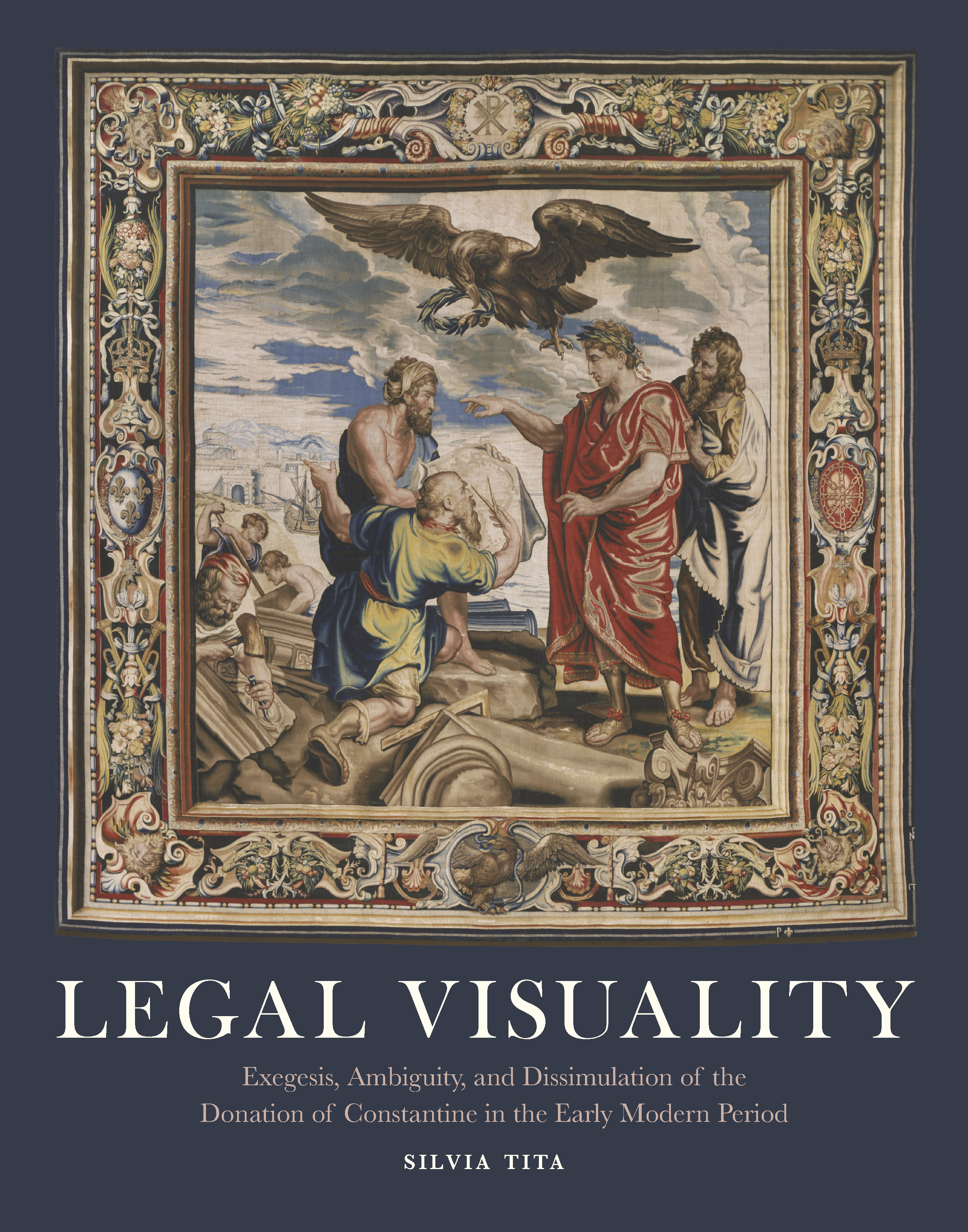 Legal Visuality
Exegesis, Ambiguity, and Dissimulation of the Donation of Constantine in the Early Modern Period
 Monastic Manuscripts from the Eastern Mediterranean (Sinai, Jerusalem, Antioch)
Production, Use, and Contexts
 Naples as Laboratory / Laboratorium Neapel
Style Options, Artistic Rivalry and Self Fashioning in Neapolitan Baroque Painting / Plurale Stilbildung, Kunstlerkonkurrenz und Self Fashioning in der neapolitanischen Barockmalerei
 Nurturing the Elite
Representations of Drinking, Eating, and Religious Vessels in Palmyrene Funerary Iconography
Volume 13


 Portraying the Individual in the Roman East
Local–Imperial Entanglements in Sculpture, Mosaics, and Paintings (First–Fourth Centuries AD)
Volume 18


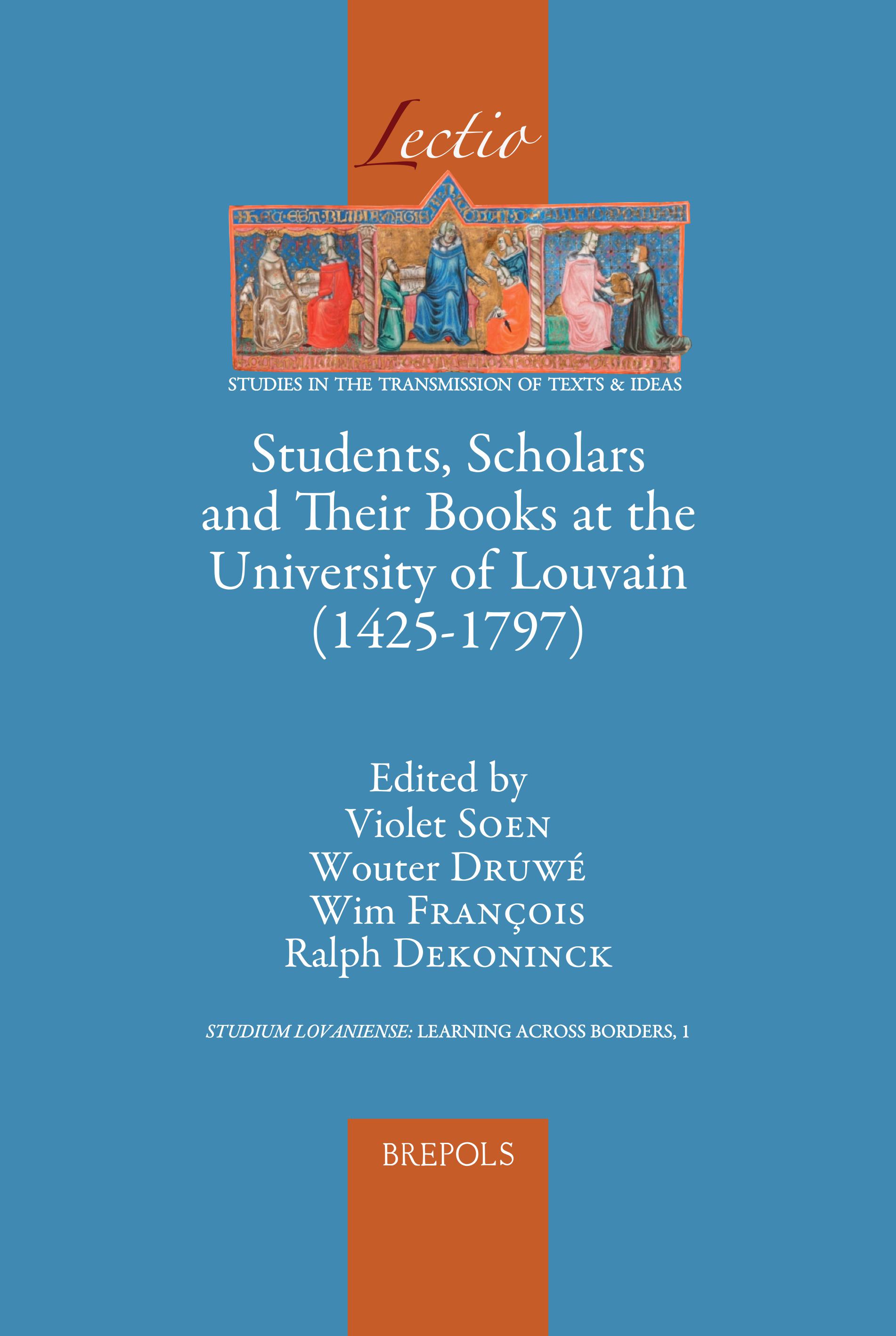 Students, Scholars and Their Books at the University of Louvain (1425-1797)
Studium Lovaniense: Learning across Borders, 1
Volume 17

 Technical Studies of Asian Art
Proceedings of the Seventh Forbes Symposium at the Freer Gallery of Art
 The Antiquarian Book-trade in Switzerland
Sir Thomas Phillipps's Acquisitions in the 1820s and their Later Dispersal
Volume 69


 Tricks of the Medieval Trades
The Trinity Encyclopedia, a collection of 14th century English craft recipes
 Venice Reimagined
The Resurgence of View Painting in Venice after the Fall of the Serenissima between 1797 and 1866


 Women’s Legacies in Natural Studies, Health, and Liberal Arts
Proceedings of the Second Annual International Women in the Arts Conference
Volume 4
 Writing in the Church of the Nativity in Bethlehem
Inscription and Graffiti in a Multilingual and Multigraphic Perspective
Volume 45
