
The Magical Path to the Acropolis
By (author) Nick Papandreou

Hardback (Out of stock indefinitely)
(December 2016)
ISBN: 9789602043561
Price: $24.95
In stock
The Magical Path to the Acropolis studies the work of the eccentric perfectionist-architect/proto-ecologist Dimitri Pikioni, who, one year short of seventy, was suddenly tasked with a work of major historical and psychological weight: to create new paths to the ancient monument of the Acropolis. His approach was that of a writer constantly revising his drafts. He would draw versions of the paths on rice paper, erase and re-draw, and then when he got to the land itself he would abandon his sketches and improvise. He would kneel to place a stone or large slab on the path, stand back, look at the way the light formed shadows around the new arrangement, take a small mallet or chisel, shape the stone slightly differently, then stand back and look at the outcome once again. He uprooted all the cypresses, planted hundreds of olive trees, and brought in herbs and bushes from the Attic countryside that were consistent with the flora of ancient times. When he worked, the material-the earth, the stone, the land itself-seemed to be an extension of his inner self.
The Magical Path to the Acropolis studies the work of the eccentric perfectionist-architect/proto-ecologist Dimitri Pikioni, who, one year short of seventy, was suddenly tasked with a work of major historical and psychological weight: to create new paths to the ancient monument of the Acropolis. His approach was that of a writer constantly revising his drafts. He would draw versions of the paths on rice paper, erase and re-draw, and then when he got to the land itself he would abandon his sketches and improvise. He would kneel to place a stone or large slab on the path, stand back, look at the way the light formed shadows around the new arrangement, take a small mallet or chisel, shape the stone slightly differently, then stand back and look at the outcome once again. He uprooted all the cypresses, planted hundreds of olive trees, and brought in herbs and bushes from the Attic countryside that were consistent with the flora of ancient times. When he worked, the material-the earth, the stone, the land itself-seemed to be an extension of his inner self.
- By (author) Nick Papandreou
Similar Books


 Behind the Scenes of Medieval Roofs
An Overview of the Roofing Systems of Italian Churches
Volume 90
 Caesar’s Visions and Impact on the Roman Empire
Revisiting the Archaeological and Historical Record of the 40s BC
Volume 2

 Circulation, Use, Impact
The Consumption of Architectural Books in the Early Modern Eastern Adriatic
Volume 1


 Drunk the Potion, No Whit Charmed
The Doctrine of Pure and Perfect Souls from Iamblichus to Damascius

 Epiphanies of the Divine in the Septuagint and the New Testament
Fifth International Symposium of the Corpus Judaeo-Hellenisticum Novi Testamenti (CJHNT), 14-17 May 2015, Nottingham


 Etruscan and Roman Hellenistic Anatomical ex votos
Reassessing Popular Religious Expressions in Central Italy
Volume 8




 Invisible Labour in Antiquity
Visualizing Obscure Work in the Ancient Mediterannean and West Asia
Volume 1
 Language and Power in the Roman Empire and Early India
Hierarchy, Ambiguity, and the Art of Reading the Signs in Cosmopolitan Cultures
 Late Antique villae in the Balkans (3rd–7th c. AD): Current Research Questions and Perspectives
HAEMUS Companion to the Late Antique Balkans 1
Volume 4


 Nurturing the Elite
Representations of Drinking, Eating, and Religious Vessels in Palmyrene Funerary Iconography
Volume 13


 Portraying the Individual in the Roman East
Local–Imperial Entanglements in Sculpture, Mosaics, and Paintings (First–Fourth Centuries AD)
Volume 18

 Small Worlds and Relational Agencies: Local Societies in Early Medieval Iberia
Pequeños mundos y Agencias relacionales: Sociedades locales altomedievales en la Península Ibérica

 The Compositional History of the Book of Kings
An Analysis of the Evaluative Frameworks in 1 Kings 14–2 Kings 25


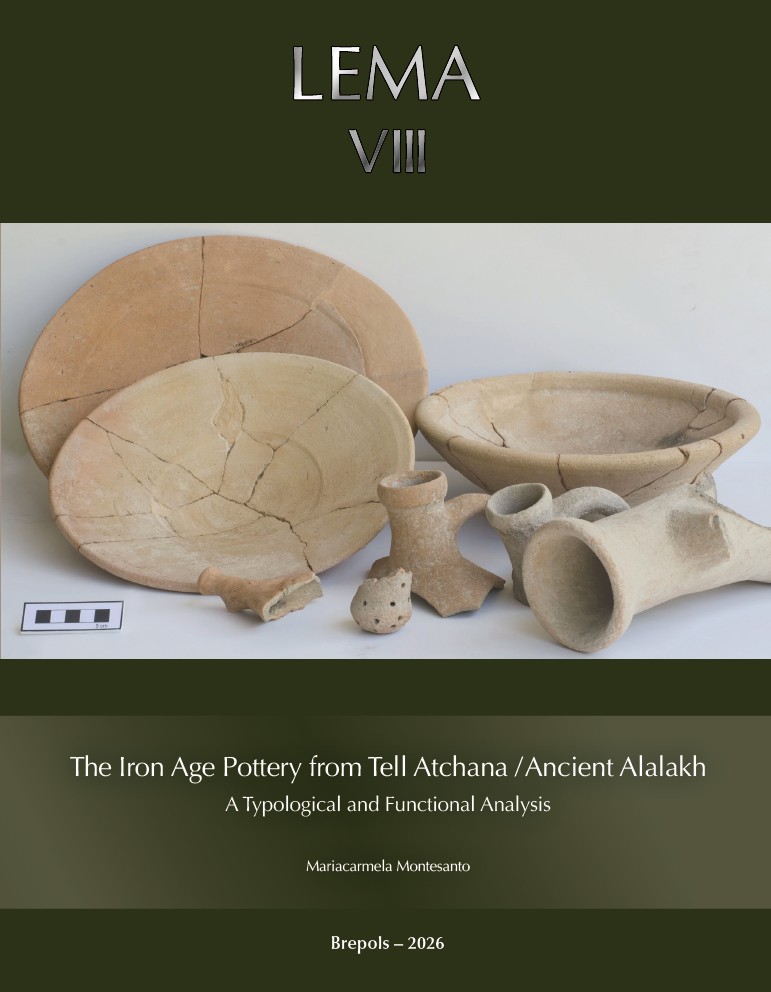 The Iron Age Pottery from Tell Atchana / Ancient Alalakh
A Typological and Functional Analysis
Volume 8


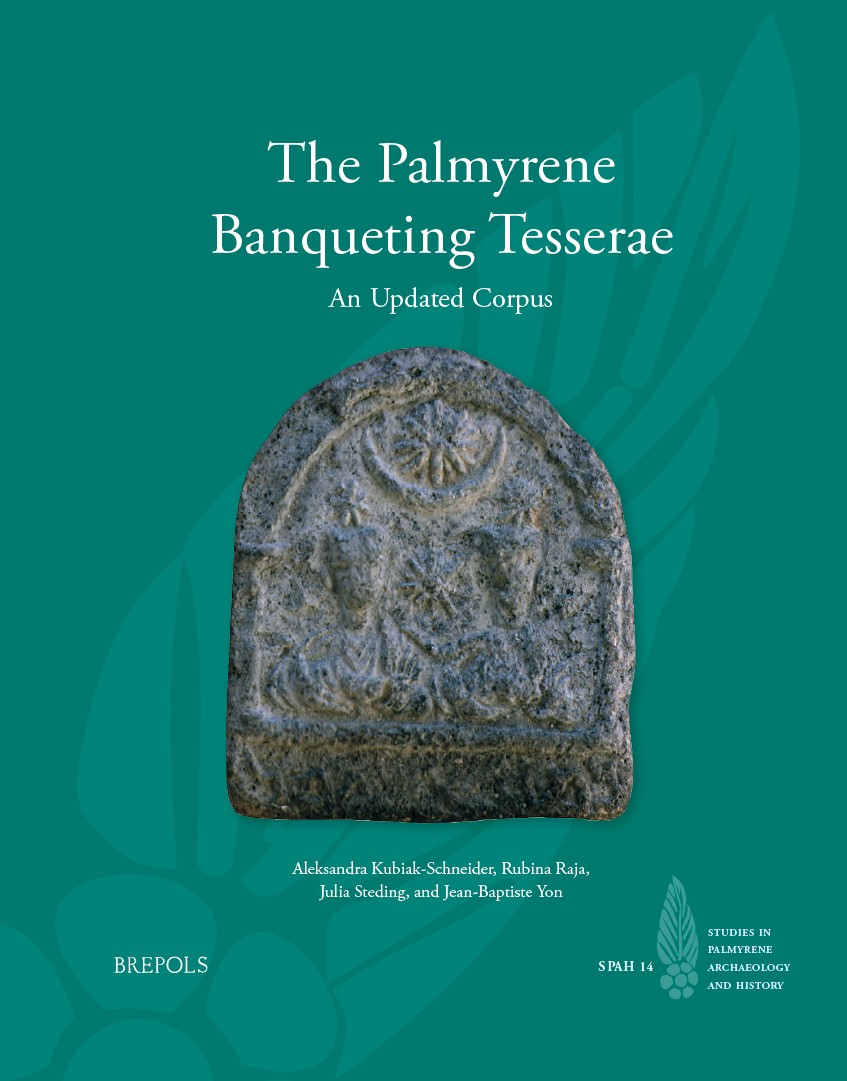

 Visual Memory and Oblivion
Monuments and Conflicts in Urban Spaces in Central and Eastern Europe from the Nineteenth Century to the Present Day
