
Late Roman to Late Byzantine/Early Islamic Period Lamps in the Holy Land
The Collection of the Israel Antiquities Authority
By (author) Varda Sussman

Paperback (Published)
(March 2017)
ISBN: 9781784915704
8.07 x 11.46 inches
Price: $130.00
In stock
This volume illustrates lamps from the Byzantine period excavated in the Holy Land and demonstrates the extent of their development since the first enclosing/capturing of light (fire) within a portable man-made vessel.
This volume illustrates lamps from the Byzantine period excavated in the Holy Land and demonstrates the extent of their development since the first enclosing/capturing of light (fire) within a portable man-made vessel. Lamps, which held important material and religious functions during daily life and the afterlife, played a large role in conveying art and cultural and political messages through the patterns chosen to decorate them. These cultural, or even more their religious affinities, were chosen to be delivered on lamps (not on other vessels) more than ever during the Byzantine period; these small portable objects were used to ‘promote’ beliefs like the ‘press’ of today. Each cultural group marked the artifacts / lamps with its symbols, proverbs from the Old and New Testaments, and this process throws light on the deep rivalry between them in this corner of the ancient world. The great variety of lamps dealt with in this volume, arranged according to their various regions of origin, emphasizes their diversity, and probably local workshop manufacture, and stands in contrast to such a small country without any physical geographic barriers to cross, only mental ones (and where one basket of lamps could satisfy the full needs of the local population). The lamps of the Byzantine period reflect the era and the struggle in the cradle of the formation of the four leading faiths and cultures: Judaism (the oldest), Samaritanism (derived from the Jewish faith), newly-born Christianity – all three successors to the existing former pagan culture – and the last, Islam, standing on a new threshold. Unlike during the former Greek and Roman periods of rule, the land of Israel during the Byzantine period did not really have a central government or authority. The variety of the oil lamps, their order and place of appearance during the Byzantine period can be described as a ‘symphony played by a self-conducted orchestra, where new soloists rise and add a different motet, creating stormy music that expresses the rhythm of the era’. This volume, like the author’s earlier books on this subject, is intended to create a basis for further study and evaluation of the endless aspects that lamps bring to light and which are beyond the capacity of any single scholar.
Introduction
I. The Southern region: Judean Shephelah
II: The Yavne region: (I. LR2a, LR5a included above) and II. LR 11, II. LR11a
III. Jerusalem workshops, types III. LR12-III.B15 (Map 4)
IV. Negev, Southern region, wheel-made oil lamps
V. The Samaria Region (V. LR 18 - V. B27)
VI. The Phoenician coast including the Northern part of the country (VI. I B31- VI.III B 45)
VII. The Bet She’an boundary, eastern part of the Decapolis (VII. LR45–VII. B54)
VIII: Imported Oil Lamps
Bibliography
Concordance Table of Sites
Catalogue
Plates
- By (author) Varda Sussman
Similar Books

 Caesar’s Visions and Impact on the Roman Empire
Revisiting the Archaeological and Historical Record of the 40s BC
Volume 2

 Cities through Time
Glimpses into Urbanity and Community in Mediaeval to Modern West Asia and Egypt
Volume 1

 Cuneiform Artefacts from Archaeological Contexts: New Research on Ancient Iraq
Proceedings of a Conference Held at the Bavarian Academy of Sciences and Humanities, July 4–5, 2024
Volume 2
 Drunk the Potion, No Whit Charmed
The Doctrine of Pure and Perfect Souls from Iamblichus to Damascius

 Epiphanies of the Divine in the Septuagint and the New Testament
Fifth International Symposium of the Corpus Judaeo-Hellenisticum Novi Testamenti (CJHNT), 14-17 May 2015, Nottingham


 Etruscan and Roman Hellenistic Anatomical ex votos
Reassessing Popular Religious Expressions in Central Italy
Volume 8

 Global Gulf
Geo-Economic, Geo-Political, and Geo-Technological Transformation in Saudi Arabia, the United Arab Emirates, and Qatar

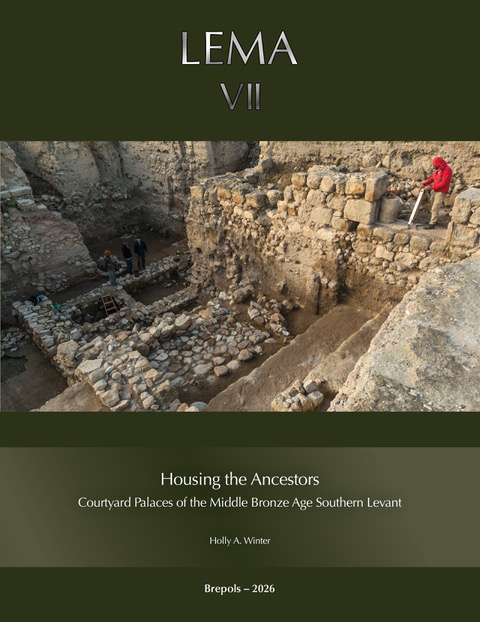

 Invisible Labour in Antiquity
Visualizing Obscure Work in the Ancient Mediterannean and West Asia
Volume 1
 Ismail Hakki Bursevi’s translation of and commentary on Fusus al-Hikam By Muhyiddin Ibn ‘Arabi
Volumes 1-4
 Language and Power in the Roman Empire and Early India
Hierarchy, Ambiguity, and the Art of Reading the Signs in Cosmopolitan Cultures
 Late Antique villae in the Balkans (3rd–7th c. AD): Current Research Questions and Perspectives
HAEMUS Companion to the Late Antique Balkans 1
Volume 4

 Monastic Manuscripts from the Eastern Mediterranean (Sinai, Jerusalem, Antioch)
Production, Use, and Contexts
 Nurturing the Elite
Representations of Drinking, Eating, and Religious Vessels in Palmyrene Funerary Iconography
Volume 13


 Portraying the Individual in the Roman East
Local–Imperial Entanglements in Sculpture, Mosaics, and Paintings (First–Fourth Centuries AD)
Volume 18
 Qatar’s Societal Security
Towards the Inclusive National Concept of ‘Baladna’ Identity, Migration and External Threats Since 2017

 Small Worlds and Relational Agencies: Local Societies in Early Medieval Iberia
Pequeños mundos y Agencias relacionales: Sociedades locales altomedievales en la Península Ibérica
 The Compositional History of the Book of Kings
An Analysis of the Evaluative Frameworks in 1 Kings 14–2 Kings 25
 The Discourse of Rites
Shaping and Reshaping the (Counter-)Priestly Rituals Conducted Outside the Tabernacle

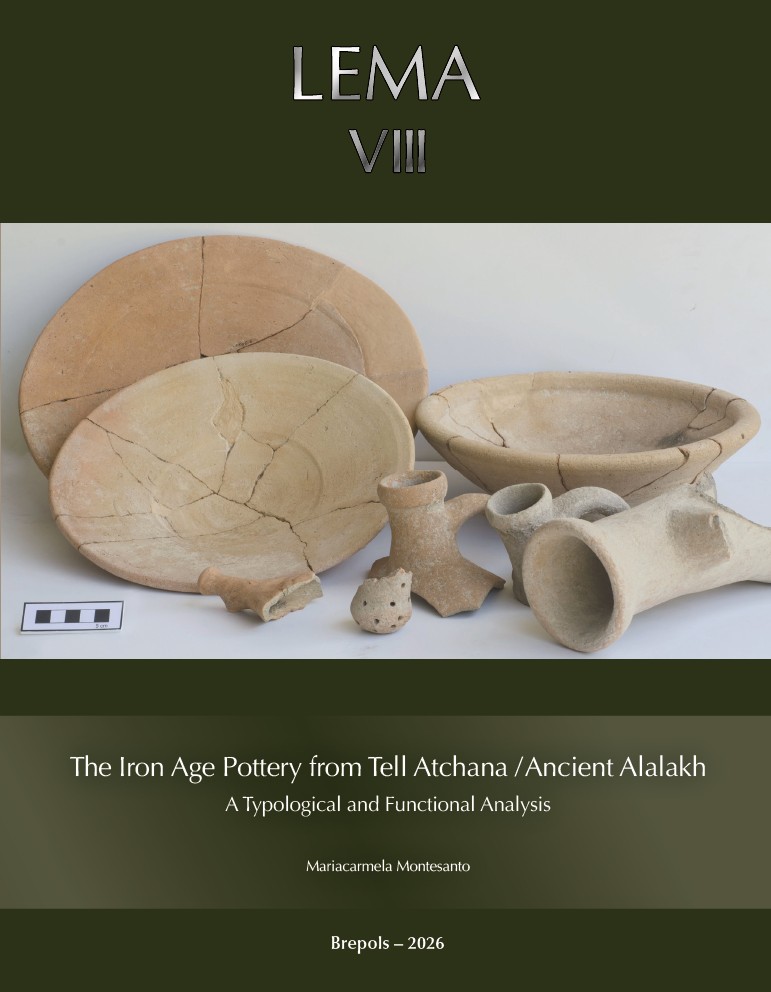 The Iron Age Pottery from Tell Atchana / Ancient Alalakh
A Typological and Functional Analysis
Volume 8


 Writing in the Church of the Nativity in Bethlehem
Inscription and Graffiti in a Multilingual and Multigraphic Perspective
Volume 45
 Contesting Labeled Identities
The Sociology of Gentilics in Biblical and Northwest Semitic Literature