
Hartmann von Aue: „Gregorius“
und die Wiederkehr des Ödipus-Mythos im Mittelalter
By (author) Sieglinde Hartmann

Hardback (Published)
(August 2025)
ISBN: 9783752008791
6.69 x 9.45 inches
Price: $73.50
On back order
The new series provides lucidly illustrated introductions to classical texts of the German Middle Ages. Students and anyone interested in literature will gain an overview of epoch-making accomplishments, themes and genres of German medieval literature. Practical tests of the medieval production of books, exemplary translations and interpretations equip the reader with the basic knowledge necessary to understand the unique character of medieval literature and book design. In addition, excursuses on the history of reception illustrate the historic changes in the perception of the Middle Ages since the 19th century. As a whole, the volumes provide a comprehensive contentual and methodological tool for the study of medieval German literature. Thanks to the generous illustrations and the translations, the series is also an invitation to anyone interested in literature to explore the classical authors and works for themselves in original medieval versions.
English summary: With Gregorius, written around 1190, Hartmann von Aue created a masterpiece of courtly saintly life that builds on the tradition of French sources while enriching it with original, mythical elements. Hartmann vividly portrays the extreme twists of an Oedipal destiny faced by the eponymous hero, Gregorius, with striking dramatic intensity while simultaneously expanding the narrative beyond its medieval settings to explore mythical dimensions of guilt, atonement, and divine grace – an enduring fascination that resonates to this day.The new introduction synthesizes the latest scholarly debates and offers innovative perspectives on the complex themes of Gregorius. A novel, pedagogically designed layout facilitates access to this central work of medieval literature while situating it within a broader context of medieval adaptations of the ancient Oedipus myth. French description: Avec le Gregorius , Hartmann von Aue a cree vers 1190 un chef-d’oeuvre de la vie de saint courtoise, qui s’inspire des modeles francais tout en les enrichissant d’elements originaux et mythiques. Hartmann decrit ainsi avec une intensite dramatique saisissante les peripeties extremes d’un destin oedipien, que le heros eponyme, Gregorius, doit affronter. Hartmann elargit la perspective des scenarios medievaux en leur donnant des dimensions mythiques pour ce qui est de la culpabilite, de l’expiation et de la grace divine. Son oeuvre exerce une fascination qui perdure encore aujourd’hui.La nouvelle introduction rassemble les debats de recherche les plus recents et ouvre en outre des perspectives innovantes sur les themes complexes du Gregorius . Une mise en page novatrice, concue de maniere didactique, facilite l’acces a cette oeuvre centrale de la litterature medievale tout en la replacant dans un contexte elargi des variantes medievales du mythe antique d’OEdipe. German description: Mit dem “Gregorius” hat Hartmann von Aue um 1190 ein Meisterwerk der hofischen Legendendichtung geschaffen, das die Tradition der franzosischen Vorlagen aufgreift, aber um originare, mythische Elemente erweitert. So schildert Hartmann die krassen Wechselfalle eines odipalen Schicksals, das der Titelheld Gregorius durchstehen muss, in packender Dramatik, wahrend er zugleich den Blick von den mittelalterlichen Szenarien hin zu mythischen Dimensionen von Schuld, Suhne und gottlicher Gnade offnet – eine Faszination, die bis heute nachwirkt.Die neue wissenschaftliche Einfuhrung bundelt aktuelle Forschungsdiskussionen und eroffnet zudem innovative Perspektiven auf die komplexen Themen des “Gregorius”. Ein neuartiges, didaktisch aufbereitetes Layout erleichtert den Zugang zu diesem zentralen Werk der mittelalterlichen Literatur und positioniert es zugleich in einem erweiterten Kontext der mittelalterlichen Varianten des antiken Odipus-Mythos.
- By (author) Sieglinde Hartmann
Other Titles in this Series
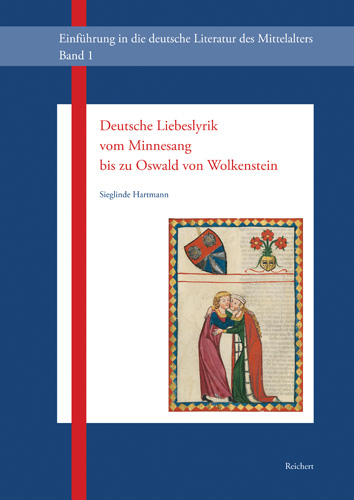 Deutsche Liebeslyrik vom Minnesang bis zu Oswald von Wolkenstein
oder die Erfindung der Liebe im Mittelalter
Similar Books
 A Collaborative Tapestry in Honour of Shirley Ann Brown / Une fresque brodée en l’honneur de Shirley Ann Brown
The Bayeux Tapestry Seen by her Colleagues and Friends / La Tapisserie de Bayeux vue par ses collègues et amis




 Ars Prophetica
Theology in the Poetry of Twentieth-Century Hebrew Poets Avraham Halfi, Shin Shalom, Amir Gilboa, and T. Carmi
 Balthasar Caymox of Nuremberg
Early Modern German Print Publishers: Popular Prints of the Seventeenth Century
 Behind the Scenes of Medieval Roofs
An Overview of the Roofing Systems of Italian Churches
Volume 90


 Cahiers de littérature française
Les Métamorphoses du texte. Enjeux intertextuels et transpositions visuelles
Volume 25


 Constitutional Conflict as Judicial Civil Disobedience and Conscientious Objection
Reconceptualising National Constitutional Court Rulings in the European Union Legal Space






 European Drama and Performance Studies
Dramatisations politiques. Théâtre, politique et idéologie au XIXe siècle (1806-1914)
Volume 27

 Formulary apportionment in international tax law
An allocation method for the age of globalization and digitalization
Volume 210


 Hofmann oder Vorkämpfer der „philosophes“?
Deutsche Voltaire-Bildnisse und -Imaginationen im Zeitalter der Aufklärung

 Innovation and Medieval Communities
The Circulation of Ideas and Practices in and out of the Town (1200-1500)
Volume 63
