
Eastern Roman Mounted Archers and Extraordinary Medico-Surgical Interventions at Paliokastro in Thasos Island during the ProtoByzantine Period
The Historical and Medical History Records and the Archaeo-Anthropological Evidence
By (author) Anagnostis P. Agelarakis

Paperback (Published)
(March 2020)
ISBN: 9781789696011
7.99 x 10.87 inches
Price: $28.00
In stock
A recent archaeological discovery at Paliokastro (Thasos, Greece), and the subsequent study of the human skeletal remains interred in four monumental funerary contexts, provide for the first time through the archaeological record of the region a unique insight of the mounted archers and their female kin during the turbulent ProtoByza
Procopius’ History of the Wars, and the Strategikon offer important aspects of Eastern Roman military tactical changes adopted against their enemies that brought the mounted archer-lancer to domineer in the synthesis of the army, along with concise descriptions of their training, panoply, and effectiveness in the battlefield during the later ProtoByzantine period. Yet, evidence in the archaeo-anthropological records of these highly specialized military members has remained elusive. A recent archaeological discovery at the strategically positioned, upland, site of Paliokastro in Thasos island, Greece, and the subsequent study of the human skeletal remains interred in four monumental funerary contexts, in a dedicated naiskos building, provide for the first time through the archaeological record of the region a unique insight of the mounted archers and their female kin during the turbulent ProtoByzantine period. The interdisciplinary study of the anthropological materials focusing on skeletal developmental, acquired skeleto-muscular manifestations and skeleto-anatomical changes recovered valuable evidentiary data on aspects of their in vivo long-term training and preparation, traumatisms and pathologies along with extraordinary traces of cranial and infra-cranial surgical interventions and medical regimens by the hands of a most experienced surgeon. In conjunction with the archaeological and anthropological evidence, historical and medical history records are integrated aiming toward a nexus with the human dynamics that transpired at Paliokastro within the context of the catastrophic consequences of the ‘barbarian’ invasions in the Aegean Thraco-Macedonia, and the ravages afforded by the Justinian plague during the later component of the ProtoByzantine period.
Introduction The archaeological site, finds, relative dating, project overview The anthropological record and aspects of burial practices Taphonomy and Skeletal Preservation Analysis of Anthropological Material Dental Anthropology Reconstructions of ante mortem kinetics indicative of habitual/occupational tasks Palaeopathology of trauma cases and the footprint of an experienced physician-surgeon Precedents in early Greek, and Roman medical history for the treatment on limb fractures Palaeopathological assessments of infectious complications About the physician-surgeon, the Iητpείov, and the context of Paliokastro Paliokastro (the old fort) and the aim for the prosopography of its female and male riders Mounted archers of Paliokastro Historical references on the Roman army and the ProtoByzantine mounted archer/lancer Reflections on archery, and the type and capacity of bows and arrows used by the Roman mounted archer in battle versus these of the 'barbarian' enemies Historical references on Roman enemies and their invasions in the region of Thasos: Antae, Avars, Bulgars, Huns, Sclaveni, Kutrigurs Historical references on barbarian raids and their consequences in Thrace and Macedonia Towards a chronology of events for the harassment of Thasos by enemy incursions Archaeological evidence of catastrophic events in Thasos during the ProtoByzantine period Aiming towards concluding remarks on the ProtoByzantine 'Paliokastretes' The case study of the Wounded Caballarius' head/neck pathology, the ways of the cranial surgery and trephination, and few palaeopathological reflections Acknowledgements, Introduction ;
The archaeological site, finds, relative dating, project overview ;
The anthropological record and aspects of burial practices ;
Taphonomy and Skeletal Preservation ;
Analysis of Anthropological Material ;
Dental Anthropology ;
Reconstructions of ante mortem kinetics indicative of habitual/occupational tasks ;
Palaeopathology of trauma cases and the footprint of an experienced physician-surgeon ;
Precedents in early Greek, and Roman medical history for the treatment on limb fractures ;
Palaeopathological assessments of infectious complications ;
About the physician-surgeon, the Ιητρείον, and the context of Paliokastro ;
Paliokastro (the old fort) and the aim for the prosopography of its female and male riders ;
Mounted archers of Paliokastro ;
Historical references on the Roman army and the ProtoByzantine mounted archer/lancer ;
Reflections on archery, and the type and capacity of bows and arrows used by the Roman mounted archer in battle versus these of the ‘barbarian’ enemies ;
Historical references on Roman enemies and their invasions in the region of Thasos: Antae, Avars, Bulgars, Huns, Sclaveni, Kutrigurs ;
Historical references on barbarian raids and their consequences in Thrace and Macedonia ;
Towards a chronology of events for the harassment of Thasos by enemy incursions ;
Archaeological evidence of catastrophic events in Thasos during the ProtoByzantine period ;
Aiming towards concluding remarks on the ProtoByzantine ‘Paliokastrétes’ ;
The case study of the Wounded Caballarius’ head/neck pathology, the ways of the cranial surgery and trephination, and few palaeopathological reflections ;
Acknowledgements
- By (author) Anagnostis P. Agelarakis
Similar Books

 Caesar’s Visions and Impact on the Roman Empire
Revisiting the Archaeological and Historical Record of the 40s BC
Volume 2


 Drunk the Potion, No Whit Charmed
The Doctrine of Pure and Perfect Souls from Iamblichus to Damascius

 Epiphanies of the Divine in the Septuagint and the New Testament
Fifth International Symposium of the Corpus Judaeo-Hellenisticum Novi Testamenti (CJHNT), 14-17 May 2015, Nottingham


 Etruscan and Roman Hellenistic Anatomical ex votos
Reassessing Popular Religious Expressions in Central Italy
Volume 8



 Invisible Labour in Antiquity
Visualizing Obscure Work in the Ancient Mediterannean and West Asia
Volume 1
 Language and Power in the Roman Empire and Early India
Hierarchy, Ambiguity, and the Art of Reading the Signs in Cosmopolitan Cultures
 Late Antique villae in the Balkans (3rd–7th c. AD): Current Research Questions and Perspectives
HAEMUS Companion to the Late Antique Balkans 1
Volume 4

 Nurturing the Elite
Representations of Drinking, Eating, and Religious Vessels in Palmyrene Funerary Iconography
Volume 13


 Portraying the Individual in the Roman East
Local–Imperial Entanglements in Sculpture, Mosaics, and Paintings (First–Fourth Centuries AD)
Volume 18

 Small Worlds and Relational Agencies: Local Societies in Early Medieval Iberia
Pequeños mundos y Agencias relacionales: Sociedades locales altomedievales en la Península Ibérica
 The Compositional History of the Book of Kings
An Analysis of the Evaluative Frameworks in 1 Kings 14–2 Kings 25

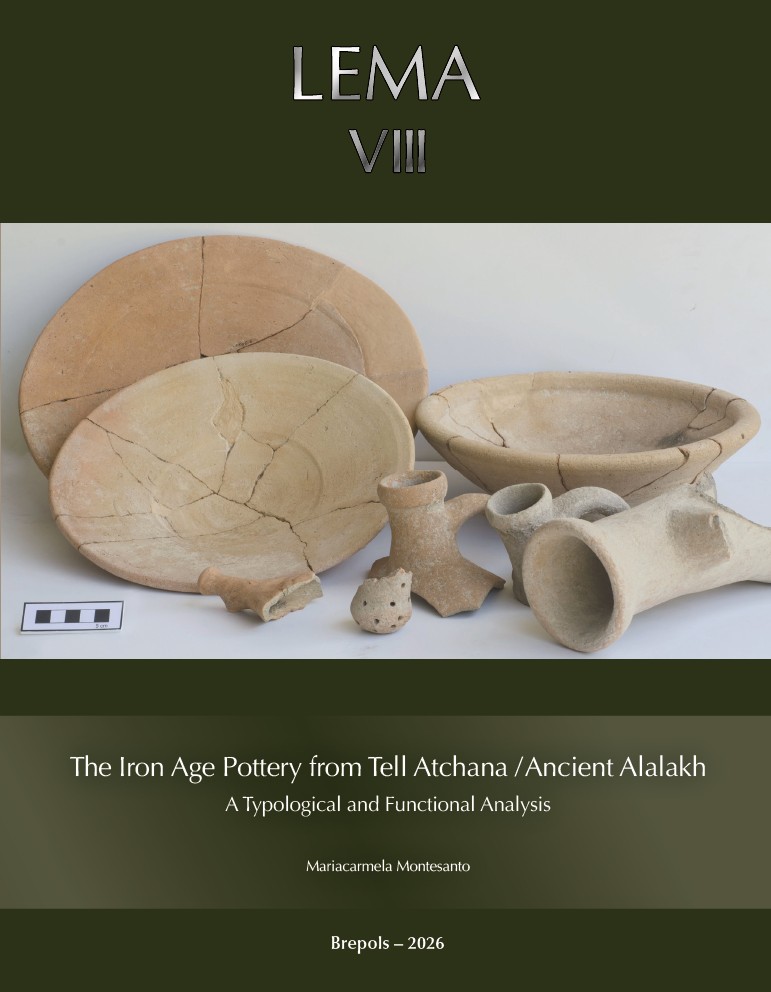 The Iron Age Pottery from Tell Atchana / Ancient Alalakh
A Typological and Functional Analysis
Volume 8
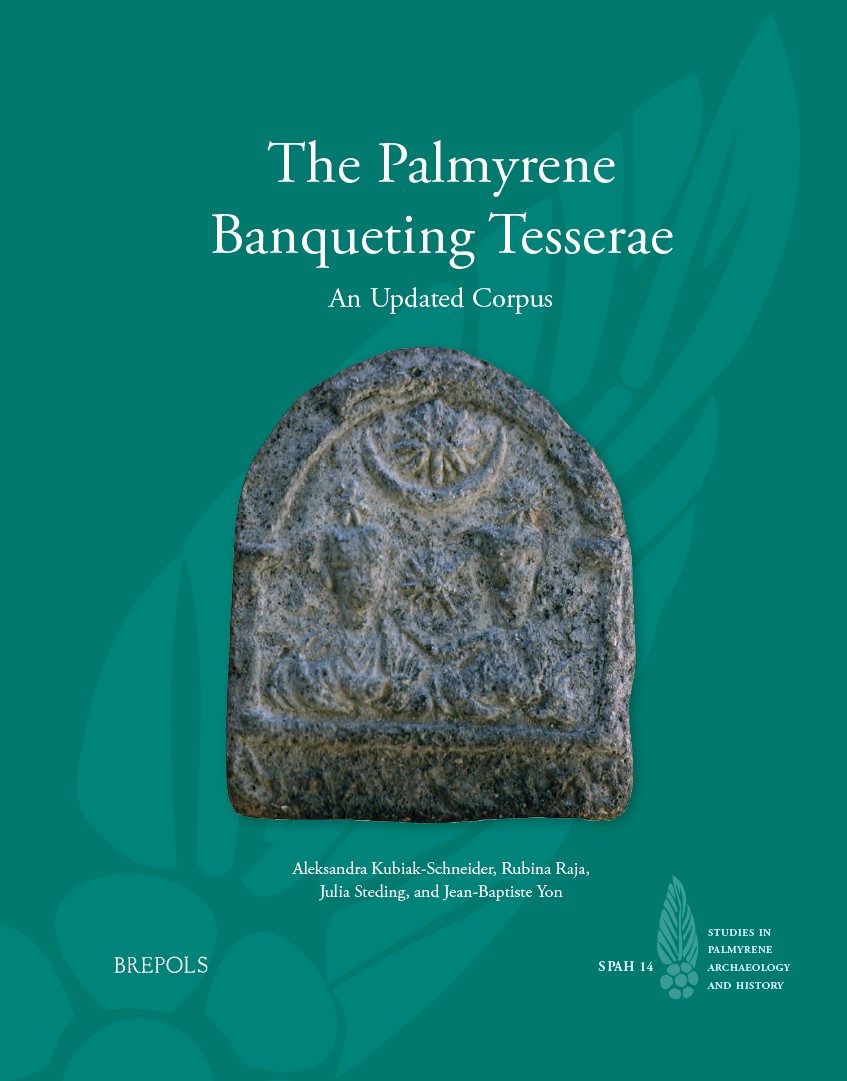

 Writing in the Church of the Nativity in Bethlehem
Inscription and Graffiti in a Multilingual and Multigraphic Perspective
Volume 45
 Contesting Labeled Identities
The Sociology of Gentilics in Biblical and Northwest Semitic Literature


 After Life in Roman Paganism. L’Égypte des astrologues. Les Mages hellénisés
Introductions historiographiques
Volume 7

 Atlante tematico di topografia antica 36-2026
Urbanistica e monumenti, porti, Roma. Ricerche sui monti Aurunci
Volume 36
 Cerámica común romana y ciclo haliéutico
Análisis de los contextos de las cetariae de Iulia Traducta


 Diodor über den ersten Sklavenaufstand auf Sizilien
Ein philologischer und historischer Kommentar
Volume 67