
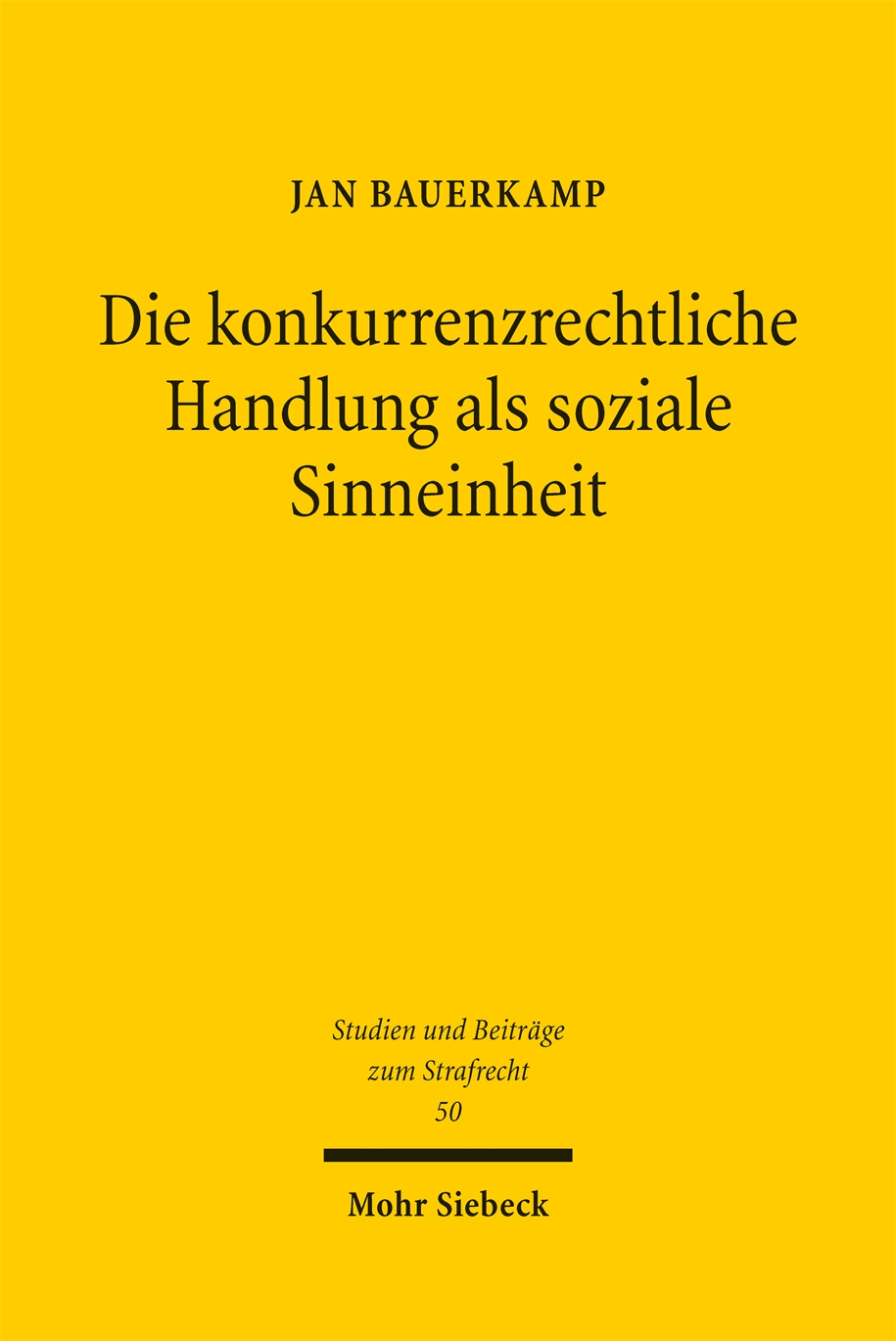
Die konkurrenzrechtliche Handlung als soziale Sinneinheit
Eine Befassung unter besonderer Berücksichtigung der Mittäterschaft und der Gleichbehandlung von Tun und Unterlassen
Paperback (Forthcoming)
(November 2026)
ISBN: 9783162009012
6.1 x 9.13 inches
Price: $149.00
The concept of an act is central to the law of concurrence in criminal law. Despite its significance, however, the prevailing approach gives rise to problems of interpretation and inconsistencies, which Jan Bauerkamp examines.
The concept of an act for the purposes of concurrence is the central concept of the law of concurrence in criminal law. It determines which method of sentencing applies where multiple offences have been committed. Where several offences are committed by means of a single act, the generally more favourable principle of absorption applies, whereas sentencing for offences committed by means of several acts is governed by the principle of aggravation.
Despite the significance of this concept, neither the law nor the legislature provides a definition. Instead, by referring to the concept of an act and attaching different legal consequences to it, the legislature seeks to reflect a distinction “which […] is readily apparent in the vast majority of real-life situations and is intuitively perceived even by those without legal training” (BT-Drs. IV/650, p. 190).
However, the distinction is by no means as clear in prevailing practice as the legislature suggests. Even the interpretation of an act in the natural sense gives rise to substantial difficulties. The analysis presented here shows that its largely consistent application rests less on the prevailing, vaguely defined concept than on an external understanding of social unity. The criteria underlying this unity, however, remain unclear.
The same applies to the concept of a natural unity of acts and to its application in cases involving omissions, negligence, and co-perpetration. Jan Bauerkamp traces the assessment of social unity to the fact that forms of conduct are regarded as “dangerous” for the same reason. The decisive question, therefore, is whether the offences are based on an identical or at least interconnected potential for dangerousness in the offender’s conduct.
Other Titles in this Series
 Geheimnisschutz und Transparenz
Whistleblowing im Widerstreit strafrechtlicher Schweigepflichten und demokratischer Publizitat
Volume 38
 Alternativ legitimierte Verhaltensnormen
Zur Legitimation des strafbewehrten Verbots der Hinterziehung verfassungswidriger Steuern
Volume 26
 Die hypothetische Einwilligung im Strafrecht
Uberlegungen zu den dogmatischen Grundlagen und zum Anwendungsbereich der Rechtsfigur
Volume 5


 Notwehr und überindividuelle Schutzgüter
Zur dogmatischen Reichweite des § 32 StGB bei Straftatbeständen, die neben individuellen Rechtsgütern auch solche der Allgemeinheit schützen
 Grundzuge eines EU-Strafverfassungsrechts
Ein konzeptioneller Ansatz fur die europaische Integration des Straf- und Strafverfahrensrechts
Volume 40
 Rechtsauskunft und strafrechtlicher Verantwortungsausschluss
Zugleich ein intrasystematischer und jurisdiktionsubergreifender Rechtsvergleich
Volume 29

 Die Neuregelung der Strafbarkeit des Jahresabschlussprufers
Ein Vorschlag de lege ferenda zur Erfassung der strafwurdigen und strafbedurftigen Konstellationen von beruflichem Fehlverhalten des Jahresabschlussprufers
Volume 14
 Personelle Strafgewalt
Ein Pladoyer fur das Domizilprinzip im Lichte grenzuberschreitender Migration
Volume 31
 Die Methode der richterlichen Straftatenpravention
Zu den Regeln der Rezeption von Empirie und Qualitat im Recht
Volume 6
 Das sozialethische Unwerturteil als staatliches Fremdbild
Zum verfassungsrechtlichen Schuldprinzip und seinen Anforderungen an die Strafgesetzgebung
Volume 43
 Gebundene Freiheit und strafrechtliche Schuld
Zur Reformbedurftigkeit des Schuldbegriffs vor dem Hintergrund neurowissenschaftlicher Erkenntnisse
Volume 17
 Notwehrprovokation
Zugleich ein Beitrag zu den moralphilosophischen Grundlagen des Notwehrrechts
Volume 45
 Normtheoretische Grundlagen der Lehre von der objektiven Zurechnung
Sicheres Fundament oder Achillesferse?
Volume 33
 Rechtfertigender Notstand und staatliche Verfahren
Zur Reichweite des Vorrangs staatlicher Verfahren unter besonderer Berucksichtigung von Notstandshandlungen zugunsten des Umwelt-, Klima- und Tierschutzes
Volume 44
 Grenzen der Delegation von Strafbarkeitsrisiken durch Compliance
Zugleich ein Beitrag zur strafrechtlichen Geschaftsherrenhaftung
Volume 19
 Die Erwartung kunftiger Straffreiheit
Eine Untersuchung zur Strafaussetzung zur Bewahrung und deren Widerruf wegen einer neuen Straftat
Volume 35
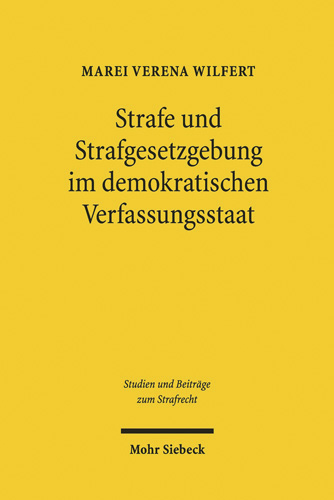 Strafe und Strafgesetzgebung im demokratischen Verfassungsstaat
Der Einfluss des grundgesetzlichen Demokratieprinzips auf Straftheorie und Strafgesetzgebung am Beispiel ausgewahlter Staatsschutzdelikte
Volume 9