
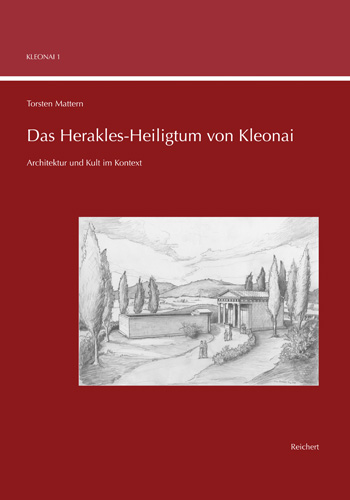
Das Herakles-Heiligtum von Kleonai
Architektur und Kult im Kontext
By (author) Torsten Mattern
Hardback (Published)
(December 2015)
ISBN: 9783954900527
8.27 x 11.69 inches
Price: $119.00
On back order
Kleonai, südwestlich von Korinth am Übergang in die Argolis gelegen, war Gründerin und lange Zeit auch die Ausrichterin der panhellenischen Spiele von Nemea. Keonai stellte die zahlenmäßige Majorität in Griechenland gegenüber den großen wirtschaftlichen und kulturellen Zentren ihrer Zeit. Bei dem vorliegenden Band handelt es sich um den ersten Teil der Forschungsergebnisse zu Kleonai, der eine Fortsetzungen mit den Ergebnissen weiterer Forschungen im Stadtgebiet und im Umland enthalten soll.<br/>
English summary: Kleonai’s sanctuary of Herakles is located approximately 500 metres southwest of the ancient city. It consists of a tetrastyle and prostyle doric temple and an opposing peribolos. Both date back to the 2nd century BC. The reconstruction of the temple, whose cult figure is partly preserved, is widely reliable. Its design is very unusual due to its widening of the middle intercolumniation and the inclusion of the altar into the crepidoma. In this volume, the architectural result of the ensemble is presented, reconstructed, and contextualized. The knowledge of the history of the city of Kleonai is essential for the understanding of its time of origin and the choice of the cult. For this reason, its history is studied on the basis of historical, epigraphic and archaeological sources. For the contextualization of the architectural history, special attention is paid to the characteristics of the temple, for instance, ground plan typologies or the development of the doric order. The Heracles temple is an excellent example for the architecture of smaller cities beyond the great cultural centres. Those local buildings were more independent from the great traditions and can thus serve as a corrective for our image of the architectural history in antiquity. German description: Ca. 500 m sudwestlich der antiken Stadt liegt das Herakles-Heiligtum von Kleonai. Es besteht aus einem tetrastylen dorischen Prostylos und einem ihm gegenuber liegendem Peribolos. Beide stammen aus dem 2. Jahrhundert vor Christus. Der Tempel, dessen Kultbildtorso erhalten ist, kann weitgehend gesichert rekonstruiert werden. Er ist aufgrund der weiten Verbreiterung des Mittelinterkolumniums und der Integration des Altars in die Krepis sehr ungewohnlich gestaltet. In dem Band wird zunachst der architektonische Befund des Ensembles vorgelegt und rekonstruiert und anschliessend kontextualisiert. Grundlage fur das Verstandnis der Entstehungszeit und der Wahl der Kultinhabers ist die Geschichte der Stadt Kleonai, die deswegen mit Hilfe historischer, epigraphischer und archaologischer Quellen entwickelt wird. Anschliessend wird der Heraklestempel in seinen architekturgeschichtlichen Kontext eingeordnet. Dabei wird besonderes Augenmerk auf die Charakteristika des Baus gelegt und wichtige Elemente hellenistischer Architektur, z.B. Grundrisstypologien oder Mehrmetopenschemata, ausfuhrlich behandelt. Insgesamt erweist sich der Herakles-Tempel als ein gutes Beispiel fur die Architektur des “Dritten Griechenlands”, der kleineren Orte, welche jenseits der grossen kulturellen Zentren das Bild des antiken Griechenlands pragten, wahrend die archaologische Uberlieferung zumeist von den Zentren dominiert wird. Jene lokalen Architekturen waren aber in ihrer Gestaltung freier von grossen Traditionen und konnen damit ein Korrektiv fur unser Bild des antiken Architekturbestandes bilden.
- By (author) Torsten Mattern
Similar Books


 Behind the Scenes of Medieval Roofs
An Overview of the Roofing Systems of Italian Churches
Volume 90
 Caesar’s Visions and Impact on the Roman Empire
Revisiting the Archaeological and Historical Record of the 40s BC
Volume 2

 Circulation, Use, Impact
The Consumption of Architectural Books in the Early Modern Eastern Adriatic
Volume 1


 Drunk the Potion, No Whit Charmed
The Doctrine of Pure and Perfect Souls from Iamblichus to Damascius

 Epiphanies of the Divine in the Septuagint and the New Testament
Fifth International Symposium of the Corpus Judaeo-Hellenisticum Novi Testamenti (CJHNT), 14-17 May 2015, Nottingham


 Etruscan and Roman Hellenistic Anatomical ex votos
Reassessing Popular Religious Expressions in Central Italy
Volume 8




 Invisible Labour in Antiquity
Visualizing Obscure Work in the Ancient Mediterannean and West Asia
Volume 1
 Language and Power in the Roman Empire and Early India
Hierarchy, Ambiguity, and the Art of Reading the Signs in Cosmopolitan Cultures
 Late Antique villae in the Balkans (3rd–7th c. AD): Current Research Questions and Perspectives
HAEMUS Companion to the Late Antique Balkans 1
Volume 4


 Nurturing the Elite
Representations of Drinking, Eating, and Religious Vessels in Palmyrene Funerary Iconography
Volume 13


 Portraying the Individual in the Roman East
Local–Imperial Entanglements in Sculpture, Mosaics, and Paintings (First–Fourth Centuries AD)
Volume 18

 Small Worlds and Relational Agencies: Local Societies in Early Medieval Iberia
Pequeños mundos y Agencias relacionales: Sociedades locales altomedievales en la Península Ibérica

 The Compositional History of the Book of Kings
An Analysis of the Evaluative Frameworks in 1 Kings 14–2 Kings 25


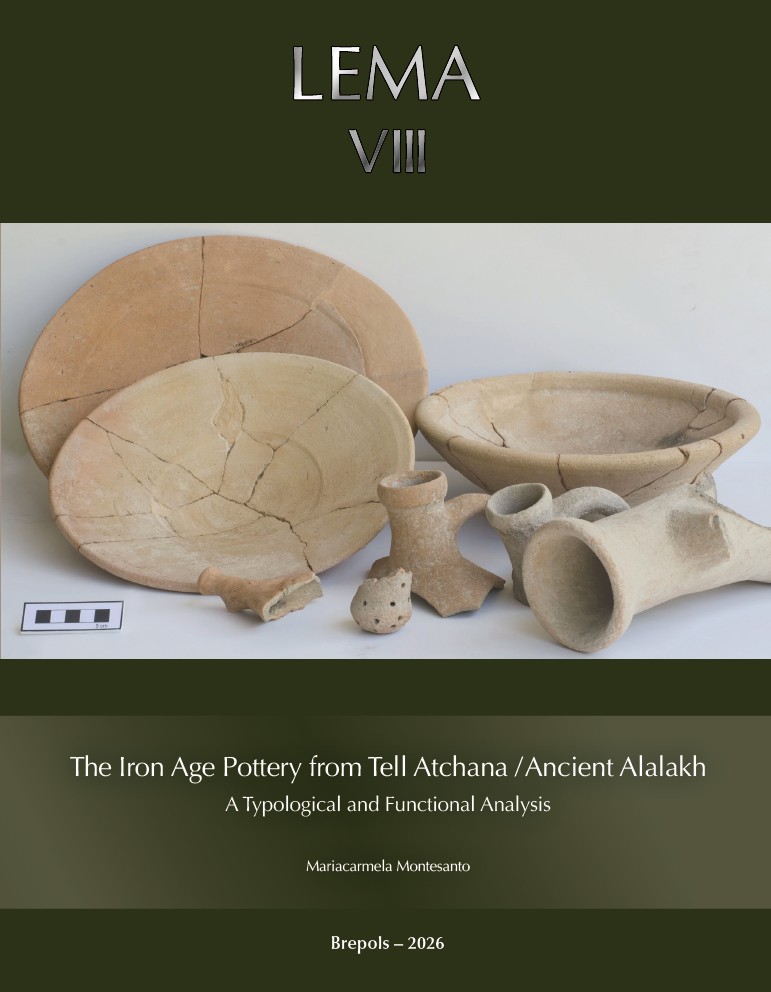 The Iron Age Pottery from Tell Atchana / Ancient Alalakh
A Typological and Functional Analysis
Volume 8



 Visual Memory and Oblivion
Monuments and Conflicts in Urban Spaces in Central and Eastern Europe from the Nineteenth Century to the Present Day
