
Das Antlitz der Götter – O rosto das divindades
Götterbilder im Westen des Römischen Reiches – Imagens de divindades no Ocidente do Império romano
Edited by Thomas G. Schattner Edited by Amílcar Guerra

Hardback (Published)
(December 2019)
ISBN: 9783954904235
8.27 x 11.69 inches
Price: $147.00
In stock
Images of gods only appear in Hispaniae imagery during the Roman Empire, since statues and reliefs of the Roman gods dominate the provincial panorama. In addition to these representations, however, one can observe early formal artistic expressions in sculpture, some of which can be traced back to Eastern Mediterranean Oriental and Graeco-Roman models, but which on the other hand reflect a certain reception through their own traditions. These two components can be traced back to the Middle Imperial Period. The various aspects are discussed in the contributions to this anthology.
English summary: Compared with Italian, Punic or even Greek abutters in the Mediterranean region, depictions of deities are being introduced into the imagery of the Hispaniae relatively late and hesitantly. Indeed they only start to become ubiquitous in the Roman Imperial Era, as monuments of Roman deities dominate provincial landscapes in the form of statures and reliefs. Next to these depictions from the Greco-Roman repertoire formal expressions in sculpture dating back to Eastern Mediterranean Oriental as well as Greco-Roman archetypes while simultaneously showing manners of reception grounding in an independent tradition can be found early on. These two components can be found right up until the Middle Imperial Era, as the tendency towards unification and convergence spread as a result of Romanization. Various aspects are being discussed in the seventeen articles by international authors published in this volume, which focuses on the records of a colloquium held in the northern Portuguese town of Boticas. The structure of the volume is oriented around Greek and Roman depictions of deities, written sources as well as conditions in other provinces of the Roman Empire, such as the Rhineland Provinces, which can be used for comparison. The main focus, however, is on the depiction of deities of the Hispaniae as they appear in late Iberian and provincial Roman monuments. A special emphasis is placed on the Hispanic North and North-West, as these regions were the last to be reached by the spread of Roman styles, thus showing the continuance of Indigenous design more strongly than elsewhere. With the volume at hand the department of Madrid offers a substantial contribution to Sanctuary Research, which has long since played an important role at the German Archaeological Institute. German description: Gotterdarstellungen finden im Vergleich zu italischen, punischen oder gar griechischen Mittelmeer-Anrainern vergleichsweise spat und zogerlich Eingang in die Bildwelt der Hispaniae. Tatsachlich erscheinen sie allenthalben erst in der romischen Kaiserzeit, da die romischen Gotter in Statue und Relief als Denkmaler das provinzielle Panorama beherrschen. Neben diesen Darstellungen aus dem griechisch-romischen Repertoire lassen sich jedoch schon fruh formale Auspragungen in der Plastik beobachten, die teils auf ostmediterrane orientalische und griechisch-romische Vorbilder zuruckgehen, die aber andererseits durch eigene Traditionen bestimmte Rezeption widerspiegeln. Diese beiden Komponenten lassen sich bis in die Mittlere Kaiserzeit fassen, da die Tendenz zur Vereinheitlichung und Konvergenz als eine Auswirkung der Romanisierung Platz greift. Die verschiedenen Aspekte sind in den Beitragen dieses Sammelbandes besprochen und diskutiert, der die Akten eines Kolloquiums im nordportugiesischen Boticas zum Thema enthalt. Diese stammen aus der Feder von 17 Autoren internationaler Herkunft. Die Gliederung des Bandes ist am griechischen wie am romischen Gotterbild orientiert, an den Schriftquellen wie an den Verhaltnissen in anderen Provinzen des Romischen Reiches, wie etwa an den Rheinprovinzen, die als Vergleich gelten konnen. Im Mittelpunkt steht jedoch das Gotterbild der Hispaniae, wie es in spat-iberischen und provinzialromischen Denkmalern vor uns tritt. Ein besonderes Augenmerk liegt dabei auf dem hispanischen Nordwesten und Westen, da diese Regionen als letzte von der Verbreitung des romischen Formenguts erfasst werden, so dass die Fortdauer des Indigenen sich deutlicher zeigt als anderswo. Damit leistet die Abteilung Madrid einen Beitrag zur Heiligtumsforschung, die am Deutschen Archaologischen Institut (DAI) traditionell eine bedeutende Rolle spielt.
- Edited by Thomas G. Schattner
- Edited by Amílcar Guerra
Other Titles in this Series
 Früher Bergbau und Metallurgie auf der Iberischen Halbinsel
From the Object to the Mine. Papers from the Project and the Conference „Prehistoric Copper Metallurgy in Zambujal (Portugal)“
 Historia del Instituto Arqueológico Alemán de Madrid – Geschichte der Madrider Abteilung des Deutschen Archäologischen Instituts
Investigación y repercusión en la prehistoria y en la protohistoria de la Península Ibérica (1954–2004) Forschung und Wirkung auf die Vor- und Frühgeschichte der Iberischen Halbinsel (1954–2004)
Similar Books

 Caesar’s Visions and Impact on the Roman Empire
Revisiting the Archaeological and Historical Record of the 40s BC
Volume 2


 Drunk the Potion, No Whit Charmed
The Doctrine of Pure and Perfect Souls from Iamblichus to Damascius

 Epiphanies of the Divine in the Septuagint and the New Testament
Fifth International Symposium of the Corpus Judaeo-Hellenisticum Novi Testamenti (CJHNT), 14-17 May 2015, Nottingham


 Etruscan and Roman Hellenistic Anatomical ex votos
Reassessing Popular Religious Expressions in Central Italy
Volume 8



 Invisible Labour in Antiquity
Visualizing Obscure Work in the Ancient Mediterannean and West Asia
Volume 1
 Language and Power in the Roman Empire and Early India
Hierarchy, Ambiguity, and the Art of Reading the Signs in Cosmopolitan Cultures
 Late Antique villae in the Balkans (3rd–7th c. AD): Current Research Questions and Perspectives
HAEMUS Companion to the Late Antique Balkans 1
Volume 4

 Nurturing the Elite
Representations of Drinking, Eating, and Religious Vessels in Palmyrene Funerary Iconography
Volume 13


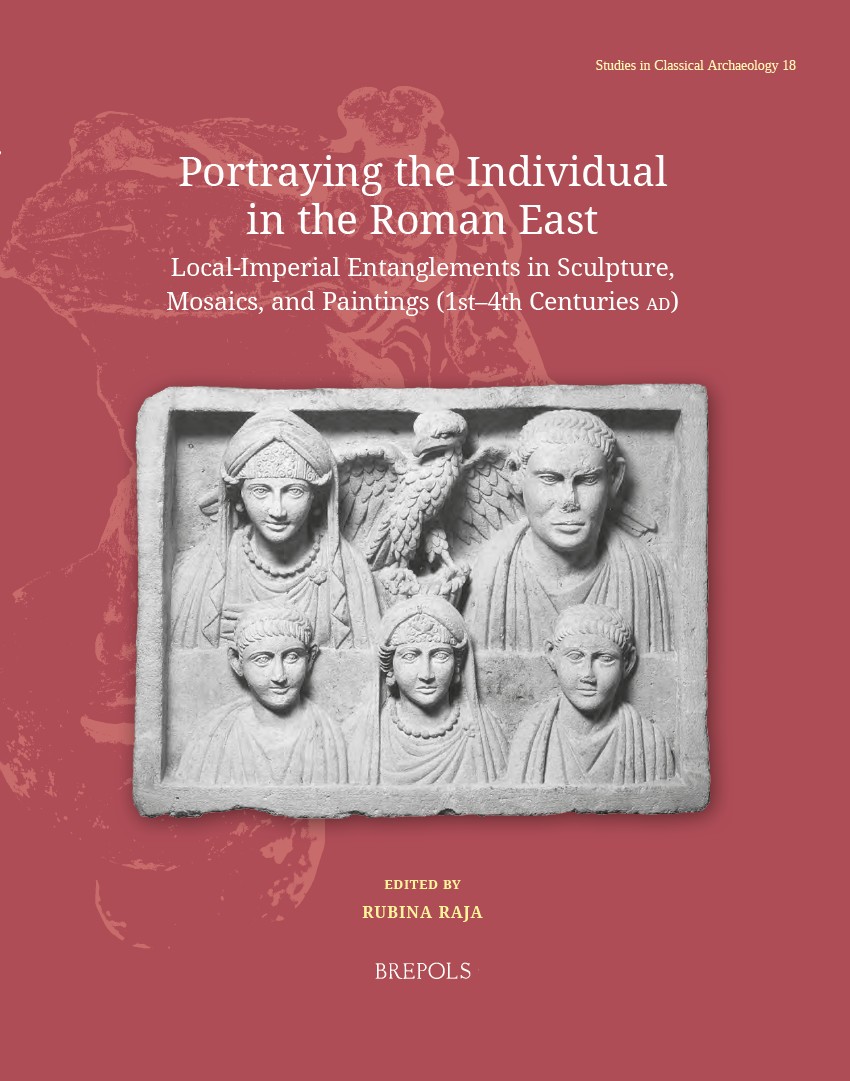 Portraying the Individual in the Roman East
Local–Imperial Entanglements in Sculpture, Mosaics, and Paintings (First–Fourth Centuries AD)
Volume 18

 Small Worlds and Relational Agencies: Local Societies in Early Medieval Iberia
Pequeños mundos y Agencias relacionales: Sociedades locales altomedievales en la Península Ibérica
 The Compositional History of the Book of Kings
An Analysis of the Evaluative Frameworks in 1 Kings 14–2 Kings 25

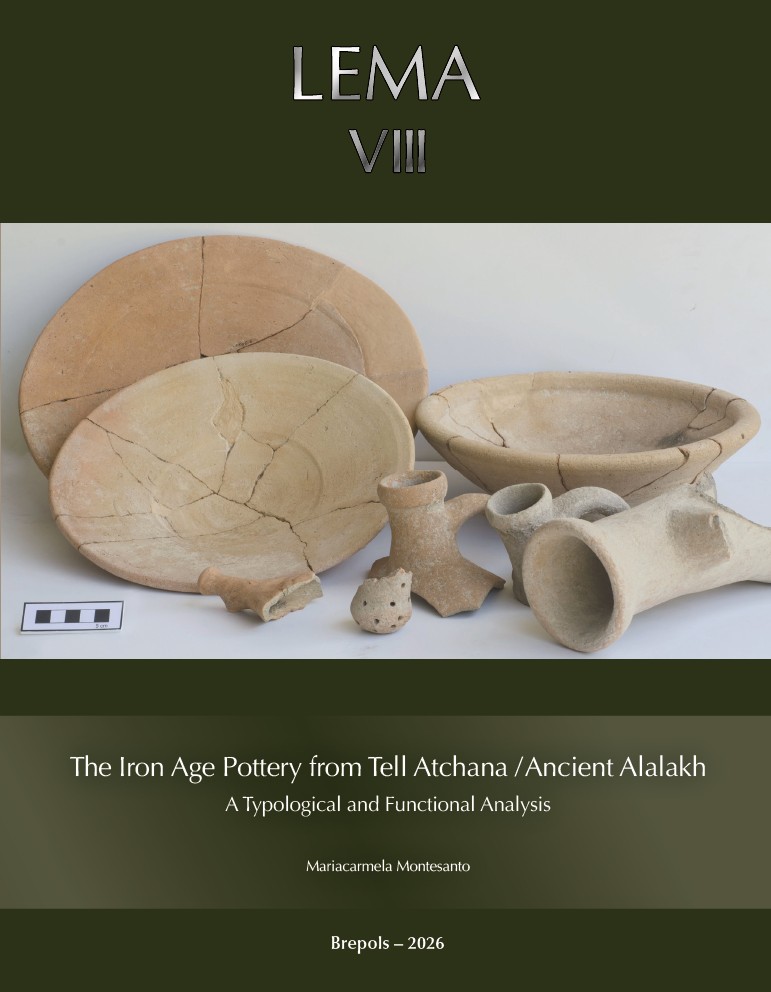 The Iron Age Pottery from Tell Atchana / Ancient Alalakh
A Typological and Functional Analysis
Volume 8

 Writing in the Church of the Nativity in Bethlehem
Inscription and Graffiti in a Multilingual and Multigraphic Perspective
Volume 45
 Contesting Labeled Identities
The Sociology of Gentilics in Biblical and Northwest Semitic Literature


 After Life in Roman Paganism. L’Égypte des astrologues. Les Mages hellénisés
Introductions historiographiques
Volume 7

 Atlante tematico di topografia antica 36-2026
Urbanistica e monumenti, porti, Roma. Ricerche sui monti Aurunci
Volume 36
 Cerámica común romana y ciclo haliéutico
Análisis de los contextos de las cetariae de Iulia Traducta


 Diodor über den ersten Sklavenaufstand auf Sizilien
Ein philologischer und historischer Kommentar
Volume 67