
A Landscape of Conflict? Rural Fortifications in the Argolid (400–146 BC)
By (author) Anna Magdalena Blomley

Paperback (Published)
(May 2022)
ISBN: 9781789699708
8.07 x 11.42 inches
Price: $77.00
On back order
This is the first systematic study of Late Classical and Hellenistic rural fortifications in ancient Argos and the city-states of the Argolic Akte. Based on one of the largest regional corpora of Greek fortified sites, the volume investigates the function of rural fortifications by placing them in the context of their surrounding lan
A Landscape of Conflict? Rural Fortifications in the Argolid (400-146 BC) is the first systematic study of Late Classical and Hellenistic rural fortifications in the territories of ancient Argos and the city-states of the Argolic Akte (northeastern Peloponnese). Based on one of the largest regional corpora of Greek fortified sites to date, the volume investigates the function of rural fortifications by placing them in the context of their surrounding landscape. This approach – combining ‘traditional’ methods of ancient history and landscape archaeology with GIS-based data analyses – helps to readdress the long-standing tension between ‘military-strategic’ and ‘non-military’ research agendas in Greek fortification studies, and highlights that Classical and Hellenistic rural fortifications are neither a priori fortified farmsteads nor parts of military-strategic networks of territorial defence. Instead, rural fortifications emerge in this monograph as multifunctional and multifaceted sites, which open a new window into different forms of ‘formal’ and ‘informal’ conflict in the ancient countryside and bear witness to a remarkable degree of local motivation and agency. The study thus demonstrates how ancient fortifications can provide an unexpected and so far much underappreciated opportunity for writing local or regional Greek histories – political and military as well as social and economic – from archaeological sources.
Chapter 1: Introduction ;
Chapter 2: The Landscape of the Ancient Argolid ;
Chapter 3: A Typology of Ancient Fortifications ;
Chapter 4: Dating Ancient Fortifications in the Argolid ;
Chapter 5: A Regional Study of Fortifications in the Argolid ;
Chapter 6: Rural Fortifications as Territorial Defences ;
Chapter 7: Rural Fortifications as Local Defences ;
Chapter 8: Conclusions ;
Bibliography ;
Catalogue ;
Appendix: The Masonry Technique and Chronology of Fortifications in the Argolid ;
Index of Sources ;
General Index
- By (author) Anna Magdalena Blomley
'Alles in allem ist Anna Blomley ein substanzieller wie lesenswerter Beitrag zur Erforschung des antiken griechischen Festungswesens gelungen, der die geographische Diversitat und Multifunktionalitat landlicher Fortifikationen in der Argolis eindrucklich vor Augen fuhrt. Im Licht der, was die Chronologie anbelangt, schwierigen Datengrundlage zeigt sich dabei nicht zuletzt das grose Potential einer landschaftsarchaologischen, mit raumlichen GIS-Analysen angereicherten Methodik. Gleichwohl kunftige Feldforschung in der Argolis die Ergebnisse Blomleys moglicherweise modifizieren kann, werden die von ihr ausgelegten Pfade zum Verstandnis der landlichen Fortifikationen nachhaltig Orientierung bieten.‘ [translated] ‘All in all, Anna Blomley has produced a substantial and highly readable contribution to the study of ancient Greek fortifications, vividly demonstrating the geographical diversity and multifunctionality of rural fortifications in the Argolis. … Although future fieldwork in the Argolis may modify Blomley’s findings, the paths she has laid out will continue to provide valuable guidance for understanding rural fortifications.’ - Johannes Fouquet (2025): GNOMON 97
—
‘This volume is very thought-provoking for studies of the Argolid and broader considerations of fortifications and regionality: it is a very fine piece of work, based on extensive research and powerful analysis, and is to be congratulated. It will be a basis for all future research about the landscapes and cities-states of the Argolid.’ – Clemence Weber-Pallez (2024): The Classical Review
—
Similar Books

 Caesar’s Visions and Impact on the Roman Empire
Revisiting the Archaeological and Historical Record of the 40s BC
Volume 2


 Drunk the Potion, No Whit Charmed
The Doctrine of Pure and Perfect Souls from Iamblichus to Damascius

 Epiphanies of the Divine in the Septuagint and the New Testament
Fifth International Symposium of the Corpus Judaeo-Hellenisticum Novi Testamenti (CJHNT), 14-17 May 2015, Nottingham


 Etruscan and Roman Hellenistic Anatomical ex votos
Reassessing Popular Religious Expressions in Central Italy
Volume 8



 Invisible Labour in Antiquity
Visualizing Obscure Work in the Ancient Mediterannean and West Asia
Volume 1
 Language and Power in the Roman Empire and Early India
Hierarchy, Ambiguity, and the Art of Reading the Signs in Cosmopolitan Cultures
 Late Antique villae in the Balkans (3rd–7th c. AD): Current Research Questions and Perspectives
HAEMUS Companion to the Late Antique Balkans 1
Volume 4

 Nurturing the Elite
Representations of Drinking, Eating, and Religious Vessels in Palmyrene Funerary Iconography
Volume 13


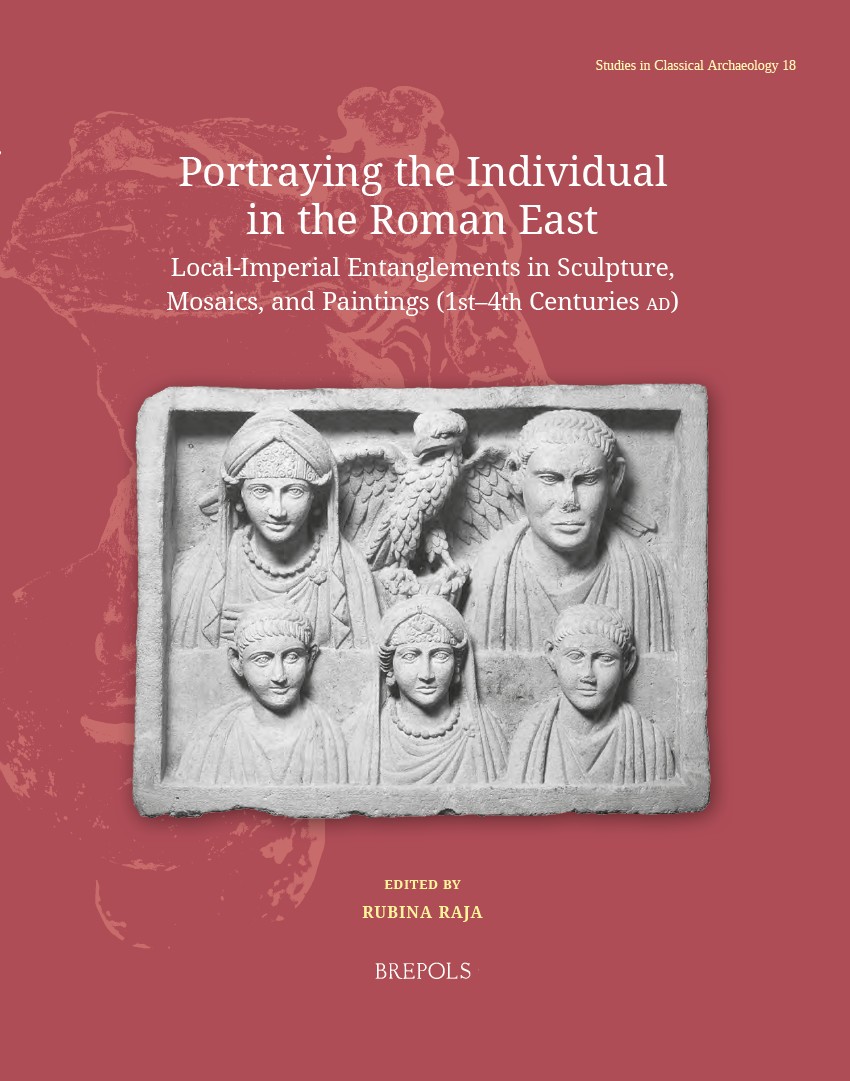 Portraying the Individual in the Roman East
Local–Imperial Entanglements in Sculpture, Mosaics, and Paintings (First–Fourth Centuries AD)
Volume 18

 Small Worlds and Relational Agencies: Local Societies in Early Medieval Iberia
Pequeños mundos y Agencias relacionales: Sociedades locales altomedievales en la Península Ibérica
 The Compositional History of the Book of Kings
An Analysis of the Evaluative Frameworks in 1 Kings 14–2 Kings 25

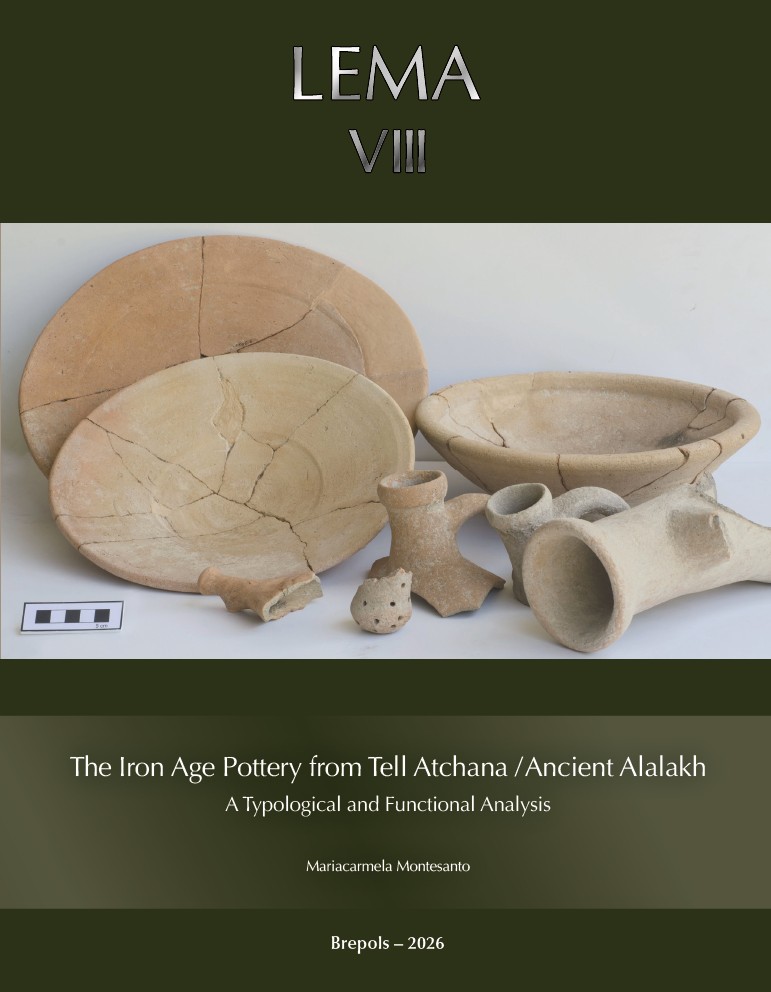 The Iron Age Pottery from Tell Atchana / Ancient Alalakh
A Typological and Functional Analysis
Volume 8

 Writing in the Church of the Nativity in Bethlehem
Inscription and Graffiti in a Multilingual and Multigraphic Perspective
Volume 45
 Contesting Labeled Identities
The Sociology of Gentilics in Biblical and Northwest Semitic Literature


 After Life in Roman Paganism. L’Égypte des astrologues. Les Mages hellénisés
Introductions historiographiques
Volume 7

 Atlante tematico di topografia antica 36-2026
Urbanistica e monumenti, porti, Roma. Ricerche sui monti Aurunci
Volume 36
 Cerámica común romana y ciclo haliéutico
Análisis de los contextos de las cetariae de Iulia Traducta


 Diodor über den ersten Sklavenaufstand auf Sizilien
Ein philologischer und historischer Kommentar
Volume 67