
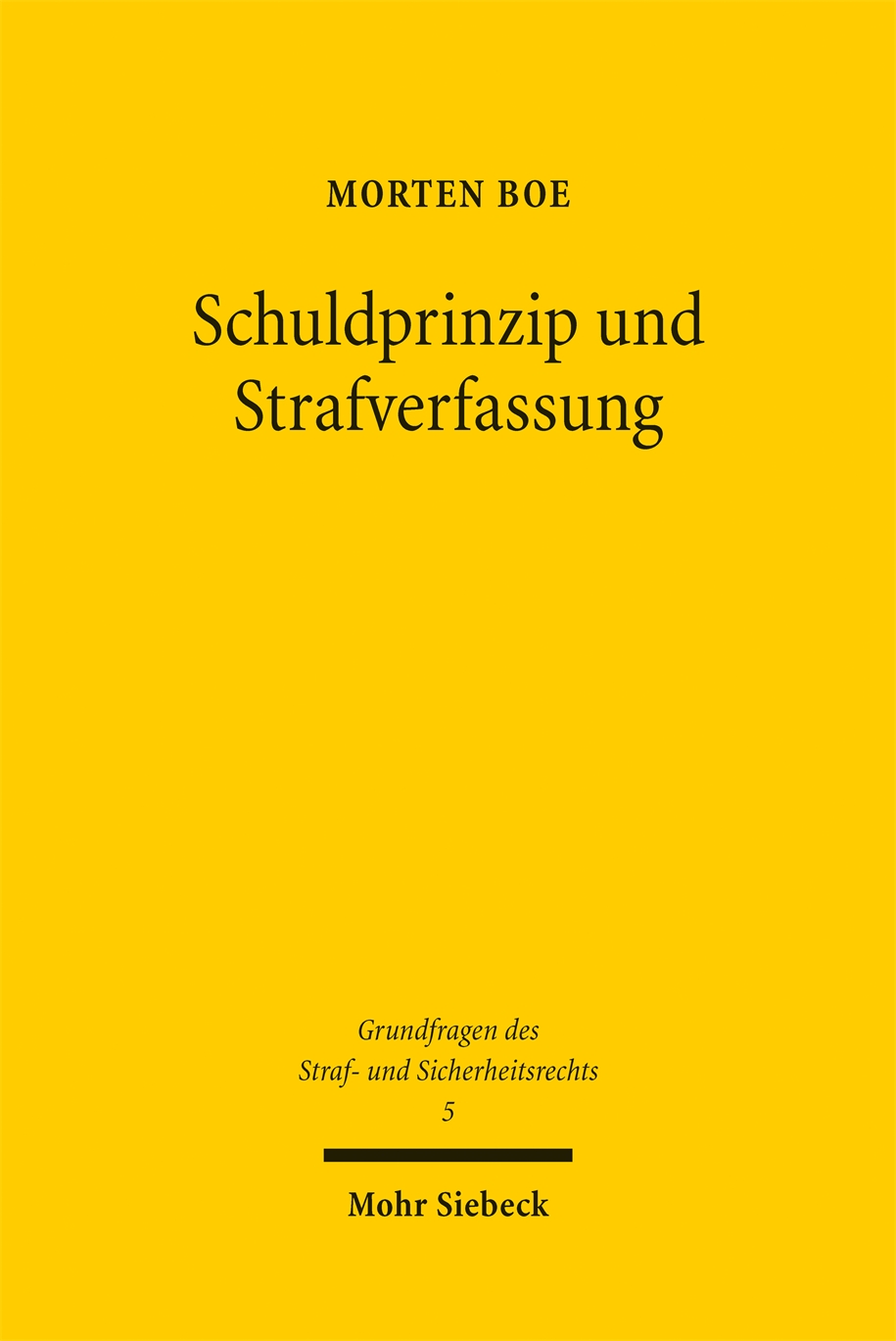
Schuldprinzip und Strafverfassung
Eine Untersuchung zur strafverfassungsrechtlichen Maßstabsbildung durch das Bundesverfassungsgericht
Paperback (Forthcoming)
(November 2026)
ISBN: 9783162009210
6.1 x 9.13 inches
Price: $179.00
The principle of guilt, a self-evident truth under constitutional criminal law? By no means. Morten Boe demonstrates its contingent development and complex structure, arguing that it should be understood as a standard-setting mechanism of constitutional jurisprudence without an independent claim to validity.
In today’s debate, the principle of guilt often appears to be a commonplace of constitutional criminal law that requires no further justification. However, this superficial self-evidence and intuitive accessibility fade the more one is tasked with demonstrating and specifying the details of the principle’s content, normative structure, and claim to validity-and what “guilt” actually means within the Basic Law’s approach to criminal law. In his study, which is situated at the intersection of criminal and constitutional law, Morten Boe traces the emergence and erratic development of the principle of guilt in the jurisprudence of the Federal Constitutional Court. This reveals a norm structure that is complex in content, allowing for a diverse range of sub-elements to attach themselves to it as an overarching umbrella concept. At the same time, the principle of guilt proves to be a flexible key concept which, mediated through the semantic ambiguity of the term “guilt,” opens up a potentially comprehensive hold over criminal law. Contrary to its widespread characterization as a (purely) limiting principle, “guilt” thus tends to become a holistic, constitutive principle that bindingly dictates the meaning and content of criminal law under the Basic Law. All of this provides reason to critically examine the often unquestioned validity of the principle of guilt as a principle of constitutional status. The study culminates in the thesis that “the” principle of guilt cannot be coherently justified as an independently applicable constitutional principle. Instead, the author argues for understanding the principle of guilt as a complex standard-setting mechanism of constitutional jurisprudence that should be tied more closely to the constitutional text than before, in order to preserve the substantive openness of the criminal constitution under the Basic Law.
Other Titles in this Series
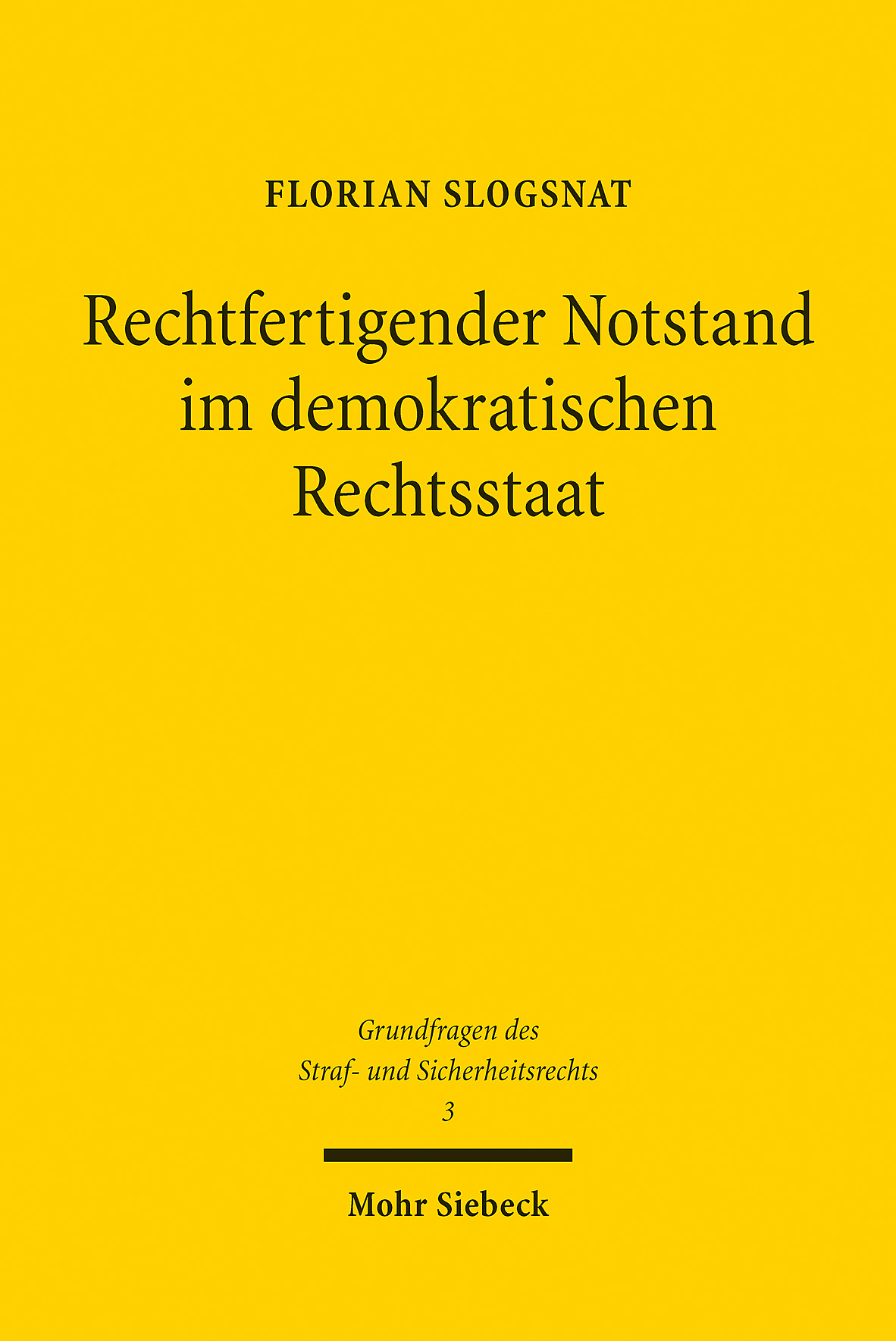 Rechtfertigender Notstand im demokratischen Rechtsstaat
Der Vorrang staatlicher Verfahren bei § 34 StGB
 Mindeststrafen in Theorie und Praxis
Zugleich ein Beitrag zum Strafverfassungs- und Strafzumessungsrecht
 Revision der Grundlagen des Strafanwendungsrechts
Der Umfang der staatlichen Strafgewalt im Lichte eines Bürgerstrafrechts