
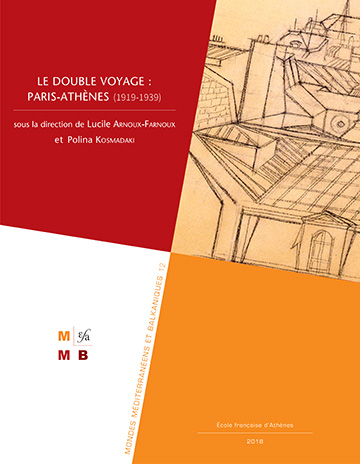
Le double voyage: Paris-Athènes (1945-1975)
Edited by L. Arnoux-Farnoux

Cultural exchanges between France and Greece peaked during the three decades that spanned from 1945 to 1975, despite, or perhaps because of, the successive crises Greece had to contend with during this period, from the Civil War (1944-1949) to the military junta (1967-1974). Greek intellectual and artistic elites were still very much drawn to post-war Paris, where they found both refuge from the chaos that reigned in their native land and an opening on modernity. So, Greece came to Paris, a place where a new generation of artists got a chance to show their work, where Greek architects made a name for themselves, often starting off with a job in Le Corbusier’s studio, and where Greek literature was translated into French like never before. However, this was a journey in both directions, and France also went to Greece, where French ideas flourished, in art, literature and philosophy. The names of the people who undertook this journey back and forth, from one shore of the Mediterranean to the other, include Candilis, Dubuisson, Xenakis, Restany, Kessanlis, Aragon, Ritsos, Eluard, Kazantzakis, Sartre, Vassilikos, Milliex and many others.
Cultural exchanges between France and Greece peaked during the three decades that spanned from 1945 to 1975, despite, or perhaps because of, the successive crises Greece had to contend with during this period, from the Civil War (1944-1949) to the military junta (1967-1974). Greek intellectual and artistic elites were still very much drawn to post-war Paris, where they found both refuge from the chaos that reigned in their native land and an opening on modernity. So, Greece came to Paris, a place where a new generation of artists got a chance to show their work, where Greek architects made a name for themselves, often starting off with a job in Le Corbusier’s studio, and where Greek literature was translated into French like never before. However, this was a journey in both directions, and France also went to Greece, where French ideas flourished, in art, literature and philosophy. The names of the people who undertook this journey back and forth, from one shore of the Mediterranean to the other, include Candilis, Dubuisson, Xenakis, Restany, Kessanlis, Aragon, Ritsos, Eluard, Kazantzakis, Sartre, Vassilikos, Milliex and many others.
- Edited by L. Arnoux-Farnoux
Other Titles in this Series

 Cent ans apres
la memoire de la Premiere Guerre mondiale: One Hundred Years after: The Memory of the First World War
Volume 13

Similar Books
 A Collaborative Tapestry in Honour of Shirley Ann Brown / Une fresque brodée en l’honneur de Shirley Ann Brown
The Bayeux Tapestry Seen by her Colleagues and Friends / La Tapisserie de Bayeux vue par ses collègues et amis





 Balthasar Caymox of Nuremberg
Early Modern German Print Publishers: Popular Prints of the Seventeenth Century

 Between Bones and Beliefs
Human-Bird Relations in Central and Northern Europe in the First Millennium AD
Volume 4


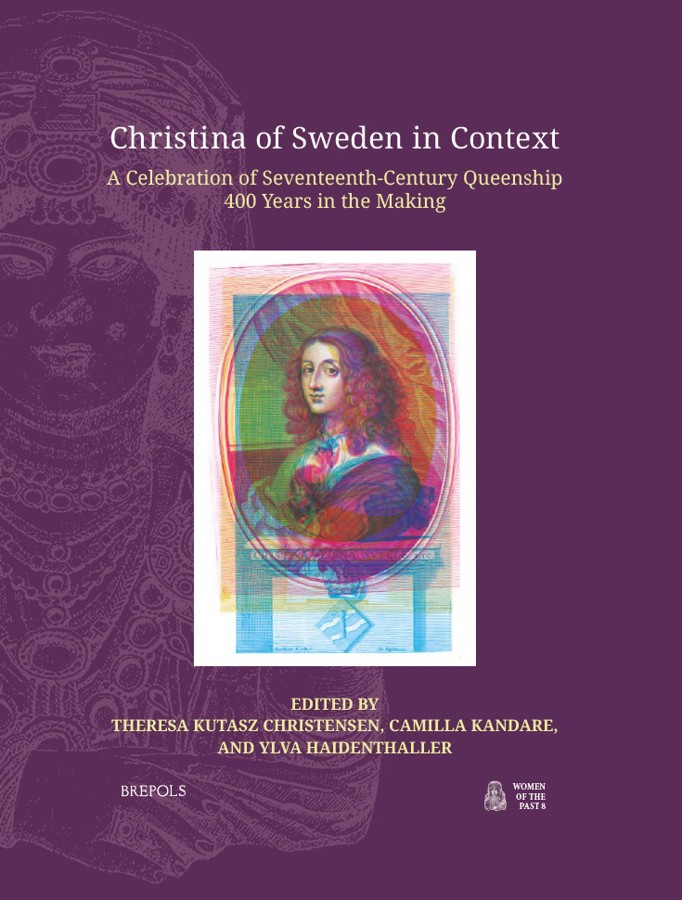 Christina of Sweden in Context
A Celebration of Seventeenth-Century Queenship 400 Years in the Making


 Engaged Languages and Literatures / Langues et Littératures engagées
Critical Views / Regards Critiques
 ENTANGLED AFRICA
Intra-African Relations Between Rain Forest and Mediterranean from Around 4,000 BCE to 1,500 CE


 Gold, Silver and Glass: Power Networks, Cultural Identities, Technology Transfers and Agency across the Old World (7th Century BC – 1st Century AD)
Proceedings of a Conference Held at the British Museum, 16–18 June 2023


 Legal Visuality
Exegesis, Ambiguity, and Dissimulation of the Donation of Constantine in the Early Modern Period
 Listening to the Swan Song
More-than-Human Beings and Sounds in Literature and Culture Through the Ages
 Lobbying for Equality
Jacques Godard and the Struggle for Jewish Equality during the French Revolution


 Monastic Manuscripts from the Eastern Mediterranean (Sinai, Jerusalem, Antioch)
Production, Use, and Contexts

 Naples as Laboratory / Laboratorium Neapel
Style Options, Artistic Rivalry and Self Fashioning in Neapolitan Baroque Painting / Plurale Stilbildung, Kunstlerkonkurrenz und Self Fashioning in der neapolitanischen Barockmalerei

 Nurturing the Elite
Representations of Drinking, Eating, and Religious Vessels in Palmyrene Funerary Iconography
Volume 13


