
Byzantine Illuminated Manuscripts of the Book of Job
A Preliminary Study of the Miniature Illustrations. Its Origin and Development.
By (author) Stella Papadaki-Oekland
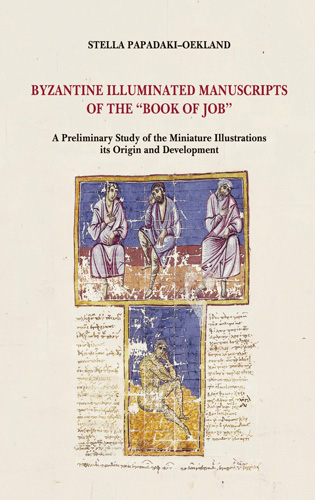
Hardback (Published)
(September 2009)
ISBN: 9782503532325
Price: $188.00
On back order
Of all the Old Testament books, the Book of Job remains acutely contemporary today. Written between the 6th and 3rd c. B.C., it deals with subjects such as the presence of evil in the world, the misery, the quest for justice, the faith, and the behavior of people when they face sudden twists and turns of life. It seems that the ancient text had been illustrated since the Early Christian period because of its fascinating novel-like narrative style. In her own study on the Book of Job, Stella Papadaki-Oekland probes into all the Byzantine illuminated manuscripts of the illustrated Greek text. The number of miniature illustrations included in these fifteen manuscripts, dating from the 9th to the 16th century, comes to more than 1800 of which 2/3 of the about 380 illustrated herein are previously unpublished manuscript images.The book is an unabridged version with minor changes of Papadaki-Oekland’s Inaugural Dissertation at Heidelberg University (1979) and is published posthumously by her daughters, Helen-Aina and Astrid-Zoe -in homage to Byzantine Art. The fifteen Byzantine Illuminated Manuscript Illustrations of the Book of Job studied, illustrated and discussed are: Biblioteca Apostolica Vaticana, Rome: cod. Vat. gr. 749; cod. Vat. gr. 751; cod. Vat. gr. 1231 and cod. Vat. Pal. gr.230 – The Monastery of St. John the Theologian, Isle of Patmos: cod. Patmos 171 – Biblioteca Nazionale Marciana, Venezia: cod. Marc. gr. 538 – Monastery of St. Catherine, Sinai, Egypt: cod. Siena 3 – Orthodox Patriarchate of Jerusalem and All Palestine, Jerusalem: MS. Taphou 5 – Monastery of Vatopedi, Mount Athos: Vatopedi 590 – Monastery Magisti (Great) Lavra, Mount Athos: Lavra B100 – Byzantine and Christian Museum, Athens: MS. 62 – Bodleian Library, Oxford: MS. Barocci 201 and MS. Laud gr. 86 – Bibliothegue nationale de France, Paris: MS. gr. 134 and MS. gr. 135 – National Library of Russia, St. Petersburg: MS gr. 382 (former folio of Taphou 5) The study of the Septuagint Book of Job in Byzantine tradition include comparative analysis of the interrelationship of the individual miniature cycles, their general arrangement and artistic character, the origin and development as well as its contents and significance in the literary and popular tradition. Finally, the six Comparative Tables presented at the end of the volume provide the reader for the first time a complete cross reference interrelationship between the individual 1800 images of the 15 manuscripts and Sir Lancelot C. L. Brenton’s English translation of the Septuagint Book of Job passages. Further examples of images discussed herein of early Christian Job representations include:Biblioteca Apostolica Vaticana, Rome, MS.Reg.gr.1 – known as the Bible of Queen Christina of Sweden; Bibliotheque nationale de France, Paris, MS gr. 510, MS syr. 341-the Syriac Bible and MS.gr. 923- Sacra Parallela; Biblioteca Nazionale Vittorio Emanuele III, Naples, Coptic MS IB 18, Catacomb of the Via Latina, Rome and the Sarcophagus of Junius Bassus, Basilica di San Pietro, Rome. Furthermore, the book is of invaluable importance due to its methodological approach. As the leading art historian Hans Belting points out, the study of Stella Papadaki-Oekland calls in question Kurt Weitzmann’s rigid theory about the process of the Byzantine illuminated manuscripts production. There’s no doubt that, even though it was written a lot of years ago, this remains the most complete and comprehensive study about the Book of Job in Byzantine art.
Of all the Old Testament books, the Book of Job remains acutely contemporary today. Written between the 6th and 3rd c. B.C., it deals with subjects such as the presence of evil in the world, the misery, the quest for justice, the faith, and the behavior of people when they face sudden twists and turns of life. It seems that the ancient text had been illustrated since the Early Christian period because of its fascinating novel-like narrative style. In her own study on the Book of Job, Stella Papadaki-Oekland probes into all the Byzantine illuminated manuscripts of the illustrated Greek text. The number of miniature illustrations included in these fifteen manuscripts, dating from the 9th to the 16th century, comes to more than 1800 of which 2/3 of the about 380 illustrated herein are previously unpublished manuscript images.The book is an unabridged version with minor changes of Papadaki-Oekland’s Inaugural Dissertation at Heidelberg University (1979) and is published posthumously by her daughters, Helen-Aina and Astrid-Zoe -in homage to Byzantine Art. The fifteen Byzantine Illuminated Manuscript Illustrations of the Book of Job studied, illustrated and discussed are: Biblioteca Apostolica Vaticana, Rome: cod. Vat. gr. 749; cod. Vat. gr. 751; cod. Vat. gr. 1231 and cod. Vat. Pal. gr.230 – The Monastery of St. John the Theologian, Isle of Patmos: cod. Patmos 171 – Biblioteca Nazionale Marciana, Venezia: cod. Marc. gr. 538 – Monastery of St. Catherine, Sinai, Egypt: cod. Siena 3 – Orthodox Patriarchate of Jerusalem and All Palestine, Jerusalem: MS. Taphou 5 – Monastery of Vatopedi, Mount Athos: Vatopedi 590 – Monastery Magisti (Great) Lavra, Mount Athos: Lavra B100 – Byzantine and Christian Museum, Athens: MS. 62 – Bodleian Library, Oxford: MS. Barocci 201 and MS. Laud gr. 86 – Bibliothegue nationale de France, Paris: MS. gr. 134 and MS. gr. 135 – National Library of Russia, St. Petersburg: MS gr. 382 (former folio of Taphou 5) The study of the Septuagint Book of Job in Byzantine tradition include comparative analysis of the interrelationship of the individual miniature cycles, their general arrangement and artistic character, the origin and development as well as its contents and significance in the literary and popular tradition. Finally, the six Comparative Tables presented at the end of the volume provide the reader for the first time a complete cross reference interrelationship between the individual 1800 images of the 15 manuscripts and Sir Lancelot C. L. Brenton’s English translation of the Septuagint Book of Job passages. Further examples of images discussed herein of early Christian Job representations include:Biblioteca Apostolica Vaticana, Rome, MS.Reg.gr.1 – known as the Bible of Queen Christina of Sweden; Bibliotheque nationale de France, Paris, MS gr. 510, MS syr. 341-the Syriac Bible and MS.gr. 923- Sacra Parallela; Biblioteca Nazionale Vittorio Emanuele III, Naples, Coptic MS IB 18, Catacomb of the Via Latina, Rome and the Sarcophagus of Junius Bassus, Basilica di San Pietro, Rome. Furthermore, the book is of invaluable importance due to its methodological approach. As the leading art historian Hans Belting points out, the study of Stella Papadaki-Oekland calls in question Kurt Weitzmann’s rigid theory about the process of the Byzantine illuminated manuscripts production. There’s no doubt that, even though it was written a lot of years ago, this remains the most complete and comprehensive study about the Book of Job in Byzantine art.
- By (author) Stella Papadaki-Oekland
Similar Books
 A Collaborative Tapestry in Honour of Shirley Ann Brown / Une fresque brodée en l’honneur de Shirley Ann Brown
The Bayeux Tapestry Seen by her Colleagues and Friends / La Tapisserie de Bayeux vue par ses collègues et amis



 Balthasar Caymox of Nuremberg
Early Modern German Print Publishers: Popular Prints of the Seventeenth Century




 Contesting Labeled Identities
The Sociology of Gentilics in Biblical and Northwest Semitic Literature


 Drunk the Potion, No Whit Charmed
The Doctrine of Pure and Perfect Souls from Iamblichus to Damascius

 ENTANGLED AFRICA
Intra-African Relations Between Rain Forest and Mediterranean from Around 4,000 BCE to 1,500 CE
 Epigraphic “Shades” from Hellenistic Thrace
Contextualizing Inscriptions in Greek from Thracian Tombs

 Epiphanies of the Divine in the Septuagint and the New Testament
Fifth International Symposium of the Corpus Judaeo-Hellenisticum Novi Testamenti (CJHNT), 14-17 May 2015, Nottingham


 Gold, Silver and Glass: Power Networks, Cultural Identities, Technology Transfers and Agency across the Old World (7th Century BC – 1st Century AD)
Proceedings of a Conference Held at the British Museum, 16–18 June 2023


 Language and Power in the Roman Empire and Early India
Hierarchy, Ambiguity, and the Art of Reading the Signs in Cosmopolitan Cultures
 Late Antique villae in the Balkans (3rd–7th c. AD): Current Research Questions and Perspectives
HAEMUS Companion to the Late Antique Balkans 1
Volume 4
 Legal Visuality
Exegesis, Ambiguity, and Dissimulation of the Donation of Constantine in the Early Modern Period
 Listening to the Swan Song
More-than-Human Beings and Sounds in Literature and Culture Through the Ages


 Monastic Manuscripts from the Eastern Mediterranean (Sinai, Jerusalem, Antioch)
Production, Use, and Contexts


