
Flemish Wall Painting
Late Gothic Wall Painting in the Southern Netherlands
By (author) Carina Fryklund
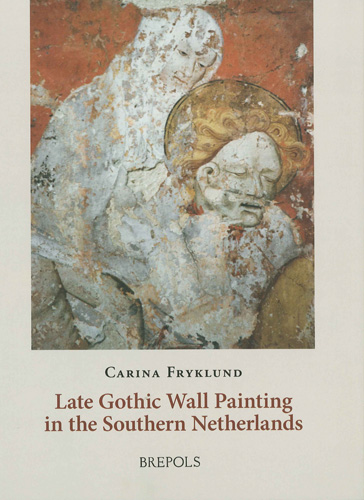
The present book considers the development of figurative wall painting in the southern Low Countries over a period of two centuries, between circa 1300 and 1500. The region had a long-standing tradition of monumental figurative painting, of which the earliest, romanesque, examples are still preserved at Tournai and Ghent. Despite the central role that figurative wall painting clearly continued to play in the art, propaganda, and liturgy of the courts and churches of the late medieval southern Low Countries, the medium has been largely overlooked in comparison with the attention paid by art historians to other contemporary art forms. A variety of factors have contributed to this neglect, of which the most significant are undoubtedly the random survival, and the often damaged condition, of extant wall paintings, as well as the frequently remote locations and difficulty of access to the buildings housing them. Benign neglect and active vandalism have ensured that only a fraction of the great wall painting ensembles of the late medieval era have survived. Today, only fifty or so individual murals or ensembles of the Late Gothic period -not including a large number of tomb paintings -once in the churches and monasteries, town halls and guild chapels, castles and hotels of the southern Low Countries, have survived the passage of time, wars, iconoclasm, and changing fashions of interior decoration. These include many previously unrecorded wall paintings discovered beneath layers of whitewash in churches and private residences within the last twenty-five years or so, and restored by conservation staff.
The present book considers the development of figurative wall painting in the southern Low Countries over a period of two centuries, between circa 1300 and 1500. The region had a long-standing tradition of monumental figurative painting, of which the earliest, romanesque, examples are still preserved at Tournai and Ghent. Despite the central role that figurative wall painting clearly continued to play in the art, propaganda, and liturgy of the courts and churches of the late medieval southern Low Countries, the medium has been largely overlooked in comparison with the attention paid by art historians to other contemporary art forms. A variety of factors have contributed to this neglect, of which the most significant are undoubtedly the random survival, and the often damaged condition, of extant wall paintings, as well as the frequently remote locations and difficulty of access to the buildings housing them. Benign neglect and active vandalism have ensured that only a fraction of the great wall painting ensembles of the late medieval era have survived. Today, only fifty or so individual murals or ensembles of the Late Gothic period -not including a large number of tomb paintings -once in the churches and monasteries, town halls and guild chapels, castles and hotels of the southern Low Countries, have survived the passage of time, wars, iconoclasm, and changing fashions of interior decoration. These include many previously unrecorded wall paintings discovered beneath layers of whitewash in churches and private residences within the last twenty-five years or so, and restored by conservation staff.
- By (author) Carina Fryklund
Similar Books
 «Solazoxa festa, stradolze e stracomplia»
Festschrift für Raymund Wilhelm zum 65. Geburtstag mit Beiträgen zu Diskurstraditionen und mittelalterlicher Philologie
Volume 249
 A Collaborative Tapestry in Honour of Shirley Ann Brown / Une fresque brodée en l’honneur de Shirley Ann Brown
The Bayeux Tapestry Seen by her Colleagues and Friends / La Tapisserie de Bayeux vue par ses collègues et amis




 Balthasar Caymox of Nuremberg
Early Modern German Print Publishers: Popular Prints of the Seventeenth Century
 Behind the Scenes of Medieval Roofs
An Overview of the Roofing Systems of Italian Churches
Volume 90


 Cahiers de recherches médiévales et humanistes – Journal of Medieval and Humanistic Studies
Volume 51





 ENTANGLED AFRICA
Intra-African Relations Between Rain Forest and Mediterranean from Around 4,000 BCE to 1,500 CE



 Gold, Silver and Glass: Power Networks, Cultural Identities, Technology Transfers and Agency across the Old World (7th Century BC – 1st Century AD)
Proceedings of a Conference Held at the British Museum, 16–18 June 2023


 Innovation and Medieval Communities
The Circulation of Ideas and Practices in and out of the Town (1200-1500)
Volume 63
 John Dunstaple Reading Boethius
John Dunstaple’s Annotations to Boethius’s “De institutione musica” in the Manuscript Oxford, Corpus Christi College Library, MS 118
 Legal Visuality
Exegesis, Ambiguity, and Dissimulation of the Donation of Constantine in the Early Modern Period
 Listening to the Swan Song
More-than-Human Beings and Sounds in Literature and Culture Through the Ages


 Medieval Debates on Foreknowledge: Future Contingents, Prophecy, and Divination
Acts of the XXVII Annual Colloquium of the SIEPM, Trento 12-15 September 2023
Volume 31